Skip to content

Republican · U.S. House, Alabama’s 6th district

Serving since Jan 6, 2015119th Congress (2025–27)next election Nov 3, 2026

Bioguide P000609FEC H4AL06098

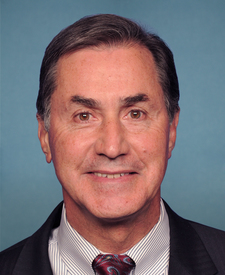
Portrait of Gary Palmer, rendered as a two-tone print
Official portrait
0.1%
of individual money in gifts of $200 or less, the lowest of 220 House Republicans

0.1% of individual money in the 2026 cycle came in gifts of $200 or less; the median for House Republicans is 9.4%. Ranks 220th of 220, where 1st is the highest share. $1.2M raised in all.

Campaigns report every donor who gives more than $200 by name and smaller gifts only as one total; this is that small-gift total as a share of all money from individuals, from the FEC’s committee summaries, ranked among House Republicans. It understates small giving when a campaign itemizes gifts made through ActBlue or WinRed.

At a glance

6 measures against House Republicans. 52% of Palmer’s statements discuss policy, in the bottom tenth of House Republicans (average 68%). 76% of Palmer’s itemized money in the 2026 cycle came from Alabama, in the top quarter of House Republicans.

The measures on which Palmer sits furthest from the middle of House Republicans, each against the same group, with the CSIP score when there is one. Every number is explained in its own section below.

Small donations, 2026

0.1%

House Republicans’ median 9.4% · ranks 220th of 220

Policy discussion

52%

House Republicans average 68% · ranks 202nd of 221

From Alabama, 2026

76%

Of itemized individual dollars · ranks 23rd of 216 House Republicans

Out of committee

38%

House Republicans average 17% · ranks 18th of 216

Bipartisanship

4.3%

House Republicans average 8.9% · ranks 171st of 221

CSIP ideology

+1.23

More conservative than 79% of House Republicans · ± 0.01

Peer group: House Republicans. Rank 1 is the highest value in the group; the thick bar is Palmer, the thin grey bar the peer average. The headline is the measure on which Palmer is most unusual among peers (Methods, §08).

Back to topNext: What politicians say

What Palmer says

Palmer stresses bipartisanship less than 76% of House Republicans. Bipartisanship in 4.3% of 717 statements, against 8.9% for the average House Republican; 171st of 221.

An AI model reads each of Palmer’s 717 statements in the 119th Congress (588 posts on X, 61 press releases, 57 Congressional Record speeches, 11 newsletters) and marks the kinds of statement it contains: a personal attack, criticism of a policy, discussion of policy, bipartisanship, credit claiming, and extreme labels. A statement can carry several. Every rate is compared with the average for House Republicans and ranked among them.

Kinds of statement

Share of statements carrying each label, the 119th Congress

0%80%
Palmer
Peers
Rank
Policy discussion372 statements
52%
68%
202nd of 221
Credit claiming217 statements
30%
37%
164th of 221
Policy criticism104 statements
14%
15%
107th of 221
Bipartisanship31 statements
4%
9%
171st of 221
Personal attacks9 statements
1%
2%
107th of 221
Show the data
Palmer's share of statements in each category against the House Republicans average.
RowPalmerPeers
Policy discussion52%68%
Credit claiming30%37%
Policy criticism14%15%
Bipartisanship4%9%
Personal attacks1%2%
717

statements classified

588 posts on X, 61 press releases, 57 Congressional Record speeches, 11 newsletters.

posts on X: 588 (82.0%)posts on X 588press releases: 61 (8.5%)Congressional Record speeches: 57 (7.9%)newsletters: 11 (1.5%)
Show the data
Palmer's statements by source
PartValue
posts on X588
press releases61
Congressional Record speeches57
newsletters11
How to read the bars

The thick bar is Palmer; the thin grey bar is the average House Republicans. A longer thick bar means Palmer does this more than peers. Rank 1 is the highest rate in the group.

Extreme labels

Palmer used extreme labels in 3.1% of statements, close to the peer average. 22 statements, most often aimed at Democrats; peers 3.0%.

  1. “radical”17
  2. “extreme”2
  3. “communist”1
  4. “woke”1

Who gets the labels

Targets named alongside an extreme label, by number of statements

  1. Democrats5
  2. left2
  3. agendas1
  4. California1
  5. Charles Schumer1
What an extreme label is

Calls a politician, a party or a policy “far left”, “far right”, “MAGA”, “extreme”, “radical”, “woke”, “fascist” or “communist”. The target is who or what the label was aimed at. The lists show the five most used labels and targets; the toggle shows the rest.

Month by month

Share of statements per month, the 119th Congress

Statements2025-01: 492025-02: 442025-03: 522025-04: 562025-05: 522025-06: 552025-07: 232025-08: 112025-09: 202025-10: 362025-11: 282025-12: 302026-01: 272026-02: 362026-03: 282026-04: 552026-05: 262026-06: 292026-07: 272026-08: 72026-09: 182026-10: 8peak 56 · Apr ’25Personal attackspeak 7.4% · Jan ’26 · latest 0.0%Personal attacks, 2025-01: 2.0% of 49Personal attacks, 2025-02: 0.0% of 44Personal attacks, 2025-03: 1.9% of 52Personal attacks, 2025-04: 1.8% of 56Personal attacks, 2025-05: 0.0% of 52Personal attacks, 2025-06: 0.0% of 55Personal attacks, 2025-07: 4.3% of 23Personal attacks, 2025-08: 0.0% of 11Personal attacks, 2025-09: 0.0% of 20Personal attacks, 2025-10: 5.6% of 36Personal attacks, 2025-11: 0.0% of 28Personal attacks, 2025-12: 0.0% of 30Personal attacks, 2026-01: 7.4% of 27Personal attacks, 2026-02: 2.8% of 36Personal attacks, 2026-03: 0.0% of 28Personal attacks, 2026-04: 0.0% of 55Personal attacks, 2026-05: 0.0% of 26Personal attacks, 2026-06: 0.0% of 29Personal attacks, 2026-07: 0.0% of 27Personal attacks, 2026-08: not plotted (fewer than 10 statements)Personal attacks, 2026-09: 0.0% of 18Personal attacks, 2026-10: not plotted (fewer than 10 statements)Policy criticismpeak 29.5% · Feb ’25 · latest 0.0%Policy criticism, 2025-01: 6.1% of 49Policy criticism, 2025-02: 29.5% of 44Policy criticism, 2025-03: 17.3% of 52Policy criticism, 2025-04: 19.6% of 56Policy criticism, 2025-05: 9.6% of 52Policy criticism, 2025-06: 16.4% of 55Policy criticism, 2025-07: 0.0% of 23Policy criticism, 2025-08: 0.0% of 11Policy criticism, 2025-09: 10.0% of 20Policy criticism, 2025-10: 22.2% of 36Policy criticism, 2025-11: 14.3% of 28Policy criticism, 2025-12: 6.7% of 30Policy criticism, 2026-01: 0.0% of 27Policy criticism, 2026-02: 25.0% of 36Policy criticism, 2026-03: 28.6% of 28Policy criticism, 2026-04: 20.0% of 55Policy criticism, 2026-05: 7.7% of 26Policy criticism, 2026-06: 20.7% of 29Policy criticism, 2026-07: 3.7% of 27Policy criticism, 2026-08: not plotted (fewer than 10 statements)Policy criticism, 2026-09: 0.0% of 18Policy criticism, 2026-10: not plotted (fewer than 10 statements)Policy discussionpeak 65.9% · Feb ’25 · latest 50.0%Policy discussion, 2025-01: 42.9% of 49Policy discussion, 2025-02: 65.9% of 44Policy discussion, 2025-03: 50.0% of 52Policy discussion, 2025-04: 57.1% of 56Policy discussion, 2025-05: 50.0% of 52Policy discussion, 2025-06: 65.5% of 55Policy discussion, 2025-07: 47.8% of 23Policy discussion, 2025-08: 27.3% of 11Policy discussion, 2025-09: 30.0% of 20Policy discussion, 2025-10: 47.2% of 36Policy discussion, 2025-11: 64.3% of 28Policy discussion, 2025-12: 63.3% of 30Policy discussion, 2026-01: 59.3% of 27Policy discussion, 2026-02: 63.9% of 36Policy discussion, 2026-03: 57.1% of 28Policy discussion, 2026-04: 52.7% of 55Policy discussion, 2026-05: 30.8% of 26Policy discussion, 2026-06: 44.8% of 29Policy discussion, 2026-07: 22.2% of 27Policy discussion, 2026-08: not plotted (fewer than 10 statements)Policy discussion, 2026-09: 50.0% of 18Policy discussion, 2026-10: not plotted (fewer than 10 statements)Bipartisanshippeak 16.7% · Sep ’26 · latest 16.7%Bipartisanship, 2025-01: 0.0% of 49Bipartisanship, 2025-02: 9.1% of 44Bipartisanship, 2025-03: 3.9% of 52Bipartisanship, 2025-04: 1.8% of 56Bipartisanship, 2025-05: 0.0% of 52Bipartisanship, 2025-06: 1.8% of 55Bipartisanship, 2025-07: 0.0% of 23Bipartisanship, 2025-08: 0.0% of 11Bipartisanship, 2025-09: 5.0% of 20Bipartisanship, 2025-10: 0.0% of 36Bipartisanship, 2025-11: 7.1% of 28Bipartisanship, 2025-12: 3.3% of 30Bipartisanship, 2026-01: 0.0% of 27Bipartisanship, 2026-02: 5.6% of 36Bipartisanship, 2026-03: 7.1% of 28Bipartisanship, 2026-04: 5.5% of 55Bipartisanship, 2026-05: 11.5% of 26Bipartisanship, 2026-06: 10.3% of 29Bipartisanship, 2026-07: 7.4% of 27Bipartisanship, 2026-08: not plotted (fewer than 10 statements)Bipartisanship, 2026-09: 16.7% of 18Bipartisanship, 2026-10: not plotted (fewer than 10 statements)Credit claimingpeak 52.3% · Feb ’25 · latest 33.3%Credit claiming, 2025-01: 28.6% of 49Credit claiming, 2025-02: 52.3% of 44Credit claiming, 2025-03: 40.4% of 52Credit claiming, 2025-04: 32.1% of 56Credit claiming, 2025-05: 23.1% of 52Credit claiming, 2025-06: 21.8% of 55Credit claiming, 2025-07: 43.5% of 23Credit claiming, 2025-08: 27.3% of 11Credit claiming, 2025-09: 15.0% of 20Credit claiming, 2025-10: 19.4% of 36Credit claiming, 2025-11: 46.4% of 28Credit claiming, 2025-12: 26.7% of 30Credit claiming, 2026-01: 44.4% of 27Credit claiming, 2026-02: 30.6% of 36Credit claiming, 2026-03: 25.0% of 28Credit claiming, 2026-04: 32.7% of 55Credit claiming, 2026-05: 19.2% of 26Credit claiming, 2026-06: 24.1% of 29Credit claiming, 2026-07: 14.8% of 27Credit claiming, 2026-08: not plotted (fewer than 10 statements)Credit claiming, 2026-09: 33.3% of 18Credit claiming, 2026-10: not plotted (fewer than 10 statements)Extreme labelspeak 10.7% · Nov ’25 · latest 0.0%Extreme labels, 2025-01: 4.1% of 49Extreme labels, 2025-02: 2.3% of 44Extreme labels, 2025-03: 7.7% of 52Extreme labels, 2025-04: 3.6% of 56Extreme labels, 2025-05: 0.0% of 52Extreme labels, 2025-06: 3.6% of 55Extreme labels, 2025-07: 0.0% of 23Extreme labels, 2025-08: 0.0% of 11Extreme labels, 2025-09: 5.0% of 20Extreme labels, 2025-10: 5.6% of 36Extreme labels, 2025-11: 10.7% of 28Extreme labels, 2025-12: 0.0% of 30Extreme labels, 2026-01: 0.0% of 27Extreme labels, 2026-02: 5.6% of 36Extreme labels, 2026-03: 0.0% of 28Extreme labels, 2026-04: 0.0% of 55Extreme labels, 2026-05: 0.0% of 26Extreme labels, 2026-06: 0.0% of 29Extreme labels, 2026-07: 7.4% of 27Extreme labels, 2026-08: not plotted (fewer than 10 statements)Extreme labels, 2026-09: 0.0% of 18Extreme labels, 2026-10: not plotted (fewer than 10 statements)Jan ’25Jul ’25Jan ’26Jul ’26Oct ’26
Show the data
Monthly rates for Palmer, each row shaded against its own peak, with statement volume. Months with fewer than 10 statements are left blank.
ColumnStatementsPersonal attacksPolicy criticismPolicy discussionBipartisanshipCredit claimingExtreme labels
Jan ’25492.0%6.1%42.9%0.0%28.6%4.1%
Feb ’25440.0%29.5%65.9%9.1%52.3%2.3%
Mar ’25521.9%17.3%50.0%3.9%40.4%7.7%
Apr ’25561.8%19.6%57.1%1.8%32.1%3.6%
May ’25520.0%9.6%50.0%0.0%23.1%0.0%
Jun ’25550.0%16.4%65.5%1.8%21.8%3.6%
Jul ’25234.3%0.0%47.8%0.0%43.5%0.0%
Aug ’25110.0%0.0%27.3%0.0%27.3%0.0%
Sep ’25200.0%10.0%30.0%5.0%15.0%5.0%
Oct ’25365.6%22.2%47.2%0.0%19.4%5.6%
Nov ’25280.0%14.3%64.3%7.1%46.4%10.7%
Dec ’25300.0%6.7%63.3%3.3%26.7%0.0%
Jan ’26277.4%0.0%59.3%0.0%44.4%0.0%
Feb ’26362.8%25.0%63.9%5.6%30.6%5.6%
Mar ’26280.0%28.6%57.1%7.1%25.0%0.0%
Apr ’26550.0%20.0%52.7%5.5%32.7%0.0%
May ’26260.0%7.7%30.8%11.5%19.2%0.0%
Jun ’26290.0%20.7%44.8%10.3%24.1%0.0%
Jul ’26270.0%3.7%22.2%7.4%14.8%7.4%
Aug ’267— (fewer than 10 statements)— (fewer than 10 statements)— (fewer than 10 statements)— (fewer than 10 statements)— (fewer than 10 statements)— (fewer than 10 statements)
Sep ’26180.0%0.0%50.0%16.7%33.3%0.0%
Oct ’268— (fewer than 10 statements)— (fewer than 10 statements)— (fewer than 10 statements)— (fewer than 10 statements)— (fewer than 10 statements)— (fewer than 10 statements)
How to read the strips

Each row is one kind of statement; each cell is a month, shaded against that row’s own peak (darker = closer to the peak), with the peak and the latest value written at the right. The top row counts statements. The strip covers every month of the 119th Congress, the same span as the rates above, including months with no statements. A month with fewer than 10 statements is hatched, not shaded: one or two posts would swing its rate to 0% or 100%. 2 months are hatched here.

In Palmer’s words

Real statements from the classifier’s example set, with the labels it assigned

Personal attacks

Mr. Speaker, I want to address some of the things my Democratic colleagues have said. They are really high on China. They look at China as a model for America. Apparently, they like how they do their economy. They like their energy production. I would just like to point out, Statistical Review of Wo…

Feb 11, 2026 · Congressional Record · personal attacks; policy criticism; policy discussion; credit claiming; Energy; Armed Forces and National Security; Commerce; International Affairs; Foreign Trade and International Finance; Public Lands and Natural Resources; extreme label “communist” aimed at China, Communist China · Source

Bipartisanship

The text of this post is on X; follow the source link to read it.

Oct 20, 2026 · Posts on X · policy criticism; policy discussion; bipartisanship; credit claiming; Economics and Public Finance; Government Operations and Politics · Source

Extreme label

The text of this post is on X; follow the source link to read it.

Aug 10, 2026 · Posts on X · policy discussion; Transportation and Public Works; Environmental Protection; extreme label “radical” aimed at California · Source

Examples by category

Up to five recent statements in each category

Category

Overtly questions a named person’s character, integrity or loyalty, or calls them names. Criticising a record or a policy does not count.

  1. Congressional Record

    Mr. Speaker, I want to address some of the things my Democratic colleagues have said. They are really high on China. They look at China as a model for America. Apparently, they like how they do their economy. They like their energy production. I would just like to point out, Statistical Review of World Energy reports that coal accounted for 58 percent of China's energy. Oil was at 20 percent, and natural gas was at 1…

    personal attacks · policy criticism · policy discussion · credit claiming · Energy · Armed Forces and National Security · Commerce · International Affairs · Foreign Trade and International Finance · Public Lands and Natural Resources · extreme label “communist” aimed at China, Communist ChinaSource

  2. Press releases

    Palmer Votes to Hold Bill and Hillary Clinton in Contempt of Congress For Immediate Release Media Contact: Hope Dawson (202) 225-4921 WASHINGTON, D.C. – Today, the House Committee on Oversight and Government Reform voted to hold Bill and Hillary Clinton in contempt of Congress for defying their subpoenas. Following his votes to hold the former President and Secretary of State in contempt of Congress, Representative G…

    personal attacks · policy discussion · credit claiming · Crime and Law Enforcement · Government Operations and Politics · target: Bill Clinton, Hillary ClintonSource

  3. Posts on X

    The text of this post is on X; follow the source link to read it.

    personal attacks · policy discussion · Law · target: ClintonsSource

  4. Press releases

    Palmer: The American People Deserve to Know Who Was Really Making the Decisions in the White House For Immediate Release Media Contact: Hope Dawson (202) 225-4921 WASHINGTON, D.C. – Today, Representative Gary Palmer (AL-06) released the following statement in response to the House Oversight Committee’s report on the Biden administration’s autopen scandal: “The findings of the Oversight Committee’s report are deeply t…

    personal attacks · policy discussion · Government Operations and Politics · Law · target: Joe BidenSource

  5. Newsletters

    An Update from Rep. Gary Palmer | The Democrats have now kept the government shut down for 27 days. Democrat Leader Chuck Schumer recently said, "Every day gets better for us." Schumer thinks the government shutdown is politically good for him and his Marxists/socialists propagandists, but it is not good for Alabama or the rest of America. While the government is shut down, 57,000 Alabamians in the federal workforce…

    personal attacks · policy discussion · credit claiming · Economics and Public Finance · Agriculture and Food · Armed Forces and National Security · Government Operations and Politics · target: Chuck Schumer

All 717 statements

Newest first, the 119th Congress

The full feed

Five statements at a time, newest first; filters apply to the statements loaded so far. Export saves the statements that match. Sources: 588 posts on X, 61 press releases, 57 Congressional Record speeches, 11 newsletters.

Back to topNext: Policy

Policy

Government Operations and Politics is what Palmer talks about most: 25% of policy statements, above the peer share. Talk and legislation agree at 0.62 on a 0–1 scale (House Republicans average 0.64; 161st of 221).

Each policy statement is tagged by the AI model with one or more of 25 policy areas from the Congressional Research Service list, so the shares say what Palmer talks about. The bills Palmer sponsors and cosponsors carry the same areas, so the two can be compared.

What Palmer talks about

Share of policy statements by area, the 119th Congress

0%35%
Palmer
Peers
Government Operations and Politics93 statements
25%
19%
Armed Forces and National Security75 statements
20%
24%
Energy70 statements
19%
9%
Economics and Public Finance59 statements
16%
19%
Health45 statements
12%
15%
Show the data
Policy areas Palmer talks about, as a share of policy statements, against the House Republicans average.
RowPalmerPeers
Government Operations and Politics25%19%
Armed Forces and National Security20%24%
Energy19%9%
Economics and Public Finance16%19%
Health12%15%
How to read the bars

The thick bar is the share of Palmer’s policy statements in an area; the thin grey bar is the average share for House Republicans. A statement counts once in each of its areas, so shares can add to more than 100%. The five largest areas are shown; the toggle shows the rest.

Talks about · legislates on

Left: share of statements by policy area. Right: share of bills. Areas in order of their share of statements; both sides run from 0 to 35%. Grey ticks are the House Republicans averages.

Talks aboutLegislates onGovernment Operations andPoliticsGovernment Operations and Politics, talks about: 25% (House Republicans 19%)25%Government Operations and Politics, legislates on: 23% (House Republicans 12%)23%Armed Forces and NationalSecurityArmed Forces and National Security, talks about: 20% (House Republicans 24%)20%Armed Forces and National Security, legislates on: 2% (House Republicans 8%)2%EnergyEnergy, talks about: 19% (House Republicans 9%)19%Energy, legislates on: 7% (House Republicans 3%)7%Economics and Public FinanceEconomics and Public Finance, talks about: 16% (House Republicans 19%)16%Economics and Public Finance, legislates on: 1% (House Republicans 2%)1%HealthHealth, talks about: 12% (House Republicans 15%)12%Health, legislates on: 11% (House Republicans 11%)11%
Show the data
Palmer's share of statements against share of bills in each policy area.
AreaTalks aboutHouse Republicans, talks aboutLegislates onHouse Republicans, legislates on
Government Operations and Politics25%19%23%12%
Armed Forces and National Security20%24%2%8%
Energy19%9%7%3%
Economics and Public Finance16%19%1%2%
Health12%15%11%11%
0.62

talk-to-bills agreement, 0 to 1

House Republicans average 0.64. Ranks 161st of 221.

What agreement means, and what it doesn’t

Agreement is 1 minus the distance between the two distributions (Jensen–Shannon): 1 means Palmer legislates on exactly the areas Palmer talks about, in the same proportions; 0 means no overlap. It does not say whether the bills match the positions in the statements, only the subjects. Bills Palmer sponsored count fully, cosponsored bills a quarter. Shown with at least 20 policy statements and 5 bills.

Back to topNext: Ideology

Ideology

Palmer sits at +1.23 on the CSIP scale, right of 0, more conservative than 79% of House Republicans. Approximate range +1.21 to +1.24, which understates the uncertainty; from 1,552 donors and 6,301 roll calls.

CSIP, the lab’s Common-Space Ideal Point, places every official, federal and state, on one left–right scale, estimated from roll-call votes, who gives money to whom, and the text of statements. Negative is left of 0, positive right of it; 0 is the centre of the scale, not a definition of “moderate”.

+1.23

CSIP ideal point

Approximate range +1.21 to +1.24. From 1,552 donors and 6,301 roll calls. Run 2026-10-25T215945. Blue is left of 0, red right of 0.

← More liberalMore conservative →0Palmer +1.2House Republicans +1.0All House +0.3

The outlined dot is Palmer, coloured by its side of 0 (blue left, red right, deeper further out); the bar through it is the approximate range (±1.96 standard errors), which understates the uncertainty; the grey ticks below are the medians of Palmer’s groups. 0 is the centre of the scale, not “moderate” by definition.

What this means, and what it doesn’t

The score summarises how an official votes, who funds them and how they talk, relative to everyone else. It does not grade positions as good or bad, and two officials with the same score can differ on any single issue. The ± range is 1.96 standard errors, which understates the uncertainty: scores whose ranges overlap may not differ at all, and even scores whose ranges do not overlap may not differ.

Where Palmer sits

Every official in each group, on the CSIP scale

−2.0−1.00.0+1.0+2.0← More liberalMore conservative →House Republicansmedian +1.0Palmer +1.2All Housemedian +0.3
Show the data
Palmer's CSIP score of +1.23 placed against House Republicans, All House.
GroupOfficialsMedianShare left of Palmer
House Republicans221+1.079%
All House439+0.389%
How to read the strips

Every small dot is one official on the same scale, coloured by its own score (blue left of 0, red right of 0, grey at 0, deeper further out) and spread up and down only to keep dots apart; where a group is crowded the dots overlap, and darker patches mean more officials. The large outlined dot is Palmer in every row; the rule is each group’s median. The table under the figure gives the share of each group to the left of Palmer.

Back to topNext: Money

Money

Palmer raised $1.2M in the 2026 cycle, below the House Republicans’ median of $2.2M. 0.1% of individual money came in gifts of $200 or less. 76% of itemized individual money came from Alabama.

Campaign money from Federal Election Commission filings, as aggregates only; the lab never shows an individual donor. Campaigns must report by name every person who gives them more than $200 in a cycle (“itemized”); smaller gifts are reported only as one total (“unitemized”), so donor counts, donor states, employers and occupations describe itemized donors only.

Election cycle
$1.2M

raised in the 2026 cycle

From 168 itemized donors. House Republicans’ median $2.2M.

Where the money came from

Each square is one percent of 2026-cycle receipts, from FEC summary totals.

Itemized individual (over $200): $587.9K (50.9%)Itemized individual (over $200): $587.9K (50.9%)Itemized individual (over $200): $587.9K (50.9%)Itemized individual (over $200): $587.9K (50.9%)Itemized individual (over $200): $587.9K (50.9%)Itemized individual (over $200): $587.9K (50.9%)Itemized individual (over $200): $587.9K (50.9%)Itemized individual (over $200): $587.9K (50.9%)Itemized individual (over $200): $587.9K (50.9%)Itemized individual (over $200): $587.9K (50.9%)Itemized individual (over $200): $587.9K (50.9%)Itemized individual (over $200): $587.9K (50.9%)Itemized individual (over $200): $587.9K (50.9%)Itemized individual (over $200): $587.9K (50.9%)Itemized individual (over $200): $587.9K (50.9%)Itemized individual (over $200): $587.9K (50.9%)Itemized individual (over $200): $587.9K (50.9%)Itemized individual (over $200): $587.9K (50.9%)Itemized individual (over $200): $587.9K (50.9%)Itemized individual (over $200): $587.9K (50.9%)Itemized individual (over $200): $587.9K (50.9%)Itemized individual (over $200): $587.9K (50.9%)Itemized individual (over $200): $587.9K (50.9%)Itemized individual (over $200): $587.9K (50.9%)Itemized individual (over $200): $587.9K (50.9%)Itemized individual (over $200): $587.9K (50.9%)Itemized individual (over $200): $587.9K (50.9%)Itemized individual (over $200): $587.9K (50.9%)Itemized individual (over $200): $587.9K (50.9%)Itemized individual (over $200): $587.9K (50.9%)Itemized individual (over $200): $587.9K (50.9%)Itemized individual (over $200): $587.9K (50.9%)Itemized individual (over $200): $587.9K (50.9%)Itemized individual (over $200): $587.9K (50.9%)Itemized individual (over $200): $587.9K (50.9%)Itemized individual (over $200): $587.9K (50.9%)Itemized individual (over $200): $587.9K (50.9%)Itemized individual (over $200): $587.9K (50.9%)Itemized individual (over $200): $587.9K (50.9%)Itemized individual (over $200): $587.9K (50.9%)Itemized individual (over $200): $587.9K (50.9%)Itemized individual (over $200): $587.9K (50.9%)Itemized individual (over $200): $587.9K (50.9%)Itemized individual (over $200): $587.9K (50.9%)Itemized individual (over $200): $587.9K (50.9%)Itemized individual (over $200): $587.9K (50.9%)Itemized individual (over $200): $587.9K (50.9%)Itemized individual (over $200): $587.9K (50.9%)Itemized individual (over $200): $587.9K (50.9%)Itemized individual (over $200): $587.9K (50.9%)Itemized individual (over $200): $587.9K (50.9%)PACs and other committees: $526.5K (45.6%)PACs and other committees: $526.5K (45.6%)PACs and other committees: $526.5K (45.6%)PACs and other committees: $526.5K (45.6%)PACs and other committees: $526.5K (45.6%)PACs and other committees: $526.5K (45.6%)PACs and other committees: $526.5K (45.6%)PACs and other committees: $526.5K (45.6%)PACs and other committees: $526.5K (45.6%)PACs and other committees: $526.5K (45.6%)PACs and other committees: $526.5K (45.6%)PACs and other committees: $526.5K (45.6%)PACs and other committees: $526.5K (45.6%)PACs and other committees: $526.5K (45.6%)PACs and other committees: $526.5K (45.6%)PACs and other committees: $526.5K (45.6%)PACs and other committees: $526.5K (45.6%)PACs and other committees: $526.5K (45.6%)PACs and other committees: $526.5K (45.6%)PACs and other committees: $526.5K (45.6%)PACs and other committees: $526.5K (45.6%)PACs and other committees: $526.5K (45.6%)PACs and other committees: $526.5K (45.6%)PACs and other committees: $526.5K (45.6%)PACs and other committees: $526.5K (45.6%)PACs and other committees: $526.5K (45.6%)PACs and other committees: $526.5K (45.6%)PACs and other committees: $526.5K (45.6%)PACs and other committees: $526.5K (45.6%)PACs and other committees: $526.5K (45.6%)PACs and other committees: $526.5K (45.6%)PACs and other committees: $526.5K (45.6%)PACs and other committees: $526.5K (45.6%)PACs and other committees: $526.5K (45.6%)PACs and other committees: $526.5K (45.6%)PACs and other committees: $526.5K (45.6%)PACs and other committees: $526.5K (45.6%)PACs and other committees: $526.5K (45.6%)PACs and other committees: $526.5K (45.6%)PACs and other committees: $526.5K (45.6%)PACs and other committees: $526.5K (45.6%)PACs and other committees: $526.5K (45.6%)PACs and other committees: $526.5K (45.6%)PACs and other committees: $526.5K (45.6%)PACs and other committees: $526.5K (45.6%)PACs and other committees: $526.5K (45.6%)Remainder not broken out in the FEC summary (transfers, loans, refunds): $39.4K (3.4%)Remainder not broken out in the FEC summary (transfers, loans, refunds): $39.4K (3.4%)Remainder not broken out in the FEC summary (transfers, loans, refunds): $39.4K (3.4%)
  • Itemized individual (over $200)51 squares$587.9K
  • Unitemized individual (gifts of $200 or less)$893
  • PACs and other committees46 squares$526.5K
  • Remainder not broken out in the FEC summary (transfers, loans, refunds)3 squares$39.4K
Show the data
Sources of Palmer's money, 2026 cycle, one square per percent
SourceAmountShare
Itemized individual (over $200)$587.9K50.9%
Unitemized individual (gifts of $200 or less)$8930.1%
PACs and other committees$526.5K45.6%
Remainder not broken out in the FEC summary (transfers, loans, refunds)$39.4K3.4%
What this means, and what it doesn’t

Totals say how much a campaign took in, not how it was spent, and they rise sharply when a seat is up for election; compare cycles with that in mind. The small-donor share understates small giving when a campaign itemizes gifts made through ActBlue or WinRed.

Receipts by cycle

Total receipts, 2020 to 2026. The grey line is the House Republicans’ median for 2026.

2020 cycle: $917.7K$917.7K20202022 cycle: $1.3M$1.3M20222024 cycle: $1.7M$1.7M20242026 cycle: $1.2M$1.2M2026House Republicans median $2.2M
Show the data
Palmer's receipts by cycle against the 2026 House Republicans median.
ItemValue
2020 cycle$917.7K
2022 cycle$1.3M
2024 cycle$1.7M
2026 cycle$1.2M

Top donor states, 2026

Itemized contributions by donor state. 76% came from Alabama.

  1. Alabama$620.6K
  2. Texas$64.0K
  3. Georgia$43.2K
  4. Florida$38.0K
  5. Virginia$10.5K

Small donations

Gifts of $200 or less as a share of individual money, by cycle. The thin grey bar is the 2026 House Republicans’ median.

0%60%
Palmer
Median
2026
0%
9%
2024
0%
9%
2022
0%
9%
2020
0%
9%
Show the data
Small-donor share by cycle against the House Republicans median
RowPalmerMedian
2026 cycle0%9%
2024 cycle0%9%
2022 cycle0%9%
2020 cycle0%9%

Where itemized donors live

Individuals who gave more than $200, by donor state

Alaska: no dataAKMaine: no dataMEVermont: no dataVTNew Hampshire: no dataNHWashington: no dataWAIdaho: no dataIDMontana: no dataMTNorth Dakota: no dataNDMinnesota: no dataMNIllinois: no dataILWisconsin: no dataWIMichigan: no dataMINew York: $4,000NYRhode Island: no dataRIMassachusetts: no dataMAOregon: no dataORNevada: no dataNVWyoming: no dataWYSouth Dakota: no dataSDIowa: no dataIAIndiana: no dataINOhio: no dataOHPennsylvania: $7,000PANew Jersey: no dataNJConnecticut: $1,000CTCalifornia: $3,000CAUtah: $3,000UTColorado: $1,500CONebraska: no dataNEMissouri: no dataMOKentucky: $500KYWest Virginia: no dataWVVirginia: $10.5KVAMaryland: $2,500MDDelaware: no dataDEArizona: $1,000AZNew Mexico: no dataNMKansas: no dataKSArkansas: no dataARTennessee: $2,500TNNorth Carolina: no dataNCSouth Carolina: no dataSCDistrict of Columbia: $7,500DCOklahoma: no dataOKLouisiana: no dataLAMississippi: $1,000MSAlabama: $620.6KALGeorgia: $43.2KGAHawaii: no dataHITexas: $64.0KTXFlorida: $38.0KFL
Show the data
Palmer's itemized individual contributions by donor state, 2026 cycle
StateValue
Alabama$620.6K
Texas$64.0K
Georgia$43.2K
Florida$38.0K
Virginia$10.5K
District of Columbia$7,500
Pennsylvania$7,000
New York$4,000
California$3,000
Utah$3,000
Maryland$2,500
Tennessee$2,500
Colorado$1,500
Connecticut$1,000
Arizona$1,000
Mississippi$1,000
Kentucky$500
AlaskaNo data
MaineNo data
VermontNo data
New HampshireNo data
WashingtonNo data
IdahoNo data
MontanaNo data
North DakotaNo data
MinnesotaNo data
IllinoisNo data
WisconsinNo data
MichiganNo data
Rhode IslandNo data
MassachusettsNo data
OregonNo data
NevadaNo data
WyomingNo data
South DakotaNo data
IowaNo data
IndianaNo data
OhioNo data
New JerseyNo data
NebraskaNo data
MissouriNo data
West VirginiaNo data
DelawareNo data
New MexicoNo data
KansasNo data
ArkansasNo data
North CarolinaNo data
South CarolinaNo data
OklahomaNo data
LouisianaNo data
HawaiiNo data
168

itemized donors

People who gave more than $200

76%

from Alabama

Of itemized individual dollars

How to read the map

Every state the same size. Darker states gave more itemized money; hatched states had no itemized donors; the outlined state is Alabama. Gifts of $200 or less carry no address and are left out.

Donors’ ideology

Distribution of itemized donors’ own CSIP scores

CSIP −0.50 to −0.25: 1.0%CSIP −0.25 to 0.00: 0.2%CSIP 0.00 to +0.25: 0.3%CSIP +0.25 to +0.50: 0.7%CSIP +0.50 to +0.75: 1.6%CSIP +0.75 to +1.00: 27%CSIP +1.00 to +1.25: 68%68%CSIP +1.25 to +1.50: 1.2%← More liberalMore conservative →0
Show the data
Ideology of Palmer's itemized donors in 2026, from −0.50 to +1.50: 27% between +0.75 and +1.00, 68% between +1.00 and +1.25.
ItemValue
CSIP −0.50 to −0.251.0%
CSIP −0.25 to 0.000.2%
CSIP 0.00 to +0.250.3%
CSIP +0.25 to +0.500.7%
CSIP +0.50 to +0.751.6%
CSIP +0.75 to +1.0027%
CSIP +1.00 to +1.2568%
CSIP +1.25 to +1.501.2%
How to read the columns

Donors who give to many candidates get their own CSIP score. Each column is the share of Palmer’s itemized money from donors in that part of the scale, blue left of 0 and red right of 0, deeper further out; Palmer’s own score is +1.23.

Top donor occupations

Itemized, 2026 cycle.

  1. HOMEMAKER$110.5K 10 donors
  2. CEO$88.0K 11 donors
  3. RETIRED$67.5K 13 donors
  4. CHAIRMAN$66.0K 5 donors
  5. OWNER$65.6K 8 donors

Top committees

PAC and committee contributions, 2026 cycle.

  1. BRINGING REPUBLICAN EXCELLENCE TO TOWN PAC$12.5K
  2. ALABAMA POWER CO EMPLOYEES FEDERAL POLITICAL ACTION CMTE (APC EMPLOYEES FEDERAL PAC)$10.0K
  3. AMERICAN CHEMISTRY COUNCIL PAC$10.0K
  4. ATLAS AIR WORLDWIDE HOLDINGS, INC. POLITICAL ACTION COMMITTEE$10.0K
  5. DRUMMOND COMPANY, INC. POLITICAL ACTION COMMITTEE (DPAC)$10.0K

Top employers

Itemized, 2026 cycle.

  1. RMS LLC$2,719 9 donors

Aggregates only. Individual donors are never named.

Back to topNext: Votes

Votes

Palmer voted with the majority of House Republicans on 98.5% of party-line votes and missed 1.2% of 674 roll calls. House Republicans on average: 97.1% party unity, 96.3% attendance. Across all roll calls, Palmer voted against the majority of House Republicans 19 times.

674 roll calls Palmer could vote on in the 119th Congress, compared with House Republicans. Attendance is the share with a vote recorded. Party unity counts only party-line roll calls, where most Democrats and most Republicans voted on opposite sides, and is the share of those where Palmer voted with the majority of House Republicans. The count of votes against that majority covers every roll call where the majority took a side.

19

votes against the majority of House Republicans

Party unity 98.5%, House Republicans average 97.1%, ranks 95th of 221. 674 roll calls in the 119th Congress.

Attendance and party unity

The thick bar is Palmer, the thin grey bar the House Republicans average. The scale runs from 80% to 100% to show the gap.

80%100%
Palmer
Peers
Rank
Attendance
98.8%
96.3%
64th of 221
Party unity
98.5%
97.1%
95th of 221
Show the data
Palmer's attendance and party unity against House Republicans.
RowPalmerPeers
Attendance98.8%96.3%
Party unity98.5%97.1%
What this means, and what it doesn’t

A missed roll call has many causes, from illness to campaigning, so attendance says how often, not why. A vote against the majority can be on procedure as well as substance, and many fall on roll calls where both parties split; the key votes below show the ones that decided something.

Key votes

25 roll calls the lab flagged as key in the 119th Congress

Key votes
Party split (yea–nay)Why it’s key
Sep 16, 2026
S. 2403
Retire through Ownership Act
On Motion to Suspend the Rules and Pass
YeaWith majorityPassedD 209–0 · R 191–14 · I 1–0Democrats 209 yea, 0 nay; Republicans 191 yea, 14 nay; Independents 1 yea, 0 naybecame law
Sep 16, 2026
H.J.Res. 213
Providing for congressional disapproval under chapter 8 of title 5, United States Code, of the rule issued by the Environmental Protection Agency relating to the “California State Nonroad Engine Pollution Control Standards; Commercial Harbor Craft Regulations; Notice of Decision”
On Passage
YeaWith majorityPassedD 3–207 · R 210–1 · I 1–0Democrats 3 yea, 207 nay; Republicans 210 yea, 1 nay; Independents 1 yea, 0 nayclose vote
Sep 16, 2026
H.R. 10326
PROOF Act
On Passage
YeaWith majorityPassedD 6–206 · R 210–1 · I 1–0Democrats 6 yea, 206 nay; Republicans 210 yea, 1 nay; Independents 1 yea, 0 nayclose vote
Sep 16, 2026
H.R. 9576
National Fraud Enforcement Division Act
On Passage
YeaWith majorityPassedD 139–72 · R 212–0 · I 1–0Democrats 139 yea, 72 nay; Republicans 212 yea, 0 nay; Independents 1 yea, 0 nayparty crossover
Sep 16, 2026
H.R. 5334
An Act to amend the Internal Revenue Code of 1986 to allow early childhood educators to take the educator expense deduction, and for other purposes
On Motion to Concur in the Senate Amendments
YeaWith majorityPassedD 58–152 · R 203–7 · I 1–0Democrats 58 yea, 152 nay; Republicans 203 yea, 7 nay; Independents 1 yea, 0 naybecame law · party crossover
How key votes are chosen

Automatically: a final-passage or override vote where the measure became law, the margin was under 10%, at least 10% of either party voted against its majority, or the bill was among the 25 most mentioned in officials’ own statements. Up to 25 per window, most recent first; five are shown. Bars show yea on the left, nay on the right, per party.

Votes most often with

The colleagues who voted the same way as Palmer most often

  1. Mike JohnsonR515 shared votes99%
  2. Matt Van EppsR358 shared votes98%
  3. Michael GuestR655 shared votes98%
  4. Roger WilliamsR642 shared votes98%
  5. Julia LetlowR626 shared votes98%

Votes least often with

The colleagues who voted the same way as Palmer least often

  1. Rashida TlaibD650 shared votes23%
  2. Adelita GrijalvaD383 shared votes24%
  3. Delia RamirezD633 shared votes24%
  4. Gregorio CasarD567 shared votes24%
  5. Jan SchakowskyD621 shared votes24%
How to read the agreement lists

The share of roll calls both members voted on where they voted the same way, among colleagues sharing at least 50 such votes. High agreement with members of the other party is common on routine votes.

Full voting record

119th Congress (2025–27), loads in batches

Back to topNext: Legislation

Legislation

Palmer sponsored 16 bills in the 119th Congress; 1 became law. Cosponsored 156 others. 38% of sponsored bills got out of committee (House Republicans average 17%; 18th of 216).

The bills Palmer sponsored and cosponsored in the 119th Congress, from the official bill records, and how far each got: introduced, referred to or acted on in committee, passed one chamber, passed both, became law. A bill counts at every stage it has reached, so the blocks only shrink to the right.

Bills by stage

Counts for the 119th Congress

Sponsored16 billsSponsored, Introduced: 1616Sponsored, In committee: 1616Sponsored, Passed one chamber: 33Sponsored, Passed both chambers: 11Sponsored, Became law: 11Cosponsored156 billsCosponsored, Introduced: 156156Cosponsored, In committee: 156156Cosponsored, Passed one chamber: 2222Cosponsored, Passed both chambers: 88Cosponsored, Became law: 88IntroducedIncommitteePassed onechamberPassed bothchambersBecamelaw
Show the data
Bills Palmer sponsored and cosponsored, by furthest stage reached
RoleIntroducedIn committeePassed one chamberPassed both chambersBecame law
Sponsored1616311
Cosponsored1561562288
How to read the blocks

Ink blocks are bills Palmer sponsored, ochre blocks bills Palmer cosponsored; the figure above each block is the count. Most bills in any legislature never leave committee, so a short staircase is the norm.

38%

of sponsored bills got out of committee

House Republicans average 17%. Ranks 18th of 216.

Cosponsorship partners

Colleagues who most often cosponsor with Palmer, by number of shared bills in the 119th Congress; the square shows their party.

  1. Barry Moore27
  2. Randy Weber Sr.20
  3. Buddy Carter15
  4. Mary Miller14
  5. Scott Perry14
What this means, and what it doesn’t

The score is the share of sponsored bills that a committee reported out or a chamber passed, with at least 5 sponsored bills, ranked within the peer group. Members of the majority party and committee chairs move more bills, so the rank reflects position in the chamber as well as effort. Cosponsorship partners are the five colleagues who share the most of Palmer’s bills; the toggle shows more.

Bill list

Sponsored and cosponsored, with status and policy area; five are shown, the toggle shows the rest

Bills sponsored and cosponsored
H.Res. 1584Recognizing the 50th anniversary of the Hyde Amendment and its enduring legacy of saving the lives of more than 2,600,000 unborn children and respecting the conscience rights of the American people.CosponsorSep 24, 2026In committeeCivil Rights and Liberties, Minority IssuesReferred to the House Committee on Energy and Commerce. Sep 24, 2026
H.R. 10449Student Voter Data Protection ActCosponsorSep 16, 2026In committeeEducationReferred to the House Committee on Education and Workforce. Sep 16, 2026
H.R. 10377MAGA ActCosponsorSep 15, 2026In committeeGovernment Operations and PoliticsReferred to the Committee on the Judiciary, and in addition to the Committee on Oversight and Government Reform, for a period to be subsequently determined by the Speaker, in each case for consideration of such provisions as fall within the jurisdiction of the committee concerned. Sep 15, 2026
H.Res. 1497Commemorating the 13 United States servicemembers killed at Abbey Gate during and as a result of President Biden's disastrous Afghanistan withdrawal.CosponsorAug 27, 2026In committeeArmed Forces and National SecurityReferred to the Committee on Armed Services, and in addition to the Committee on Foreign Affairs, for a period to be subsequently determined by the Speaker, in each case for consideration of such provisions as fall within the jurisdiction of the committee concerned. Aug 27, 2026
H.J.Res. 211Providing congressional disapproval under chapter 8 of title 5, United States Code, of the rule submitted by the Environmental Protection Agency relating to "California State Motor Vehicle Pollution Control Standards; Notice of Decision Granting a Waiver of Clean Air Act Preemption for California's SponsorAug 6, 2026In committeeEnvironmental ProtectionReferred to the House Committee on Energy and Commerce. Aug 6, 2026

Back to topNext: Online

Online

A site that changed 47 times in 90 days. Palmer’s official site had 36 pages when last crawled on Oct 25, 2026. The lab last catalogued the images Palmer posted on Oct 26, 2026.

The lab crawls Palmer’s official and campaign websites (weekly for Congress, monthly for the states) and keeps every page’s text, so changes can be read later; it also records social accounts and describes the images Palmer posts with a vision model.

Websites

  • Official site

    palmer.house.gov

    Last crawled Oct 25, 2026

    36

    pages crawled

    47

    changes in 90 days

  • Campaign site

    palmerforalabama.com

    Last crawled Oct 25, 2026

    12

    pages crawled

    2

    changes in 90 days

How to read the counts

“Pages crawled” is the size of the site at the last crawl; “changes in 90 days” counts pages whose text differed from the previous crawl. Sites change for many routine reasons, such as new press releases, so a high count is not by itself notable.

Images Palmer posted

The latest 24, with model-written descriptions

  • A group of officials pose behind a yellow ribbon at a building-opening ceremony, with ceremonial scissors and green, gold, and white balloons around them. A large display is behind the group and contains text.
    A group of officials pose behind a yellow ribbon at a building-opening ceremony, with ceremonial scissors and green, gold, and white balloons around them. A large display is behind the group and contains text.View post
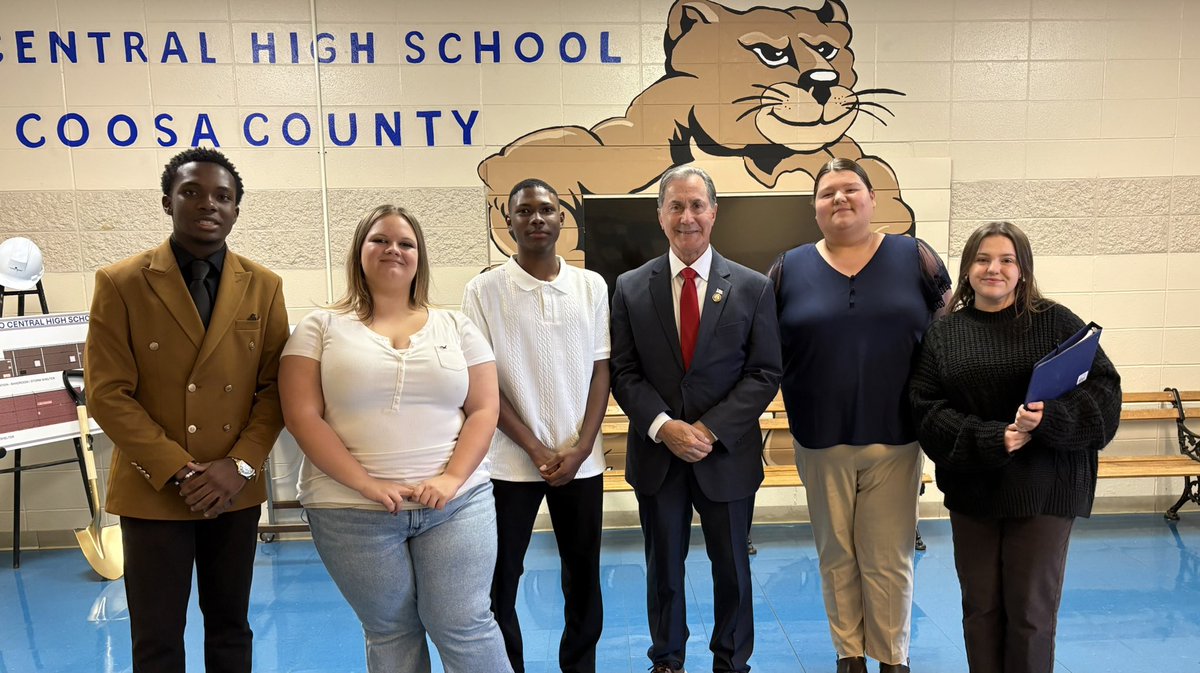
  • A group of six people pose for a photo in a school gym. A large wildcat mascot illustration and school lettering are visible on the wall behind them. There is also a display board at the left with text.
    A group of six people pose for a photo in a school gym. A large wildcat mascot illustration and school lettering are visible on the wall behind them. There is also a display board at the left with text.View post
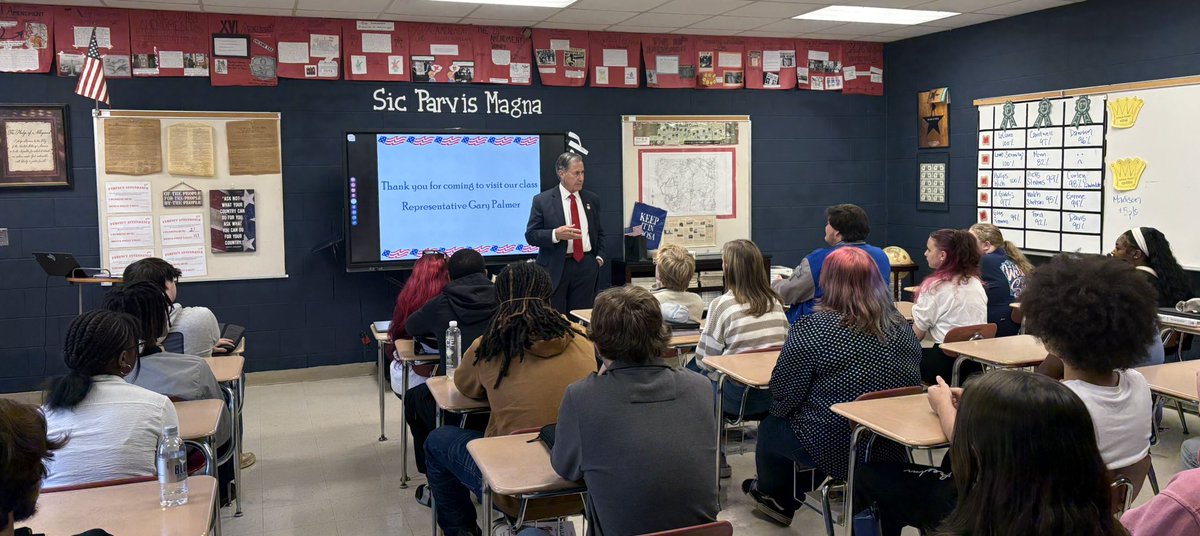
  • A man in a suit speaks to students seated at desks in a classroom. The room has educational displays, a wall-mounted screen, maps, and a whiteboard with text.
    A man in a suit speaks to students seated at desks in a classroom. The room has educational displays, a wall-mounted screen, maps, and a whiteboard with text.View post
  • A large group of students and adults pose for a photo in a classroom. A man in a suit stands near the center, with classroom displays, desks, and text visible in the background.
    A large group of students and adults pose for a photo in a classroom. A man in a suit stands near the center, with classroom displays, desks, and text visible in the background.View post
  • A classroom scene where a suited adult speaks with three teenage students near a large digital map display and wall-mounted maps. Other students, desks, and classroom supplies are visible. There is text on the display and wall.
    A classroom scene where a suited adult speaks with three teenage students near a large digital map display and wall-mounted maps. Other students, desks, and classroom supplies are visible. There is text on the display and wall.View post
About the descriptions

Written by a vision model and may be wrong. Open the post to see the original. Five are shown; the toggle shows the rest.

Back to topNext: Methods and sources

Methods and sources

How this page was made. Profile built Oct 28, 2026; site last built Oct 28, 2026. Every number on the page is computed from the sources listed here, by the same rules for every official; nothing is written by hand.

The headline

The headline is the measure on which Palmer is most unusual among House Republicans, chosen by one rule for every official of every party. The candidates are the rate of each kind of statement and of extreme labels, party unity, attendance, the small-donor share, the in-state share and total receipts of the latest cycle, the share of sponsored bills that got out of committee, talk-to-bills agreement, and the CSIP score’s place within the party group.

The builder ranks every measure within the same peer group the page compares it with, and writes each official’s percentile: the share of the group below the value, ties counting half, so 0.5 is the median and a value shared by many never ranks first. A measure’s score is how far that percentile sits from the median (0 in the middle, 0.5 at either end), and the highest score leads if it is above 0.25, outside the middle half of the group. Scores within 0.03 of each other are a tie, broken in this order: votes against the party majority, kinds of statement, ideology, roll calls missed, small donations, in-state money, legislation, agreement, extreme labels, receipts.

A measure counts only with at least 200 statements, 100 roll calls or 5 sponsored bills behind it and a peer group of at least 10. Two things never lead: high party unity or attendance, where most members sit, and a high rate of a kind of statement backed by fewer than 10 statements. When nothing qualifies, the headline is a neutral fact instead: statements classified, or years in office. The wording always names the direction (“in the bottom 5% of …”, “votes against the majority of …”).


Identifiers

Profile id
P000609
Bioguide
P000609
FEC candidate ids
H4AL06098

Bulk files with the same data for every official:

Freshness of this profile’s data

  • What politicians sayOct 27, 20261 days agoMembers of Congress: tweets since 2017; press releases, newsletters and floor speeches since 2022. State legislators: tweets since May 2024. Governors: tweets since January 2025. Labels from an LLM classifier.
  • Roll calls (Congress)Sep 30, 202628 days agoVoteview roll calls, 113th Congress (2013) on.
  • Bills (Congress)Oct 22, 20266 days agoGovInfo BILLSTATUS: sponsors, cosponsors, actions, CRS policy area.
  • Campaign money (FEC)Oct 22, 20266 days agoFEC committee financial summaries (totals, small donations) and itemized contributions (donor counts, states, employers), cycles 2020-2026; aggregates only.
  • Ideology (CSIP)Oct 25, 20263 days agoCommon-Space Ideal Points (CSIP), current validated run.
  • WebsitesOct 25, 20263 days agoWeekly crawls of federal sites since April 2026; monthly state crawls since June 2026.
  • ImagesOct 28, 2026todayImages in members' tweets with vision-model descriptions.

How the measures work

What politicians say
Every post, press release, newsletter and congressional floor speech is read by a language model and marked for personal attacks, policy criticism, policy discussion, bipartisanship and credit claiming. A statement can be in several. Rates are shares of statements in the window. The methods paper.
Extreme labels
A statement has an extreme label when it calls a politician, party or policy “far left”, “far right”, “MAGA”, “extreme”, “radical”, “woke”, “fascist” or “communist”. The target is who the label is aimed at.
Policy areas and agreement
Statements and bills share 25 Congressional Research Service policy areas (state bills are assigned by a language model). Agreement is 1 − Jensen–Shannon distance between the two distributions, shown with at least 20 policy statements and 5 bills.
Ideology (CSIP)
Common-Space Ideal Points place federal and state officials on one left–right scale, estimated jointly from roll calls, campaign contributions and the text of statements, with standard errors. Only a validated run is shown. The methods paper.
Campaign money
Campaigns report by name only donors who give more than $200 in a cycle; smaller gifts are reported as one total. Federal totals and the small-donor share come from the FEC’s financial summaries of each campaign committee. Donor counts, donor states, employers and occupations cover itemized donors only. State filings report no small-gift totals, so state figures are itemized only. The lab never publishes donor names.
Votes and key votes
Attendance, party unity and the count of votes against the majority of an official’s own party come from roll calls (Voteview for Congress, chamber records for the states). Key votes are final-passage or override votes that became law, were decided by under 10%, saw at least 10% of a party vote against its majority, or concerned one of the 25 bills most mentioned in officials’ statements.
Peers and ranks
Comparisons are with the same party, chamber and level (for example House Democrats); state legislators are compared within their state and chamber for votes. Every comparison names its group. Rank 1 is the highest value in the group; tied values share the average of their ranks, and the percentile is the share of the group below the value, ties counting half.

America’s Political Pulse · Polarization Research Lab

Back to top