Skip to content

Democrat · U.S. House, California’s 46th district

2024 presidential vote here Harris +17.7 (the district as drawn for 2024; The Downballot)Won 2024 with 63.4%, by 26.9 points

Serving since Jan 3, 2017119th Congress (2025–27)next election Nov 7, 2028

Bioguide C001110FEC H6CA46116

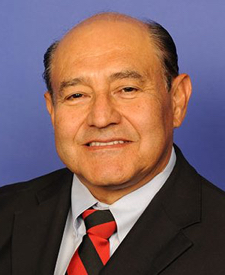
Portrait of J. Correa, rendered as a two-tone print
Official portrait
0.6%
of statements contain a personal attack, in the bottom 5% of House Democrats

0.6% of 865 statements contain a personal attack (5 statements); the average for House Democrats is 6.5%. Ranks 209th of 216, where 1st is the highest rate.

An AI model reads each of Correa’s press releases, Congressional Record speeches, newsletters and posts on X and marks whether it attacks a person’s character, integrity or loyalty. The rate is the share of statements marked; it is compared with the average among House Democrats and ranked against the same group.

At a glance

6 measures against House Democrats. 1.0% of Correa’s individual money in the 2026 cycle came in gifts of $200 or less, in the bottom 5% of House Democrats (median 13%). 18% of Correa’s statements use bipartisan language, 1.9 times the House Democrat average of 9.7%.

The measures on which Correa sits furthest from the middle of House Democrats, each against the same group, with the CSIP score when there is one. Every number is explained in its own section below.

Personal attacks

0.6%

House Democrats average 6.5% · ranks 209th of 216

Small donations, 2026

1.0%

House Democrats’ median 13% · ranks 208th of 214

Bipartisanship

18%

House Democrats average 9.7% · ranks 20th of 216

Credit claiming

34%

House Democrats average 23% · ranks 23rd of 216

Attendance

93.3%

House Democrats average 96.9% · ranks 196th of 217 · 687 roll calls

CSIP ideology

−0.64

More conservative than 89% of House Democrats · ± 0.02

Peer group: House Democrats. Rank 1 is the highest value in the group; the thick bar is Correa, the thin grey bar the peer average. The headline is the measure on which Correa is most unusual among peers (Methods, §08).

The district at a glance

Congressional District 46 (119th Congress): the district as drawn for 2024

The district’s page

Of every 100 people

757,342 people (±4,024)

District

United States

California

Race and ethnicity, of every 100 people: district, California and the United States
GroupDistrictCaliforniaU.S.
White153457
Black2512
Hispanic or Latino664019
Asian16156
Another race or more than one365

Hispanic or Latino people may be of any race; the other groups are not Hispanic.

Compared with the typical House district

Where it falls among the House districts: the centre rule is the median, the edges the lowest and the highest

← Lower than mostHigher than most →
Median household income
$89,900typical $78,700
Below the poverty line
13%typical 12%
Bachelor’s degree or moreadults 25 and over
23%typical 33%
Median age
35.1typical 39.1
Aged 65 and over
12%typical 17%
Born outside the U.S.
38%typical 10%
Veteranscivilian adults
2.4%typical 6.3%
Living in rural areas2020 Census
0.0%typical 15%
bottom 10%mediantop 10%
Show the data
Where it falls among the House districts
MeasureHere±The typical House districtPercentileStanding
Median household income$89,900±$1,773$78,70067higher than in 2 of every 3 House districts
Below the poverty line13%±0.612%57near the middle of the House districts
Bachelor’s degree or more23%±0.633%8fewer than in 9 of every 10 House districts
Median age35.1±0.339.111lower than in 3 of every 4 House districts
Aged 65 and over12%±0.317%5fewer than in 9 of every 10 House districts
Born outside the U.S.38%±0.610%97more than in 19 of every 20 House districts
Veterans2.4%±0.26.3%4fewer than in 19 of every 20 House districts
Living in rural areas0.0%—15%4fewer than in 19 of every 20 House districts

Source: ACS 2020–2024 5-year estimates (Census Bureau); rural share from the 2020 Census.

About these figures

The figures from the American Community Survey are estimates from a sample, not a count. The ± beside each is its 90 percent margin of error: nine times in ten the true value lies within that range. In small districts the margins are wide, so a gap of a few points from California may be noise. Shares are of everyone in the district, except education (adults 25 and over), poverty (people whose poverty status is known) and veterans (civilian adults).

These are the Census Bureau’s own estimates for the district; margins on shares are approximated from the counts’ margins.

The rural share counts the people living outside the urban areas the Census Bureau drew from the 2020 Census; it is a count, with no margin of error.

Back to topNext: What politicians say

What Correa says

Correa attacks opponents personally less than 96% of House Democrats. Personal attacks in 0.6% of 865 statements, against 6.5% for the average House Democrat; 209th of 216.

An AI model reads each of Correa’s 865 statements in the 119th Congress (403 posts on X, 175 Congressional Record speeches, 166 press releases, 121 newsletters) and marks the kinds of statement it contains: a personal attack, criticism of a policy, discussion of policy, bipartisanship, credit claiming, and extreme labels. A statement can carry several. Every rate is compared with the average for House Democrats and ranked among them.

Kinds of statement

Share of statements carrying each label, the 119th Congress

0%80%
Correa
Peers
Rank
Policy discussion689 statements
80%
73%
40th of 216
Credit claiming291 statements
34%
23%
23rd of 216
Policy criticism234 statements
27%
27%
120th of 216
Bipartisanship157 statements
18%
10%
20th of 216
Personal attacks5 statements
1%
7%
209th of 216
Show the data
Correa's share of statements in each category against the House Democrats average.
RowCorreaPeers
Policy discussion80%73%
Credit claiming34%23%
Policy criticism27%27%
Bipartisanship18%10%
Personal attacks1%7%
865

statements classified

403 posts on X, 175 Congressional Record speeches, 166 press releases, 121 newsletters.

posts on X: 403 (46.6%)posts on X 403Congressional Record speeches: 175 (20.2%)press releases: 166 (19.2%)newsletters: 121 (14.0%)
Show the data
Correa's statements by source
PartValue
posts on X403
Congressional Record speeches175
press releases166
newsletters121
How to read the bars

The thick bar is Correa, in the colour of that kind of statement; the thin grey bar is the average House Democrats. A longer thick bar means Correa does this more than peers. Rank 1 is the highest rate in the group.

Extreme labels

Correa used extreme labels in 1.2% of statements, below the peer average. 10 statements, most often aimed at Medicaid cuts; peers 1.9%.

  1. “extreme”7
  2. “communist”2
  3. “radical”1

Who gets the labels

Targets named alongside an extreme label, by number of statements

  1. Medicaid cuts2
  2. Republican budget2
  3. food assistance1
  4. food assistance cuts1
  5. GOP1
What an extreme label is

Calls a politician, a party or a policy “far left”, “far right”, “MAGA”, “extreme”, “radical”, “woke”, “fascist” or “communist”. The target is who or what the label was aimed at. The lists show the five most used labels and targets; the toggle shows the rest.

Month by month

Share of statements per month, the 119th Congress

Statements2025-01: 532025-02: 232025-03: 602025-04: 522025-05: 402025-06: 662025-07: 492025-08: 202025-09: 342025-10: 202025-11: 222025-12: 292026-01: 232026-02: 242026-03: 372026-04: 462026-05: 422026-06: 332026-07: 262026-08: 242026-09: 502026-10: 512026-11: 41peak 66 · Jun ’25Personal attackspeak 5.4% · Mar ’26 · latest 0.0%Personal attacks, 2025-01: 0.0% of 53Personal attacks, 2025-02: 0.0% of 23Personal attacks, 2025-03: 0.0% of 60Personal attacks, 2025-04: 0.0% of 52Personal attacks, 2025-05: 0.0% of 40Personal attacks, 2025-06: 0.0% of 66Personal attacks, 2025-07: 0.0% of 49Personal attacks, 2025-08: 0.0% of 20Personal attacks, 2025-09: 2.9% of 34Personal attacks, 2025-10: 0.0% of 20Personal attacks, 2025-11: 0.0% of 22Personal attacks, 2025-12: 0.0% of 29Personal attacks, 2026-01: 0.0% of 23Personal attacks, 2026-02: 0.0% of 24Personal attacks, 2026-03: 5.4% of 37Personal attacks, 2026-04: 0.0% of 46Personal attacks, 2026-05: 0.0% of 42Personal attacks, 2026-06: 0.0% of 33Personal attacks, 2026-07: 3.9% of 26Personal attacks, 2026-08: 0.0% of 24Personal attacks, 2026-09: 0.0% of 50Personal attacks, 2026-10: 2.0% of 51Personal attacks, 2026-11: 0.0% of 41Policy criticismpeak 60.0% · Aug ’25 · latest 4.9%Policy criticism, 2025-01: 32.1% of 53Policy criticism, 2025-02: 30.4% of 23Policy criticism, 2025-03: 38.3% of 60Policy criticism, 2025-04: 17.3% of 52Policy criticism, 2025-05: 22.5% of 40Policy criticism, 2025-06: 37.9% of 66Policy criticism, 2025-07: 32.6% of 49Policy criticism, 2025-08: 60.0% of 20Policy criticism, 2025-09: 32.4% of 34Policy criticism, 2025-10: 35.0% of 20Policy criticism, 2025-11: 31.8% of 22Policy criticism, 2025-12: 24.1% of 29Policy criticism, 2026-01: 26.1% of 23Policy criticism, 2026-02: 25.0% of 24Policy criticism, 2026-03: 10.8% of 37Policy criticism, 2026-04: 39.1% of 46Policy criticism, 2026-05: 21.4% of 42Policy criticism, 2026-06: 30.3% of 33Policy criticism, 2026-07: 34.6% of 26Policy criticism, 2026-08: 25.0% of 24Policy criticism, 2026-09: 24.0% of 50Policy criticism, 2026-10: 3.9% of 51Policy criticism, 2026-11: 4.9% of 41Policy discussionpeak 100.0% · Feb ’25 · latest 82.9%Policy discussion, 2025-01: 88.7% of 53Policy discussion, 2025-02: 100.0% of 23Policy discussion, 2025-03: 85.0% of 60Policy discussion, 2025-04: 75.0% of 52Policy discussion, 2025-05: 70.0% of 40Policy discussion, 2025-06: 78.8% of 66Policy discussion, 2025-07: 73.5% of 49Policy discussion, 2025-08: 85.0% of 20Policy discussion, 2025-09: 82.3% of 34Policy discussion, 2025-10: 85.0% of 20Policy discussion, 2025-11: 59.1% of 22Policy discussion, 2025-12: 69.0% of 29Policy discussion, 2026-01: 78.3% of 23Policy discussion, 2026-02: 66.7% of 24Policy discussion, 2026-03: 73.0% of 37Policy discussion, 2026-04: 89.1% of 46Policy discussion, 2026-05: 73.8% of 42Policy discussion, 2026-06: 72.7% of 33Policy discussion, 2026-07: 92.3% of 26Policy discussion, 2026-08: 83.3% of 24Policy discussion, 2026-09: 82.0% of 50Policy discussion, 2026-10: 82.3% of 51Policy discussion, 2026-11: 82.9% of 41Bipartisanshippeak 30.4% · Feb ’25 · latest 0.0%Bipartisanship, 2025-01: 22.6% of 53Bipartisanship, 2025-02: 30.4% of 23Bipartisanship, 2025-03: 28.3% of 60Bipartisanship, 2025-04: 11.5% of 52Bipartisanship, 2025-05: 22.5% of 40Bipartisanship, 2025-06: 22.7% of 66Bipartisanship, 2025-07: 12.2% of 49Bipartisanship, 2025-08: 20.0% of 20Bipartisanship, 2025-09: 20.6% of 34Bipartisanship, 2025-10: 10.0% of 20Bipartisanship, 2025-11: 0.0% of 22Bipartisanship, 2025-12: 17.2% of 29Bipartisanship, 2026-01: 17.4% of 23Bipartisanship, 2026-02: 16.7% of 24Bipartisanship, 2026-03: 24.3% of 37Bipartisanship, 2026-04: 15.2% of 46Bipartisanship, 2026-05: 28.6% of 42Bipartisanship, 2026-06: 21.2% of 33Bipartisanship, 2026-07: 23.1% of 26Bipartisanship, 2026-08: 8.3% of 24Bipartisanship, 2026-09: 20.0% of 50Bipartisanship, 2026-10: 11.8% of 51Bipartisanship, 2026-11: 0.0% of 41Credit claimingpeak 43.2% · Mar ’26 · latest 21.9%Credit claiming, 2025-01: 41.5% of 53Credit claiming, 2025-02: 34.8% of 23Credit claiming, 2025-03: 40.0% of 60Credit claiming, 2025-04: 36.5% of 52Credit claiming, 2025-05: 35.0% of 40Credit claiming, 2025-06: 31.8% of 66Credit claiming, 2025-07: 38.8% of 49Credit claiming, 2025-08: 20.0% of 20Credit claiming, 2025-09: 32.4% of 34Credit claiming, 2025-10: 20.0% of 20Credit claiming, 2025-11: 13.6% of 22Credit claiming, 2025-12: 27.6% of 29Credit claiming, 2026-01: 34.8% of 23Credit claiming, 2026-02: 20.8% of 24Credit claiming, 2026-03: 43.2% of 37Credit claiming, 2026-04: 21.7% of 46Credit claiming, 2026-05: 40.5% of 42Credit claiming, 2026-06: 36.4% of 33Credit claiming, 2026-07: 42.3% of 26Credit claiming, 2026-08: 41.7% of 24Credit claiming, 2026-09: 32.0% of 50Credit claiming, 2026-10: 39.2% of 51Credit claiming, 2026-11: 21.9% of 41Extreme labelspeak 5.8% · Apr ’25 · latest 2.4%Extreme labels, 2025-01: 0.0% of 53Extreme labels, 2025-02: 0.0% of 23Extreme labels, 2025-03: 3.3% of 60Extreme labels, 2025-04: 5.8% of 52Extreme labels, 2025-05: 2.5% of 40Extreme labels, 2025-06: 0.0% of 66Extreme labels, 2025-07: 2.0% of 49Extreme labels, 2025-08: 0.0% of 20Extreme labels, 2025-09: 0.0% of 34Extreme labels, 2025-10: 0.0% of 20Extreme labels, 2025-11: 0.0% of 22Extreme labels, 2025-12: 0.0% of 29Extreme labels, 2026-01: 4.3% of 23Extreme labels, 2026-02: 0.0% of 24Extreme labels, 2026-03: 0.0% of 37Extreme labels, 2026-04: 0.0% of 46Extreme labels, 2026-05: 0.0% of 42Extreme labels, 2026-06: 0.0% of 33Extreme labels, 2026-07: 3.9% of 26Extreme labels, 2026-08: 0.0% of 24Extreme labels, 2026-09: 0.0% of 50Extreme labels, 2026-10: 0.0% of 51Extreme labels, 2026-11: 2.4% of 41Jan ’25Jul ’25Jan ’26Jul ’26Nov ’26
Show the data
Monthly rates for Correa, each row shaded against its own peak, with statement volume. Months with fewer than 10 statements are left blank.
ColumnStatementsPersonal attacksPolicy criticismPolicy discussionBipartisanshipCredit claimingExtreme labels
Jan ’25530.0%32.1%88.7%22.6%41.5%0.0%
Feb ’25230.0%30.4%100.0%30.4%34.8%0.0%
Mar ’25600.0%38.3%85.0%28.3%40.0%3.3%
Apr ’25520.0%17.3%75.0%11.5%36.5%5.8%
May ’25400.0%22.5%70.0%22.5%35.0%2.5%
Jun ’25660.0%37.9%78.8%22.7%31.8%0.0%
Jul ’25490.0%32.6%73.5%12.2%38.8%2.0%
Aug ’25200.0%60.0%85.0%20.0%20.0%0.0%
Sep ’25342.9%32.4%82.3%20.6%32.4%0.0%
Oct ’25200.0%35.0%85.0%10.0%20.0%0.0%
Nov ’25220.0%31.8%59.1%0.0%13.6%0.0%
Dec ’25290.0%24.1%69.0%17.2%27.6%0.0%
Jan ’26230.0%26.1%78.3%17.4%34.8%4.3%
Feb ’26240.0%25.0%66.7%16.7%20.8%0.0%
Mar ’26375.4%10.8%73.0%24.3%43.2%0.0%
Apr ’26460.0%39.1%89.1%15.2%21.7%0.0%
May ’26420.0%21.4%73.8%28.6%40.5%0.0%
Jun ’26330.0%30.3%72.7%21.2%36.4%0.0%
Jul ’26263.9%34.6%92.3%23.1%42.3%3.9%
Aug ’26240.0%25.0%83.3%8.3%41.7%0.0%
Sep ’26500.0%24.0%82.0%20.0%32.0%0.0%
Oct ’26512.0%3.9%82.3%11.8%39.2%0.0%
Nov ’26410.0%4.9%82.9%0.0%21.9%2.4%
How to read the strips

Each row is one kind of statement; each cell is a month, shaded against that row’s own peak (darker = closer to the peak), with the peak and the latest value written at the right. The top row counts statements. The strip covers every month of the 119th Congress, the same span as the rates above, including months with no statements. A month with fewer than 10 statements is hatched, not shaded: one or two posts would swing its rate to 0% or 100%.

In Correa’s words

Real statements from the classifier’s example set, with the labels it assigned

Bipartisanship

Bringing Home Federal Dollars For YOU [Rep. Lou Correa banner] Dear Neighbor, Orange County is getting results. This week, I was proud to bring home federal dollars used to improve the safety and well-being of our neighbors here in Orange County. I also took some time to engage with our next gene…

Oct 17, 2026 · Newsletters · policy discussion; bipartisanship; credit claiming; Water Resources Development; Health; Environmental Protection; Taxation; Labor and Employment; Education

Personal attacks

Fighting for Main Street [Rep. Lou Correa banner] Dear Neighbor, I spent this week working diligently to stand up for our neighbors in Orange County and across California. Whether it be calling out President Trump’s outrageous remarks attacking our neighbors in Los Angeles and San Diego to spotli…

Oct 10, 2026 · Newsletters · personal attacks; policy discussion; credit claiming; Health; Government Operations and Politics; target: Donald Trump

Extreme label

The text of this post is on X; follow the source link to read it.

Nov 6, 2026 · Posts on X · policy discussion; Immigration; extreme label “extreme” aimed at Trump policies · Source

Examples by category

Up to five recent statements in each category

Category

Overtly questions a named person’s character, integrity or loyalty, or calls them names. Criticising a record or a policy does not count.

  1. Newsletters

    Fighting for Main Street [Rep. Lou Correa banner] Dear Neighbor, I spent this week working diligently to stand up for our neighbors in Orange County and across California. Whether it be calling out President Trump’s outrageous remarks attacking our neighbors in Los Angeles and San Diego to spotlighting exemplary community members and providing you with critical resources, I took time to make sure no neighbor was left voiceless. As I continue to bring your stories to the halls of Congress, I wanted to take a moment to show you what I’ve been working on. STANDING UP FOR OUR CALIFORNIA NEIGHB

    personal attacks · policy discussion · credit claiming · Health · Government Operations and Politics · target: Donald Trump

  2. Press releases

    CORREA VOTES NO ON INSIDER TRADING BILL TIED TO VOTER SUPPRESSION WASHINGTON – Today, U.S. Representative Lou Correa (CA–46) released the following statement on his ‘no’ vote on the Stop Insider Trading Act, which includes a restrictive voter ID requirement from the SAVE America Act that will suppress voters across the country. “I don’t trade individual stocks, and I don’t think other members of Congress or the President should either. I support a clean, serious bill banning stock trading by members of Congress and the President. That's not what this is. This bill does absolutely nothing abou

    personal attacks · policy discussion · credit claiming · Government Operations and Politics · Civil Rights and Liberties, Minority Issues · target: Donald TrumpSource

  3. Newsletters

    3.27.2026 Washington Update [Rep. Lou Correa banner] Hello, I hope this message finds you well. It’s been a busy few weeks both here at home and in Washington, D.C., and I want to take a moment to share some updates on the work I’ve been doing on your behalf. DHS Funding Standoff Throughout this week, I’ve been demanding that ICE respect Americans’ Constitutional Rights for families in Orange County and throughout the country. I will only consider voting for a Department of Homeland Security funding bill that at the minimum: * Bans the deportation or detention of U.S. Citizens * Prohibit

    personal attacks · policy discussion · bipartisanship · credit claiming · Civil Rights and Liberties, Minority Issues · Commerce · Education · Immigration · Finance and Financial Sector · Housing and Community Development · Labor and Employment · Public Lands and Natural Resources · Transportation and Public Works · target: Cesar Chavez

  4. Press releases

    DEM LEADER JEFFRIES JOINS CORREA, TRAN FOR VETERAN ROUNDTABLE BUENA PARK, CA — Yesterday, House Democratic Leader Hakeem Jeffries (NY-08) joined U.S. Representatives Lou Correa (CA-46) and Derek Tran (CA-45), local elected officials, and community representatives from Veteran service organizations (VSOs) for a discussion about the Trump Administration’s broken promises to care for those who have served our country. The lawmakers heard the unique challenges facing Veterans and servicemembers, and highlighted their efforts to support troops in Orange County and across the country. “Servicemembe

    personal attacks · policy discussion · bipartisanship · credit claiming · Armed Forces and National Security · International Affairs · Education · Immigration · Health · Housing and Community Development · target: Donald TrumpSource

  5. Newsletters

    Should Congress force the Administration to release the Epstein Files? Dear neighbor, Sunshine is the best disinfectant. In this country, everyone is treated equally under the law-no matter who they are or who they're friends with. As you may know Jeffery Epstein, convicted sex offender, died in prison while awaiting trial for sex trafficking charges. I have consistently called for the release of the Epstein files. I want all people involved in sex trafficking to be brought to justice, irrespective of your wealth or political influence. Once again, Congress is proposing a resolution that wo

    personal attacks · policy discussion · Crime and Law Enforcement · Government Operations and Politics · target: Jeffery Epstein

All 865 statements

Newest first, the 119th Congress

The full feed

Five statements at a time, newest first; filters apply to the statements loaded so far. Export saves the statements that match. Sources: 403 posts on X, 175 Congressional Record speeches, 166 press releases, 121 newsletters.

Back to topNext: Policy

Policy

Immigration is what Correa talks about most: 32% of policy statements, 3.1 times the peer share. Talk and legislation agree at 0.71 on a 0–1 scale (House Democrats average 0.67; 37th of 216).

Each policy statement is tagged by the AI model with one or more of 25 policy areas from the Congressional Research Service list, so the shares say what Correa talks about. The bills Correa sponsors and cosponsors carry the same areas, so the two can be compared.

What Correa talks about

Share of policy statements by area, the 119th Congress

0%35%
Correa
Peers
Immigration221 statements
32%
10%
Health194 statements
28%
25%
Armed Forces and National Security185 statements
27%
16%
Economics and Public Finance128 statements
19%
20%
Government Operations and Politics109 statements
16%
20%
Show the data
Policy areas Correa talks about, as a share of policy statements, against the House Democrats average.
RowCorreaPeers
Immigration32%10%
Health28%25%
Armed Forces and National Security27%16%
Economics and Public Finance19%20%
Government Operations and Politics16%20%
How to read the bars

The thick bar is the share of Correa’s policy statements in an area; the thin grey bar is the average share for House Democrats. A statement counts once in each of its areas, so shares can add to more than 100%. The five largest areas are shown; the toggle shows the rest.

Talks about · legislates on

Left: share of statements by policy area. Right: share of bills. Areas in order of their share of statements; both sides run from 0 to 35%. Grey ticks are the House Democrats averages.

Talks aboutLegislates onImmigrationImmigration, talks about: 32% (House Democrats 10%)32%Immigration, legislates on: 13% (House Democrats 4%)13%HealthHealth, talks about: 28% (House Democrats 25%)28%Health, legislates on: 13% (House Democrats 16%)13%Armed Forces and NationalSecurityArmed Forces and National Security, talks about: 27% (House Democrats 16%)27%Armed Forces and National Security, legislates on: 7% (House Democrats 7%)7%Economics and Public FinanceEconomics and Public Finance, talks about: 19% (House Democrats 20%)19%Economics and Public Finance, legislates on: 1% (House Democrats 1%)1%Government Operations andPoliticsGovernment Operations and Politics, talks about: 16% (House Democrats 20%)16%Government Operations and Politics, legislates on: 12% (House Democrats 11%)12%
Show the data
Correa's share of statements against share of bills in each policy area.
AreaTalks aboutHouse Democrats, talks aboutLegislates onHouse Democrats, legislates on
Immigration32%10%13%4%
Health28%25%13%16%
Armed Forces and National Security27%16%7%7%
Economics and Public Finance19%20%1%1%
Government Operations and Politics16%20%12%11%
0.71

talk-to-bills agreement, 0 to 1

House Democrats average 0.67. Ranks 37th of 216.

What agreement means, and what it doesn’t

Agreement is 1 minus the distance between the two distributions (Jensen–Shannon): 1 means Correa legislates on exactly the areas Correa talks about, in the same proportions; 0 means no overlap. It does not say whether the bills match the positions in the statements, only the subjects. Bills Correa sponsored count fully, cosponsored bills a quarter. Shown with at least 20 policy statements and 5 bills.

Back to topNext: Ideology

Ideology

Correa sits at −0.64 on the CSIP scale, left of 0, more conservative than 89% of House Democrats. Approximate range −0.66 to −0.62, which understates the uncertainty; from 1,143 donors and 4,962 roll calls.

CSIP, the lab’s Common-Space Ideal Point, places every official, federal and state, on one left–right scale, estimated from roll-call votes, who gives money to whom, and the text of statements. Negative is left of 0, positive right of it; 0 is the centre of the scale, not a definition of “moderate”.

−0.64

CSIP ideal point

Approximate range −0.66 to −0.62. From 1,143 donors and 4,962 roll calls. Run 2026-11-03T100151. Blue is left of 0, red right of 0.

← More liberalMore conservative →0Correa −0.6House Democrats −1.0All House +0.4

The outlined dot is Correa, coloured by its side of 0 (blue left, red right, deeper further out); the bar through it is the approximate range (±1.96 standard errors), which understates the uncertainty; the grey ticks below are the medians of Correa’s groups. 0 is the centre of the scale, not “moderate” by definition.

What this means, and what it doesn’t

The score summarises how an official votes, who funds them and how they talk, relative to everyone else. It does not grade positions as good or bad, and two officials with the same score can differ on any single issue. The ± range is 1.96 standard errors, which understates the uncertainty: scores whose ranges overlap may not differ at all, and even scores whose ranges do not overlap may not differ.

Where Correa sits

Every official in each group, on the CSIP scale

−2.0−1.00.0+1.0+2.0← More liberalMore conservative →House Democratsmedian −1.0Correa −0.6All Housemedian +0.4
Show the data
Correa's CSIP score of −0.64 placed against House Democrats, All House.
GroupOfficialsMedianShare left of Correa
House Democrats217−1.088%
All House439+0.444%
How to read the strips

Every small dot is one official on the same scale, coloured by its own score (blue left of 0, red right of 0, grey at 0, deeper further out) and spread up and down only to keep dots apart; where a group is crowded the dots overlap, and darker patches mean more officials. The large outlined dot is Correa in every row; the rule is each group’s median. The table under the figure gives the share of each group to the left of Correa.

Back to topNext: Money

Money

Correa raised $1.5M in the 2026 cycle, below the House Democrats’ median of $2.0M. 1.0% of individual money came in gifts of $200 or less. 68% of itemized individual money came from California.

Campaign money from Federal Election Commission filings, as aggregates only; the lab never shows an individual donor. Campaigns must report by name every person who gives them more than $200 in a cycle (“itemized”); smaller gifts are reported only as one total (“unitemized”), so donor counts, donor states, employers and occupations describe itemized donors only.

Election cycle
$1.5M

raised in the 2026 cycle

From 343 itemized donors. House Democrats’ median $2.0M.

Where the money came from

Each square is one percent of 2026-cycle receipts, from FEC summary totals.

Itemized individual (over $200): $489.2K (32.8%)Itemized individual (over $200): $489.2K (32.8%)Itemized individual (over $200): $489.2K (32.8%)Itemized individual (over $200): $489.2K (32.8%)Itemized individual (over $200): $489.2K (32.8%)Itemized individual (over $200): $489.2K (32.8%)Itemized individual (over $200): $489.2K (32.8%)Itemized individual (over $200): $489.2K (32.8%)Itemized individual (over $200): $489.2K (32.8%)Itemized individual (over $200): $489.2K (32.8%)Itemized individual (over $200): $489.2K (32.8%)Itemized individual (over $200): $489.2K (32.8%)Itemized individual (over $200): $489.2K (32.8%)Itemized individual (over $200): $489.2K (32.8%)Itemized individual (over $200): $489.2K (32.8%)Itemized individual (over $200): $489.2K (32.8%)Itemized individual (over $200): $489.2K (32.8%)Itemized individual (over $200): $489.2K (32.8%)Itemized individual (over $200): $489.2K (32.8%)Itemized individual (over $200): $489.2K (32.8%)Itemized individual (over $200): $489.2K (32.8%)Itemized individual (over $200): $489.2K (32.8%)Itemized individual (over $200): $489.2K (32.8%)Itemized individual (over $200): $489.2K (32.8%)Itemized individual (over $200): $489.2K (32.8%)Itemized individual (over $200): $489.2K (32.8%)Itemized individual (over $200): $489.2K (32.8%)Itemized individual (over $200): $489.2K (32.8%)Itemized individual (over $200): $489.2K (32.8%)Itemized individual (over $200): $489.2K (32.8%)Itemized individual (over $200): $489.2K (32.8%)Itemized individual (over $200): $489.2K (32.8%)Itemized individual (over $200): $489.2K (32.8%)PACs and other committees: $838.7K (56.2%)PACs and other committees: $838.7K (56.2%)PACs and other committees: $838.7K (56.2%)PACs and other committees: $838.7K (56.2%)PACs and other committees: $838.7K (56.2%)PACs and other committees: $838.7K (56.2%)PACs and other committees: $838.7K (56.2%)PACs and other committees: $838.7K (56.2%)PACs and other committees: $838.7K (56.2%)PACs and other committees: $838.7K (56.2%)PACs and other committees: $838.7K (56.2%)PACs and other committees: $838.7K (56.2%)PACs and other committees: $838.7K (56.2%)PACs and other committees: $838.7K (56.2%)PACs and other committees: $838.7K (56.2%)PACs and other committees: $838.7K (56.2%)PACs and other committees: $838.7K (56.2%)PACs and other committees: $838.7K (56.2%)PACs and other committees: $838.7K (56.2%)PACs and other committees: $838.7K (56.2%)PACs and other committees: $838.7K (56.2%)PACs and other committees: $838.7K (56.2%)PACs and other committees: $838.7K (56.2%)PACs and other committees: $838.7K (56.2%)PACs and other committees: $838.7K (56.2%)PACs and other committees: $838.7K (56.2%)PACs and other committees: $838.7K (56.2%)PACs and other committees: $838.7K (56.2%)PACs and other committees: $838.7K (56.2%)PACs and other committees: $838.7K (56.2%)PACs and other committees: $838.7K (56.2%)PACs and other committees: $838.7K (56.2%)PACs and other committees: $838.7K (56.2%)PACs and other committees: $838.7K (56.2%)PACs and other committees: $838.7K (56.2%)PACs and other committees: $838.7K (56.2%)PACs and other committees: $838.7K (56.2%)PACs and other committees: $838.7K (56.2%)PACs and other committees: $838.7K (56.2%)PACs and other committees: $838.7K (56.2%)PACs and other committees: $838.7K (56.2%)PACs and other committees: $838.7K (56.2%)PACs and other committees: $838.7K (56.2%)PACs and other committees: $838.7K (56.2%)PACs and other committees: $838.7K (56.2%)PACs and other committees: $838.7K (56.2%)PACs and other committees: $838.7K (56.2%)PACs and other committees: $838.7K (56.2%)PACs and other committees: $838.7K (56.2%)PACs and other committees: $838.7K (56.2%)PACs and other committees: $838.7K (56.2%)PACs and other committees: $838.7K (56.2%)PACs and other committees: $838.7K (56.2%)PACs and other committees: $838.7K (56.2%)PACs and other committees: $838.7K (56.2%)PACs and other committees: $838.7K (56.2%)Remainder not broken out in the FEC summary (transfers, loans, refunds): $160.3K (10.7%)Remainder not broken out in the FEC summary (transfers, loans, refunds): $160.3K (10.7%)Remainder not broken out in the FEC summary (transfers, loans, refunds): $160.3K (10.7%)Remainder not broken out in the FEC summary (transfers, loans, refunds): $160.3K (10.7%)Remainder not broken out in the FEC summary (transfers, loans, refunds): $160.3K (10.7%)Remainder not broken out in the FEC summary (transfers, loans, refunds): $160.3K (10.7%)Remainder not broken out in the FEC summary (transfers, loans, refunds): $160.3K (10.7%)Remainder not broken out in the FEC summary (transfers, loans, refunds): $160.3K (10.7%)Remainder not broken out in the FEC summary (transfers, loans, refunds): $160.3K (10.7%)Remainder not broken out in the FEC summary (transfers, loans, refunds): $160.3K (10.7%)Remainder not broken out in the FEC summary (transfers, loans, refunds): $160.3K (10.7%)
  • Itemized individual (over $200)33 squares$489.2K
  • Unitemized individual (gifts of $200 or less)$5,127
  • PACs and other committees56 squares$838.7K
  • Remainder not broken out in the FEC summary (transfers, loans, refunds)11 squares$160.3K
Show the data
Sources of Correa's money, 2026 cycle, one square per percent
SourceAmountShare
Itemized individual (over $200)$489.2K32.8%
Unitemized individual (gifts of $200 or less)$5,1270.3%
PACs and other committees$838.7K56.2%
Remainder not broken out in the FEC summary (transfers, loans, refunds)$160.3K10.7%
What this means, and what it doesn’t

Totals say how much a campaign took in, not how it was spent, and they rise sharply when a seat is up for election; compare cycles with that in mind. The small-donor share understates small giving when a campaign itemizes gifts made through ActBlue or WinRed.

Receipts by cycle

Total receipts, 2020 to 2026. The grey line is the House Democrats’ median for 2026.

2020 cycle: $1.2M$1.2M20202022 cycle: $1.3M$1.3M20222024 cycle: $1.4M$1.4M20242026 cycle: $1.5M$1.5M2026House Democrats median $2.0M
Show the data
Correa's receipts by cycle against the 2026 House Democrats median.
ItemValue
2020 cycle$1.2M
2022 cycle$1.3M
2024 cycle$1.4M
2026 cycle$1.5M

Top donor states, 2026

Itemized contributions by donor state. 68% came from California.

  1. California$269.0K
  2. District of Columbia$19.6K
  3. Michigan$16.0K
  4. Virginia$15.5K
  5. Texas$10.5K

Small donations

Gifts of $200 or less as a share of individual money, by cycle. The thin grey bar is the 2026 House Democrats’ median.

0%60%
Correa
Median
2026
1%
13%
2024
1%
13%
2022
4%
13%
2020
5%
13%
Show the data
Small-donor share by cycle against the House Democrats median
RowCorreaMedian
2026 cycle1%13%
2024 cycle1%13%
2022 cycle4%13%
2020 cycle5%13%

Where itemized donors live

Individuals who gave more than $200, by donor state

Alaska: no dataAKMaine: $2,000MEVermont: no dataVTNew Hampshire: no dataNHWashington: $1,500WAIdaho: $1,000IDMontana: $1,000MTNorth Dakota: no dataNDMinnesota: no dataMNIllinois: $3,500ILWisconsin: no dataWIMichigan: $16.0KMINew York: $1,000NYRhode Island: $500RIMassachusetts: $3,500MAOregon: $1,500ORNevada: $2,000NVWyoming: no dataWYSouth Dakota: $1,000SDIowa: $1,000IAIndiana: $1,000INOhio: $3,250OHPennsylvania: $2,250PANew Jersey: $3,800NJConnecticut: $1,000CTCalifornia: $269.0KCAUtah: $500UTColorado: $1,500CONebraska: no dataNEMissouri: no dataMOKentucky: $500KYWest Virginia: no dataWVVirginia: $15.5KVAMaryland: $4,750MDDelaware: $500DEArizona: $4,500AZNew Mexico: $500NMKansas: $500KSArkansas: no dataARTennessee: $3,000TNNorth Carolina: $2,000NCSouth Carolina: $1,500SCDistrict of Columbia: $19.6KDCOklahoma: no dataOKLouisiana: no dataLAMississippi: no dataMSAlabama: $1,500ALGeorgia: $3,000GAHawaii: no dataHITexas: $10.5KTXFlorida: $9,000FL
Show the data
Correa's itemized individual contributions by donor state, 2026 cycle
StateValue
California$269.0K
District of Columbia$19.6K
Michigan$16.0K
Virginia$15.5K
Texas$10.5K
Florida$9,000
Maryland$4,750
Arizona$4,500
New Jersey$3,800
Illinois$3,500
Massachusetts$3,500
Ohio$3,250
Tennessee$3,000
Georgia$3,000
Pennsylvania$2,250
Maine$2,000
Nevada$2,000
North Carolina$2,000
Washington$1,500
Oregon$1,500
Colorado$1,500
South Carolina$1,500
Alabama$1,500
Idaho$1,000
Montana$1,000
New York$1,000
South Dakota$1,000
Iowa$1,000
Indiana$1,000
Connecticut$1,000
Rhode Island$500
Utah$500
Kentucky$500
Delaware$500
New Mexico$500
Kansas$500
AlaskaNo data
VermontNo data
New HampshireNo data
North DakotaNo data
MinnesotaNo data
WisconsinNo data
WyomingNo data
NebraskaNo data
MissouriNo data
West VirginiaNo data
ArkansasNo data
OklahomaNo data
LouisianaNo data
MississippiNo data
HawaiiNo data
343

itemized donors

People who gave more than $200

68%

from California

Of itemized individual dollars

How to read the map

Every state the same size. Darker states gave more itemized money; hatched states had no itemized donors; the outlined state is California. Gifts of $200 or less carry no address and are left out.

Donors’ ideology

Distribution of itemized donors’ own CSIP scores

CSIP −1.25 to −1.00: 9.4%CSIP −1.00 to −0.75: 33%33%CSIP −0.75 to −0.50: 32%CSIP −0.50 to −0.25: 6.2%CSIP −0.25 to 0.00: 3.0%CSIP 0.00 to +0.25: 12%CSIP +0.25 to +0.50: 2.1%CSIP +0.50 to +0.75: 1.7%CSIP +0.75 to +1.00: 0.5%← More liberalMore conservative →0
Show the data
Ideology of Correa's itemized donors in 2026, from −1.25 to +1.00: 9.4% between −1.25 and −1.00, 33% between −1.00 and −0.75, 32% between −0.75 and −0.50, 6.2% between −0.50 and −0.25, 12% between 0.00 and +0.25.
ItemValue
CSIP −1.25 to −1.009.4%
CSIP −1.00 to −0.7533%
CSIP −0.75 to −0.5032%
CSIP −0.50 to −0.256.2%
CSIP −0.25 to 0.003.0%
CSIP 0.00 to +0.2512%
CSIP +0.25 to +0.502.1%
CSIP +0.50 to +0.751.7%
CSIP +0.75 to +1.000.5%
How to read the columns

Donors who give to many candidates get their own CSIP score. Each column is the share of Correa’s itemized money from donors in that part of the scale, blue left of 0 and red right of 0, deeper further out; Correa’s own score is −0.64.

Top donor occupations

Itemized, 2026 cycle.

  1. REAL ESTATE BROKER$54.3K 92 donors
  2. ATTORNEY$44.4K 28 donors
  3. NOT EMPLOYED$42.6K 12 donors
  4. CEO$31.0K 18 donors
  5. PRESIDENT$19.6K 10 donors

Top committees

PAC and committee contributions, 2026 cycle.

  1. ABBVIE POLITICAL ACTION COMMITTEE$10.0K
  2. AMERICA'S CREDIT UNIONS PAC$10.0K
  3. AMERICAN BANKERS ASSOCIATION PAC (BANKPAC)$10.0K
  4. AMERICAN CRYSTAL SUGAR COMPANY POLITICAL ACTION COMMITTEE$10.0K
  5. AMERICAN FEDERATION OF STATE COUNTY & MUNICIPAL EMPLOYEES P E O P L E$10.0K

Top employers

Itemized, 2026 cycle.

  1. COLDWELL BANKER REALTY$3,500 4 donors
  2. COMPASS$2,500 5 donors

Aggregates only. Individual donors are never named.

Back to topNext: Votes

Votes

Correa voted with the majority of House Democrats on 92.6% of party-line votes and missed 6.7% of 687 roll calls. House Democrats on average: 96.3% party unity, 96.9% attendance. Across all roll calls, Correa voted against the majority of House Democrats 35 times.

687 roll calls Correa could vote on in the 119th Congress, compared with House Democrats. Attendance is the share with a vote recorded. Party unity counts only party-line roll calls, where most Democrats and most Republicans voted on opposite sides, and is the share of those where Correa voted with the majority of House Democrats. The count of votes against that majority covers every roll call where the majority took a side.

35

votes against the majority of House Democrats

Party unity 92.6%, House Democrats average 96.3%, ranks 186th of 217. 687 roll calls in the 119th Congress.

Attendance and party unity

The thick bar is Correa, the thin grey bar the House Democrats average. The scale runs from 80% to 100% to show the gap.

80%100%
Correa
Peers
Rank
Attendance
93.3%
96.9%
196th of 217
Party unity
92.6%
96.3%
186th of 217
Show the data
Correa's attendance and party unity against House Democrats.
RowCorreaPeers
Attendance93.3%96.9%
Party unity92.6%96.3%
What this means, and what it doesn’t

A missed roll call has many causes, from illness to campaigning, so attendance says how often, not why. A vote against the majority can be on procedure as well as substance, and many fall on roll calls where both parties split; the key votes below show the ones that decided something.

Key votes

25 roll calls the lab flagged as key in the 119th Congress

Key votes
Party split (yea–nay)Why it’s key
Nov 17, 2026
H.R. 9600
Common Sense 250 Act
On Motion to Suspend the Rules and Pass
Did not vote—PassedD 202–0 · R 163–36Democrats 202 yea, 0 nay; Republicans 163 yea, 36 nayparty crossover
Nov 11, 2026
H.R. 1013
Retirement Fairness for Charities and Educational Institutions Act
On Passage
Did not vote—PassedD 83–128 · R 211–0 · I 1–0Democrats 83 yea, 128 nay; Republicans 211 yea, 0 nay; Independents 1 yea, 0 nayparty crossover
Sep 16, 2026
S. 2403
Retire through Ownership Act
On Motion to Suspend the Rules and Pass
YeaWith majorityPassedD 209–0 · R 191–14 · I 1–0Democrats 209 yea, 0 nay; Republicans 191 yea, 14 nay; Independents 1 yea, 0 naybecame law
Sep 16, 2026
H.J.Res. 213
Providing for congressional disapproval under chapter 8 of title 5, United States Code, of the rule issued by the Environmental Protection Agency relating to the “California State Nonroad Engine Pollution Control Standards; Commercial Harbor Craft Regulations; Notice of Decision”
On Passage
NayWith majorityPassedD 3–207 · R 210–1 · I 1–0Democrats 3 yea, 207 nay; Republicans 210 yea, 1 nay; Independents 1 yea, 0 nayclose vote
Sep 16, 2026
H.R. 10326
PROOF Act
On Passage
NayWith majorityPassedD 6–206 · R 210–1 · I 1–0Democrats 6 yea, 206 nay; Republicans 210 yea, 1 nay; Independents 1 yea, 0 nayclose vote
How key votes are chosen

Automatically: a final-passage or override vote where the measure became law, the margin was under 10%, at least 10% of either party voted against its majority, or the bill was among the 25 most mentioned in officials’ own statements. Up to 25 per window, most recent first; five are shown. Bars show yea on the left, nay on the right, per party.

Votes most often with

The colleagues who voted the same way as Correa most often

  1. Salud CarbajalD635 shared votes96%
  2. Nicole (Nikki) BudzinskiD641 shared votes95%
  3. Julie JohnsonD616 shared votes95%
  4. Raul RuizD633 shared votes95%
  5. Suzan DelBeneD631 shared votes95%

Votes least often with

The colleagues who voted the same way as Correa least often

  1. Chip RoyR608 shared votes20%
  2. Keith SelfR633 shared votes21%
  3. Eric BurlisonR612 shared votes22%
  4. Andy BiggsR576 shared votes22%
  5. Ralph NormanR571 shared votes22%
How to read the agreement lists

The share of roll calls both members voted on where they voted the same way, among colleagues sharing at least 50 such votes. High agreement with members of the other party is common on routine votes.

Full voting record

119th Congress (2025–27), loads in batches

Back to topNext: Legislation

Legislation

Correa sponsored 29 bills in the 119th Congress; none became law. Cosponsored 379 others. 6.9% of sponsored bills got out of committee (House Democrats average 4.9%; 53rd of 209).

The bills Correa sponsored and cosponsored in the 119th Congress, from the official bill records, and how far each got: introduced, referred to or acted on in committee, passed one chamber, passed both, became law. A bill counts at every stage it has reached, so the blocks only shrink to the right.

Bills by stage

Counts for the 119th Congress

Sponsored29 billsSponsored, Introduced: 2929Sponsored, In committee: 2929Sponsored, Passed one chamber: 11Sponsored, Passed both chambers: 00Sponsored, Became law: 00Cosponsored379 billsCosponsored, Introduced: 379379Cosponsored, In committee: 379379Cosponsored, Passed one chamber: 2626Cosponsored, Passed both chambers: 33Cosponsored, Became law: 33IntroducedIncommitteePassed onechamberPassed bothchambersBecamelaw
Show the data
Bills Correa sponsored and cosponsored, by furthest stage reached
RoleIntroducedIn committeePassed one chamberPassed both chambersBecame law
Sponsored2929100
Cosponsored3793792633
How to read the blocks

Ink blocks are bills Correa sponsored, ochre blocks bills Correa cosponsored; the figure above each block is the count. Most bills in any legislature never leave committee, so a short staircase is the norm.

6.9%

of sponsored bills got out of committee

House Democrats average 4.9%. Ranks 53rd of 209.

Cosponsorship partners

Colleagues who most often cosponsor with Correa, by number of shared bills in the 119th Congress; the square shows their party.

  1. Eleanor Norton30
  2. Shri Thanedar24
  3. Michael Lawler22
  4. Gilbert Cisneros17
  5. Dan Goldman17
What this means, and what it doesn’t

The score is the share of sponsored bills that a committee reported out or a chamber passed, with at least 5 sponsored bills, ranked within the peer group. Members of the majority party and committee chairs move more bills, so the rank reflects position in the chamber as well as effort. Cosponsorship partners are the five colleagues who share the most of Correa’s bills; the toggle shows more.

Bill list

Sponsored and cosponsored, with status and policy area; five are shown, the toggle shows the rest

Bills sponsored and cosponsored
H.R. 11080↗ official page (opens in a new tab)To amend the Homeland Security Act of 2002 to require the use of body-worn cameras and dashboard cameras in the Department of Homeland Security, and for other purposes.CosponsorNov 19, 2026In committeeUnassignedReferred to the Committee on Homeland Security, and in addition to the Committee on the Judiciary, for a period to be subsequently determined by the Speaker, in each case for consideration of such provisions as fall within the jurisdiction of the committee concerned. Nov 19, 2026
H.R. 11117↗ official page (opens in a new tab)To amend the Public Health Service Act to authorize grants to States, Indian Tribes, Tribal organizations, and political subdivisions thereof to hire, employ, train, and dispatch mental health professionals to respond in lieu of law enforcement officers in emergencies involving one or more persons wCosponsorNov 19, 2026In committeeUnassignedReferred to the Committee on Energy and Commerce, and in addition to the Committee on the Judiciary, for a period to be subsequently determined by the Speaker, in each case for consideration of such provisions as fall within the jurisdiction of the committee concerned. Nov 19, 2026
H.Res. 1666↗ official page (opens in a new tab)Declaring support and gratitude by the House of Representatives to food banks, food pantries, and other community-based organizations working to end food insecurity and providing other essential services in the United States.SponsorNov 17, 2026In committeeUnassignedReferred to the House Committee on Agriculture. Nov 17, 2026
H.Res. 1653↗ official page (opens in a new tab)Honoring the service and sacrifice of America's veterans on Veterans Day, 2026.CosponsorNov 9, 2026In committeeArmed Forces and National SecurityReferred to the House Committee on Veterans' Affairs. Nov 9, 2026
H.Res. 1646↗ official page (opens in a new tab)Supporting the recognition of November as "Bladder Health Awareness Month", supporting efforts to increase public education, reduce stigma, and improve access to care for bladder health conditions, and for other purposes.CosponsorNov 2, 2026In committeeHealthReferred to the House Committee on Energy and Commerce. Nov 2, 2026

Back to topNext: Lawmark

Lawmark Achievement Scores

Correa’s Lawmark Achievement Score in the 119th Congress stands at +0.9. The 90% interval runs from −0.5 to +2.4, which takes in the median for the House (+0.9): the score is not distinguishable from the typical House member’s. Position contributes −0.3 and Correa’s personal part +1.2.

The Lawmark Achievement Score measures how far a member’s own bills get against how far the same bills would be expected to get with another sponsor, step by step: committee action, leaving committee, passing the chamber, passing the other chamber, becoming law. It adds two parts. The part from position is what the member’s posts are worth (the majority party, chairs, ranking seats, leadership, seniority); the personal part is what the member adds beyond them. The unit is one standard deviation of members’ personal parts, and 0 is a first-term member of the minority with no committee post and an average personal record.

+0.9

Lawmark Achievement Score, 119th Congress

90% interval −0.5 to +2.4. Provisional: the Congress is still under way.

From position
−0.3 (−0.5 to −0.2)
Personal
+1.2 (−0.1 to +2.7)

Posts held: minority party · subcommittee ranking member · 5th Congress in the chamber.

With Correa as sponsor, 1.3% of the House’s own bills in the 119th Congress would become law (90% interval 0.7% to 2.1%), against 1.3% for the median House member.

19 bills sponsored: 2 saw committee action, 2 left committee, 1 passed the House, 0 became law.

Correa in the 119th Congress

The grey ticks are the 430 members of the House with at least five bills; the line is their median score

−2.00.0+2.0+4.0+6.0+8.0Median +0.9Score: +0.9 (90% interval −0.5 to +2.4)+0.9Scoreposition + personalFrom position: −0.3 (90% interval −0.5 to −0.2)−0.3From positionPersonal: +1.2 (90% interval −0.1 to +2.7)+1.2Personal
Show the data
Correa’s Lawmark Achievement Score in the 119th Congress +0.9 (90% interval −0.5 to +2.4), from position −0.3, personal +1.2; the chamber median is +0.9.
PartEstimate90% interval
Score (position + personal)+0.9−0.5 to +2.4
From position−0.3−0.5 to −0.2
Personal+1.2−0.1 to +2.7
What this means, and what it doesn’t

The score credits a member for bills that move, not for bills filed: a member who introduces two hundred bills and sees six become law scores below one who introduces twenty and sees five. Each bill is compared with bills like it (its policy area, when in the Congress it was introduced, how many committees it went to, whether it is commemorative or an appropriations bill, how significant it looked when introduced), so an easy bill earns less than a hard one. Every score carries a 90% interval; where two members’ intervals overlap, the data do not tell them apart.

A Congress still under way is provisional: pending bills are counted as still able to move, on the schedule bills kept in past Congresses, and the score will change as they do. With fewer than five bills in a Congress, Correa’s own contribution cannot be measured, and only the part from position is shown.

A methods paper on how the scores are estimated, and how to reproduce them, is forthcoming.

Congress by Congress

Newest first

−1.00.0+1.0+2.0+3.0+4.0+5.0119th: +0.9 (90% interval −0.5 to +2.4)+0.9119thHouse, provisional118th: +1.3 (90% interval −0.1 to +2.6)+1.3118thHouse117th: +3.1 (90% interval +1.8 to +4.5)+3.1117thHouse116th: +2.8 (90% interval +1.4 to +4.1)+2.8116thHouse115th: +1.5 (90% interval +0.1 to +2.9)+1.5115thHouse
Show the data
Correa’s Lawmark Achievement Score by Congress: 119th +0.9; 118th +1.3; 117th +3.1; 116th +2.8; 115th +1.5.
CongressScore90% interval
119th (House, provisional)+0.9−0.5 to +2.4
118th (House)+1.3−0.1 to +2.6
117th (House)+3.1+1.8 to +4.5
116th (House)+2.8+1.4 to +4.1
115th (House)+1.5+0.1 to +2.9
How to read the rows

Each row is one Congress: the dot is the score and the bar its 90% interval. An open gold dot is the part from position alone, shown where Correa had fewer than five bills. Scores compare members within a chamber and Congress; a member’s own scores are linked across Congresses, so a long record steadies each one.

Lawmark text in law

Words of enacted text that came from Correa’s bills in the 119th Congress

74

words in law

74 words in 1 law, from 1 bill

Inside other laws: 74 (100.0%)Inside other laws 74
Show the data
Correa’s words in law in the 119th Congress: 0 from laws Correa sponsored, 74 from Correa’s bills enacted inside other laws, 0 from major vehicles Correa sponsored.
PartValue
Own laws0
Inside other laws74
Major vehicles0
  • P.L. 119-60 National Defense Authorization Act for Fiscal Year 2026

    74 words in 1 section, from H.R. 1058 · Dec 18, 2025

Bill progress share

Volden–Wiseman method

0.44

119th Congress

1.0 is the average member of the House; a member with the same posts would be expected to reach 0.5, so this is in line with expectations.

The standard count: the member’s share of the chamber’s bills at each stage (introduced, committee action, out of committee, passed the chamber, became law), with commemorative bills counting least and significant ones most, scaled so the chamber averages 1. It rewards volume as well as success; the Lawmark Achievement Score does not.

Back to topNext: Online

Online

A site that changed 110 times in 90 days. Correa’s official site had 33 pages when last crawled on Nov 22, 2026. The lab last catalogued the images Correa posted on Nov 24, 2026.

The lab crawls Correa’s official and campaign websites (weekly for Congress, monthly for the states) and keeps every page’s text, so changes can be read later; it also records social accounts and describes the images Correa posts with a vision model.

Websites

  • Official site

    correa.house.gov

    Last crawled Nov 22, 2026

    33

    pages crawled

    110

    changes in 90 days

  • Campaign site

    www.loucorrea.com

    Last crawled Nov 22, 2026

    27

    pages crawled

    24

    changes in 90 days

How to read the counts

“Pages crawled” is the size of the site at the last crawl; “changes in 90 days” counts pages whose text differed from the previous crawl. Sites change for many routine reasons, such as new press releases, so a high count is not by itself notable.

Images Correa posted

The latest 24, with model-written descriptions

  • A Spanish-language political graphic about immigration reform, with a large headline and several paragraphs of quoted text over a red-to-blue gradient background. A faint image of the U.S. Capitol appears behind the text, with a representative's name and logo at the bottom.
    A Spanish-language political graphic about immigration reform, with a large headline and several paragraphs of quoted text over a red-to-blue gradient background. A faint image of the U.S. Capitol appears behind the text, with a representative's name and logo at the bottom.View post
  • A political promotional graphic with a dark blue background. A man in a suit speaks at a lectern with several microphones, positioned in front of a document. Large headline text fills the upper portion, with a small campaign-style logo at the top.
    A political promotional graphic with a dark blue background. A man in a suit speaks at a lectern with several microphones, positioned in front of a document. Large headline text fills the upper portion, with a small campaign-style logo at the top.View post
  • A promotional graphic honoring military families, showing a uniformed service member embracing a young child. There is large headline text at the top and a campaign logo near the bottom.
    A promotional graphic honoring military families, showing a uniformed service member embracing a young child. There is large headline text at the top and a campaign logo near the bottom.View post
  • A political graphic with an orange-to-blue gradient background. A representative’s logo appears at the top, a large headline fills the center, and an image of an official letter with a handwritten signature is shown below. Text is present throughout.
    A political graphic with an orange-to-blue gradient background. A representative’s logo appears at the top, a large headline fills the center, and an image of an official letter with a handwritten signature is shown below. Text is present throughout.View post
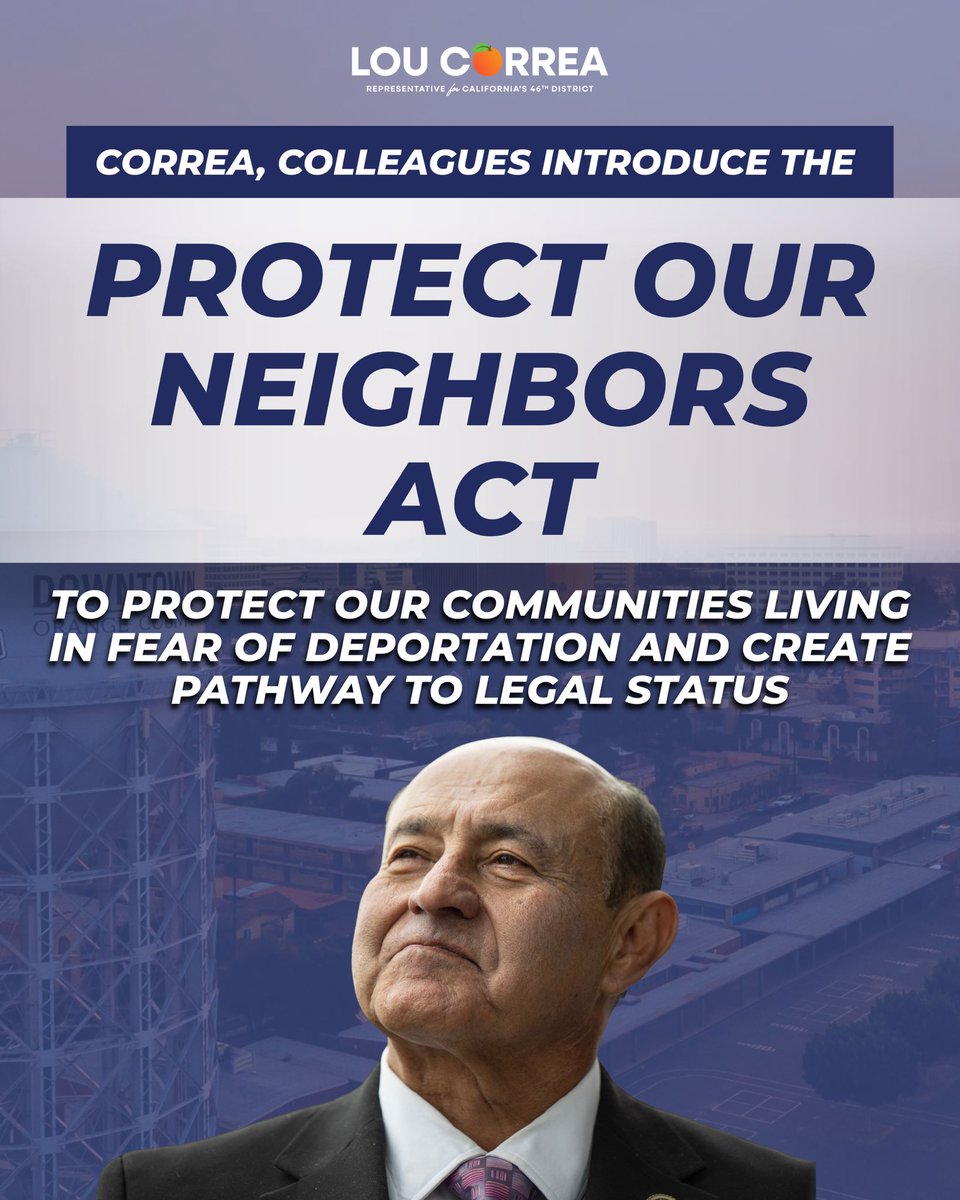
  • A political promotional poster for a proposed act, featuring a large headline and a portrait of a suited man against a tinted industrial cityscape. The image contains prominent text.
    A political promotional poster for a proposed act, featuring a large headline and a portrait of a suited man against a tinted industrial cityscape. The image contains prominent text.View post
About the descriptions

Written by a vision model and may be wrong. Open the post to see the original. Five are shown; the toggle shows the rest.

Back to topNext: Methods and sources

Methods and sources

How this page was made. Profile built Nov 26, 2026; site last built Nov 26, 2026. Every number on the page is computed from the sources listed here, by the same rules for every official; nothing is written by hand.

The headline

The headline is the measure on which Correa is most unusual among House Democrats, chosen by one rule for every official of every party. The candidates are the rate of each kind of statement and of extreme labels, party unity, attendance, the small-donor share, the in-state share and total receipts of the latest cycle, the share of sponsored bills that got out of committee, talk-to-bills agreement, and the CSIP score’s place within the party group.

The builder ranks every measure within the same peer group the page compares it with, and writes each official’s percentile: the share of the group below the value, ties counting half, so 0.5 is the median and a value shared by many never ranks first. A measure’s score is how far that percentile sits from the median (0 in the middle, 0.5 at either end), and the highest score leads if it is above 0.25, outside the middle half of the group. Scores within 0.03 of each other are a tie, broken in this order: votes against the party majority, kinds of statement, ideology, roll calls missed, small donations, in-state money, legislation, agreement, extreme labels, receipts.

A measure counts only with at least 200 statements, 100 roll calls or 5 sponsored bills behind it and a peer group of at least 10. Two things never lead: high party unity or attendance, where most members sit, and a high rate of a kind of statement backed by fewer than 10 statements. When nothing qualifies, the headline is a neutral fact instead: statements classified, or years in office. The wording always names the direction (“in the bottom 5% of …”, “votes against the majority of …”).


Identifiers

Profile id
C001110
Bioguide
C001110
FEC candidate ids
H6CA46116

Bulk files with the same data for every official:

Freshness of this profile’s data

  • What politicians sayNov 25, 20261 days agoMembers of Congress: tweets since 2017; press releases, newsletters and floor speeches since 2022. State legislators: tweets since May 2024. Governors: tweets since January 2025. Labels from an LLM classifier.
  • Roll calls (Congress)Nov 20, 20266 days agoVoteview roll calls, 113th Congress (2013) on.
  • Bills (Congress)Nov 20, 20266 days agoGovInfo BILLSTATUS: sponsors, cosponsors, actions, CRS policy area.
  • Lawmark Achievement Scores (Congress)Nov 20, 20266 days agoLawmark Achievement Scores, Lawmark text in law and the bill progress share, every Congress from the 113th (2013), from the bill status files, the printed bill texts and public committee rosters; weekly.
  • Campaign money (FEC)Nov 20, 20266 days agoFEC committee financial summaries (totals, small donations) and itemized contributions (donor counts, states, employers), the 2020 cycle on; aggregates only.
  • Ideology (CSIP)Nov 3, 202623 days agoCommon-Space Ideal Points (CSIP), current validated run.
  • WebsitesNov 22, 20264 days agoWeekly crawls of federal sites since April 2026; monthly state crawls since June 2026.
  • ImagesNov 26, 2026todayImages in members' tweets with vision-model descriptions.

How the measures work

What politicians say
Every post, press release, newsletter and congressional floor speech is read by a language model and marked for personal attacks, policy criticism, policy discussion, bipartisanship and credit claiming. A statement can be in several. Rates are shares of statements in the window. The methods paper.
Extreme labels
A statement has an extreme label when it calls a politician, party or policy “far left”, “far right”, “MAGA”, “extreme”, “radical”, “woke”, “fascist” or “communist”. The target is who the label is aimed at.
Policy areas and agreement
Statements and bills share 25 Congressional Research Service policy areas (state bills are assigned by a language model). Agreement is 1 − Jensen–Shannon distance between the two distributions, shown with at least 20 policy statements and 5 bills.
Ideology (CSIP)
Common-Space Ideal Points place federal and state officials on one left–right scale, estimated jointly from roll calls, campaign contributions and the text of statements, with standard errors. Only a validated run is shown. The methods paper.
Campaign money
Campaigns report by name only donors who give more than $200 in a cycle; smaller gifts are reported as one total. Federal totals and the small-donor share come from the FEC’s financial summaries of each campaign committee. Donor counts, donor states, employers and occupations cover itemized donors only. State filings report no small-gift totals, so state figures are itemized only. The lab never publishes donor names.
Votes and key votes
Attendance, party unity and the count of votes against the majority of an official’s own party come from roll calls (Voteview for Congress, chamber records for the states). Key votes are final-passage or override votes that became law, were decided by under 10%, saw at least 10% of a party vote against its majority, or concerned one of the 25 bills most mentioned in officials’ statements.
Peers and ranks
Comparisons are with the same party, chamber and level (for example House Democrats); state legislators are compared within their state and chamber for votes. Every comparison names its group. Rank 1 is the highest value in the group; tied values share the average of their ranks, and the percentile is the share of the group below the value, ties counting half.

America’s Political Pulse · Polarization Research Lab

Back to top