

2026 midterms · Candidate
Democrat · Candidate · U.S. Senate, New York · Incumbent
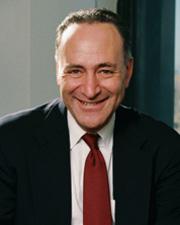
In the top quarter of Democratic Senate incumbents (their average is 3.5%; Schumer ranks 3rd of 20, where 1st is the highest rate), from 40,907 statements.
An AI model reads everything Schumer publishes in office (posts, press releases, newsletters, floor speeches) and marks whether each attacks a person’s character, integrity or loyalty; the rate is the share marked.
What Schumer says
6.1% of Schumer’s statements contain a personal attack, in the top quarter of Democratic Senate incumbents. Their average is 3.5%.
An AI model reads everything Schumer publishes in office and marks five kinds of statement; the rate is the share of statements with each label. The thin grey bar is the average of the 20 Democratic Senate incumbents with 50 or more statements, and the rank places Schumer among them (1st is the highest rate). A rate describes what was said, not whether it was right.
How often does Schumer make each kind of statement?
Share of statements: Schumer (thick bar) against the Democratic Senate incumbents average (thin grey bar)
Show the data
| Row | Schumer | Average |
|---|---|---|
| Personal attacks | 6.1% | 3.5% |
| Policy criticism | 24% | 21% |
| Policy discussion | 62% | 70% |
| Bipartisanship | 9.1% | 11% |
| Credit claiming | 15% | 21% |
statements classified
From everything they publish in office: posts, press releases, newsletters and floor speeches.
This compares Schumer with other candidates. Schumer’s official profile compares Schumer with fellow office-holders and has every statement, vote and bill.
The five kinds of statement
Personal attacks. Overtly questions a named person’s character, integrity or loyalty, or calls them names. Criticising a record or a policy does not count.
Policy criticism. Objects to a specific policy, law or court ruling with fact-based arguments, without personal attacks or emotional appeals.
Policy discussion. Discusses a specific public policy or policy area (health care, taxes, defense, …).
Bipartisanship. Emphasises working across the aisle, compromise or common ground between the parties.
Credit claiming. Claims credit for passing legislation, securing funding or grants, or other accomplishments in office.
Money
Totals the campaign reports to the Federal Election Commission for the 2026 cycle, as filed.
No FEC figures are on file for this candidate.
Online
Engagement is what X reports for each collected post, averaged; it measures reach, not support.
No engagement figures are on file for this account.
The race
New York Senate: Schumer advanced from the primary. Primary Jun 23, 2026. General election Nov 3, 2026.
This race is not among the races the lab lists as rated toss-up or leaning.
Not a 2026 race as listed.Neither of New York’s Senate seats is on the 2026 ballot. The tracker lists this race because candidates have filed with the FEC for a later Senate election, and it adds the sitting senators to it.
Who else is on the list?
Candidates recorded as advancing from the primary
- Kirsten GillibrandDIncumbent · advanced · official profile
The race page compares every candidate’s statements and money · every race in New York
Methods and sources
The headline. Each candidate’s headline is chosen by one rule for everyone. The peer group is the ranked candidates (50 or more statements) of the same party, for the same office and measured on the same record, widened to both parties when it has fewer than 10. Each kind of statement is scored by how far the candidate sits from the middle of the group (|percentile − 0.5|, ties counting half); the farthest leads if it is outside the middle half (above 0.25), scores within 0.03 tie and fall to a fixed order, and a high rate backed by fewer than 10 labelled statements cannot lead. Otherwise the headline is a plain count.
The statements. As an incumbent member of Congress, this candidate is measured on everything the lab collects from them in office: posts on X, press releases, newsletters and floor speeches. An AI model marks each statement for five kinds of statement; rates are shown from 10 statements and ranked from 50.
The race. Candidates come from FEC filings (House and Senate), the lab’s list of sitting members of Congress, and the lab’s list of candidates for governor. The lab records each primary’s result once it is official. House districts follow FEC filings; a sitting member is placed in the race for the seat they hold now.
Identifiers. Bioguide id S000148: a sitting member added from the lab’s officials list.
Money and reach. Campaign money is as reported to the FEC. Followers, likes and views are what X reports for the posts the lab collected.