Skip to content

Republican · U.S. Senate, Iowa

2024 presidential vote here Trump +13.2 (statewide; MEDSL)Won 2020 with 50.9%, by 6.5 points

Serving since Jan 6, 2015119th Congress (2025–27)next election Nov 2, 2032

Bioguide E000295FEC S4IA00129

Portrait of Joni Ernst, rendered as a two-tone print
Official portrait
0.72
agreement between talk and bills (0 to 1), in the top 5% of Senate Republicans

Agreement 0.72 on a 0–1 scale; the average for Senate Republicans is 0.65. Ranks 3rd of 52, where 1st is the closest match.

How closely the mix of policy areas in Ernst’s statements matches the mix in the bills Ernst sponsors and cosponsors: 1 means the same areas in the same proportions, 0 means no overlap. Ranked among Senate Republicans.

At a glance

6 measures against Senate Republicans. 48% of Ernst’s statements claim credit, in the top tenth of Senate Republicans (average 36%). 26% of Ernst’s statements criticize a policy, 1.5 times the Senate Republican average of 17%.

The measures on which Ernst sits furthest from the middle of Senate Republicans, each against the same group, with the CSIP score when there is one. Every number is explained in its own section below.

Talk-to-bills agreement

0.72

Senate Republicans average 0.65 · ranks 3rd of 52

Credit claiming

48%

Senate Republicans average 36% · ranks 5th of 52

Policy criticism

26%

Senate Republicans average 17% · ranks 6th of 52

Policy discussion

79%

Senate Republicans average 70% · ranks 9th of 52

From Iowa, 2026

13%

Of itemized individual dollars · ranks 39th of 50 Senate Republicans

CSIP ideology

+0.96

Right of 0, the centre of the scale · ± 0.01

Peer group: Senate Republicans. Rank 1 is the highest value in the group; the thick bar is Ernst, the thin grey bar the peer average. The headline is the measure on which Ernst is most unusual among peers (Methods, §08).

Back to topNext: What politicians say

What Ernst says

Ernst criticizes policies more than 88% of Senate Republicans. Policy criticism in 26% of 3,041 statements, against 17% for the average Senate Republican; 6th of 52.

An AI model reads each of Ernst’s 3,041 statements in the 119th Congress (2,163 posts on X, 521 press releases, 237 Congressional Record speeches, 120 newsletters) and marks the kinds of statement it contains: a personal attack, criticism of a policy, discussion of policy, bipartisanship, credit claiming, and extreme labels. A statement can carry several. Every rate is compared with the average for Senate Republicans and ranked among them.

Kinds of statement

Share of statements carrying each label, the 119th Congress

0%80%
Ernst
Peers
Rank
Policy discussion2,395 statements
79%
70%
9th of 52
Credit claiming1,463 statements
48%
36%
5th of 52
Policy criticism794 statements
26%
17%
6th of 52
Bipartisanship279 statements
9%
13%
32nd of 52
Personal attacks93 statements
3%
2%
13th of 52
Show the data
Ernst's share of statements in each category against the Senate Republicans average.
RowErnstPeers
Policy discussion79%70%
Credit claiming48%36%
Policy criticism26%17%
Bipartisanship9%13%
Personal attacks3%2%
3,041

statements classified

2,163 posts on X, 521 press releases, 237 Congressional Record speeches, 120 newsletters.

posts on X: 2,163 (71.1%)posts on X 2,163press releases: 521 (17.1%)Congressional Record speeches: 237 (7.8%)newsletters: 120 (3.9%)
Show the data
Ernst's statements by source
PartValue
posts on X2,163
press releases521
Congressional Record speeches237
newsletters120
How to read the bars

The thick bar is Ernst, in the colour of that kind of statement; the thin grey bar is the average Senate Republicans. A longer thick bar means Ernst does this more than peers. Rank 1 is the highest rate in the group.

Extreme labels

Ernst used extreme labels in 1.8% of statements, below the peer average. 56 statements, most often aimed at Democrats; peers 2.8%.

  1. “radical”18
  2. “extreme”9
  3. “far left”8
  4. “communist”4
  5. “woke”2

Who gets the labels

Targets named alongside an extreme label, by number of statements

  1. Democrats5
  2. Green New Deal5
  3. far left3
  4. California Crazy Train2
  5. abortion agenda1
What an extreme label is

Calls a politician, a party or a policy “far left”, “far right”, “MAGA”, “extreme”, “radical”, “woke”, “fascist” or “communist”. The target is who or what the label was aimed at. The lists show the five most used labels and targets; the toggle shows the rest.

Month by month

Share of statements per month, the 119th Congress

Statements2025-01: 2172025-02: 2202025-03: 2322025-04: 1762025-05: 1602025-06: 1772025-07: 1592025-08: 1112025-09: 1322025-10: 1442025-11: 1082025-12: 1022026-01: 1142026-02: 1242026-03: 1552026-04: 1312026-05: 872026-06: 1622026-07: 962026-08: 722026-09: 852026-10: 402026-11: 37peak 232 · Mar ’25Personal attackspeak 8.4% · Apr ’26 · latest 0.0%Personal attacks, 2025-01: 2.3% of 217Personal attacks, 2025-02: 3.2% of 220Personal attacks, 2025-03: 3.0% of 232Personal attacks, 2025-04: 6.8% of 176Personal attacks, 2025-05: 0.6% of 160Personal attacks, 2025-06: 4.0% of 177Personal attacks, 2025-07: 3.1% of 159Personal attacks, 2025-08: 0.9% of 111Personal attacks, 2025-09: 4.5% of 132Personal attacks, 2025-10: 0.7% of 144Personal attacks, 2025-11: 0.9% of 108Personal attacks, 2025-12: 2.0% of 102Personal attacks, 2026-01: 0.9% of 114Personal attacks, 2026-02: 3.2% of 124Personal attacks, 2026-03: 1.3% of 155Personal attacks, 2026-04: 8.4% of 131Personal attacks, 2026-05: 0.0% of 87Personal attacks, 2026-06: 3.1% of 162Personal attacks, 2026-07: 7.3% of 96Personal attacks, 2026-08: 8.3% of 72Personal attacks, 2026-09: 2.4% of 85Personal attacks, 2026-10: 0.0% of 40Personal attacks, 2026-11: 0.0% of 37Policy criticismpeak 43.1% · Oct ’25 · latest 8.1%Policy criticism, 2025-01: 37.8% of 217Policy criticism, 2025-02: 37.7% of 220Policy criticism, 2025-03: 35.3% of 232Policy criticism, 2025-04: 26.7% of 176Policy criticism, 2025-05: 19.4% of 160Policy criticism, 2025-06: 25.4% of 177Policy criticism, 2025-07: 41.5% of 159Policy criticism, 2025-08: 22.5% of 111Policy criticism, 2025-09: 22.7% of 132Policy criticism, 2025-10: 43.1% of 144Policy criticism, 2025-11: 36.1% of 108Policy criticism, 2025-12: 30.4% of 102Policy criticism, 2026-01: 12.3% of 114Policy criticism, 2026-02: 21.0% of 124Policy criticism, 2026-03: 26.5% of 155Policy criticism, 2026-04: 4.6% of 131Policy criticism, 2026-05: 10.3% of 87Policy criticism, 2026-06: 18.5% of 162Policy criticism, 2026-07: 12.5% of 96Policy criticism, 2026-08: 15.3% of 72Policy criticism, 2026-09: 9.4% of 85Policy criticism, 2026-10: 27.5% of 40Policy criticism, 2026-11: 8.1% of 37Policy discussionpeak 89.5% · Jan ’26 · latest 64.9%Policy discussion, 2025-01: 75.1% of 217Policy discussion, 2025-02: 76.8% of 220Policy discussion, 2025-03: 82.8% of 232Policy discussion, 2025-04: 83.5% of 176Policy discussion, 2025-05: 84.4% of 160Policy discussion, 2025-06: 78.0% of 177Policy discussion, 2025-07: 83.7% of 159Policy discussion, 2025-08: 70.3% of 111Policy discussion, 2025-09: 75.0% of 132Policy discussion, 2025-10: 70.8% of 144Policy discussion, 2025-11: 82.4% of 108Policy discussion, 2025-12: 85.3% of 102Policy discussion, 2026-01: 89.5% of 114Policy discussion, 2026-02: 81.5% of 124Policy discussion, 2026-03: 65.2% of 155Policy discussion, 2026-04: 84.7% of 131Policy discussion, 2026-05: 85.1% of 87Policy discussion, 2026-06: 71.6% of 162Policy discussion, 2026-07: 71.9% of 96Policy discussion, 2026-08: 87.5% of 72Policy discussion, 2026-09: 78.8% of 85Policy discussion, 2026-10: 87.5% of 40Policy discussion, 2026-11: 64.9% of 37Bipartisanshippeak 16.7% · Aug ’26 · latest 10.8%Bipartisanship, 2025-01: 6.0% of 217Bipartisanship, 2025-02: 9.6% of 220Bipartisanship, 2025-03: 6.5% of 232Bipartisanship, 2025-04: 9.1% of 176Bipartisanship, 2025-05: 15.6% of 160Bipartisanship, 2025-06: 8.5% of 177Bipartisanship, 2025-07: 8.2% of 159Bipartisanship, 2025-08: 8.1% of 111Bipartisanship, 2025-09: 11.4% of 132Bipartisanship, 2025-10: 6.3% of 144Bipartisanship, 2025-11: 11.1% of 108Bipartisanship, 2025-12: 4.9% of 102Bipartisanship, 2026-01: 4.4% of 114Bipartisanship, 2026-02: 7.3% of 124Bipartisanship, 2026-03: 10.3% of 155Bipartisanship, 2026-04: 10.7% of 131Bipartisanship, 2026-05: 11.5% of 87Bipartisanship, 2026-06: 6.8% of 162Bipartisanship, 2026-07: 12.5% of 96Bipartisanship, 2026-08: 16.7% of 72Bipartisanship, 2026-09: 15.3% of 85Bipartisanship, 2026-10: 12.5% of 40Bipartisanship, 2026-11: 10.8% of 37Credit claimingpeak 62.5% · May ’25 · latest 32.4%Credit claiming, 2025-01: 53.9% of 217Credit claiming, 2025-02: 44.5% of 220Credit claiming, 2025-03: 46.6% of 232Credit claiming, 2025-04: 54.0% of 176Credit claiming, 2025-05: 62.5% of 160Credit claiming, 2025-06: 51.4% of 177Credit claiming, 2025-07: 45.9% of 159Credit claiming, 2025-08: 55.9% of 111Credit claiming, 2025-09: 54.5% of 132Credit claiming, 2025-10: 34.0% of 144Credit claiming, 2025-11: 38.0% of 108Credit claiming, 2025-12: 46.1% of 102Credit claiming, 2026-01: 46.5% of 114Credit claiming, 2026-02: 62.1% of 124Credit claiming, 2026-03: 38.1% of 155Credit claiming, 2026-04: 44.3% of 131Credit claiming, 2026-05: 50.6% of 87Credit claiming, 2026-06: 45.7% of 162Credit claiming, 2026-07: 40.6% of 96Credit claiming, 2026-08: 50.0% of 72Credit claiming, 2026-09: 47.1% of 85Credit claiming, 2026-10: 45.0% of 40Credit claiming, 2026-11: 32.4% of 37Extreme labelspeak 6.8% · Sep ’25 · latest 0.0%Extreme labels, 2025-01: 4.2% of 217Extreme labels, 2025-02: 2.3% of 220Extreme labels, 2025-03: 1.7% of 232Extreme labels, 2025-04: 2.3% of 176Extreme labels, 2025-05: 1.3% of 160Extreme labels, 2025-06: 2.3% of 177Extreme labels, 2025-07: 2.5% of 159Extreme labels, 2025-08: 2.7% of 111Extreme labels, 2025-09: 6.8% of 132Extreme labels, 2025-10: 2.8% of 144Extreme labels, 2025-11: 3.7% of 108Extreme labels, 2025-12: 1.0% of 102Extreme labels, 2026-01: 0.9% of 114Extreme labels, 2026-02: 0.8% of 124Extreme labels, 2026-03: 0.0% of 155Extreme labels, 2026-04: 0.0% of 131Extreme labels, 2026-05: 0.0% of 87Extreme labels, 2026-06: 0.6% of 162Extreme labels, 2026-07: 0.0% of 96Extreme labels, 2026-08: 0.0% of 72Extreme labels, 2026-09: 0.0% of 85Extreme labels, 2026-10: 0.0% of 40Extreme labels, 2026-11: 0.0% of 37Jan ’25Jul ’25Jan ’26Jul ’26Nov ’26
Show the data
Monthly rates for Ernst, each row shaded against its own peak, with statement volume. Months with fewer than 10 statements are left blank.
ColumnStatementsPersonal attacksPolicy criticismPolicy discussionBipartisanshipCredit claimingExtreme labels
Jan ’252172.3%37.8%75.1%6.0%53.9%4.2%
Feb ’252203.2%37.7%76.8%9.6%44.5%2.3%
Mar ’252323.0%35.3%82.8%6.5%46.6%1.7%
Apr ’251766.8%26.7%83.5%9.1%54.0%2.3%
May ’251600.6%19.4%84.4%15.6%62.5%1.3%
Jun ’251774.0%25.4%78.0%8.5%51.4%2.3%
Jul ’251593.1%41.5%83.7%8.2%45.9%2.5%
Aug ’251110.9%22.5%70.3%8.1%55.9%2.7%
Sep ’251324.5%22.7%75.0%11.4%54.5%6.8%
Oct ’251440.7%43.1%70.8%6.3%34.0%2.8%
Nov ’251080.9%36.1%82.4%11.1%38.0%3.7%
Dec ’251022.0%30.4%85.3%4.9%46.1%1.0%
Jan ’261140.9%12.3%89.5%4.4%46.5%0.9%
Feb ’261243.2%21.0%81.5%7.3%62.1%0.8%
Mar ’261551.3%26.5%65.2%10.3%38.1%0.0%
Apr ’261318.4%4.6%84.7%10.7%44.3%0.0%
May ’26870.0%10.3%85.1%11.5%50.6%0.0%
Jun ’261623.1%18.5%71.6%6.8%45.7%0.6%
Jul ’26967.3%12.5%71.9%12.5%40.6%0.0%
Aug ’26728.3%15.3%87.5%16.7%50.0%0.0%
Sep ’26852.4%9.4%78.8%15.3%47.1%0.0%
Oct ’26400.0%27.5%87.5%12.5%45.0%0.0%
Nov ’26370.0%8.1%64.9%10.8%32.4%0.0%
How to read the strips

Each row is one kind of statement; each cell is a month, shaded against that row’s own peak (darker = closer to the peak), with the peak and the latest value written at the right. The top row counts statements. The strip covers every month of the 119th Congress, the same span as the rates above, including months with no statements. A month with fewer than 10 statements is hatched, not shaded: one or two posts would swing its rate to 0% or 100%.

In Ernst’s words

Real statements from the classifier’s example set, with the labels it assigned

Personal attacks

Ernst Investigation Reveals Fraudsters Becoming Billionaires by Bilking Taxpayers WASHINGTON – Today, U.S. Senator Joni Ernst (R-Iowa) released her latest investigation revealing how fraudsters are becoming billionaires by bilking taxpayers. Ernst highlights ten scammers who collectively billed gov…

Sep 29, 2026 · Press releases · personal attacks; policy discussion; credit claiming; Health; Crime and Law Enforcement; Taxation; Economics and Public Finance; target: Brett Blackman, Alexandra Gehrke, Jeffrey King, Marizel Yukee, Brian Rowan, Erekle Gugava, Ibrahim Hilmi, Nika Machutadze, Herbert Kimble · Source

Policy criticism

Ernst to Washington: Stop Paying Twice for Broadband Ernst introduces PROTOCOL Act to prevent duplicate broadband projects and direct federal dollars to rural communities still waiting for service WASHINGTON, D.C. –Today Senator Joni Ernst (R-Iowa) introduced the Provide Rigorous Oversight to Optim…

Nov 20, 2026 · Press releases · policy criticism; policy discussion; bipartisanship; credit claiming; Science, Technology, Communications; Economics and Public Finance; Government Operations and Politics · Source

Extreme label

Mr. President, reserving the right to object, claiming Republicans pose a threat to contraception is absurd. Despite fearmongering and election-year stunts from the left, over-the-counter daily oral contraceptive pills are available everywhere and have been for years. Democrats have repeatedly made…

Jun 23, 2026 · Congressional Record · policy criticism; policy discussion; Health; extreme label “extreme” aimed at Democrats · Source

Examples by category

Up to five recent statements in each category

Category

Overtly questions a named person’s character, integrity or loyalty, or calls them names. Criticising a record or a policy does not count.

  1. Press releases

    Ernst Investigation Reveals Fraudsters Becoming Billionaires by Bilking Taxpayers WASHINGTON – Today, U.S. Senator Joni Ernst (R-Iowa) released her latest investigation revealing how fraudsters are becoming billionaires by bilking taxpayers. Ernst highlights ten scammers who collectively billed government programs for over $21 billion. More than $3.1 billion of those bogus charges were paid. The crooks spent the loot on million-dollar mansions, luxury vehicles, extravagant jewelry, and a beachside resort. They also laundered millions of dollars overseas to China and the Russian mob. “Klepto-c

    personal attacks · policy discussion · credit claiming · Health · Crime and Law Enforcement · Taxation · Economics and Public Finance · target: Brett Blackman, Alexandra Gehrke, Jeffrey King, Marizel Yukee, Brian Rowan, Erekle Gugava, Ibrahim Hilmi, Nika Machutadze, Herbert KimbleSource

  2. Posts on X

    The text of this post is on X; follow the source link to read it.

    personal attacks · policy discussion · Agriculture and Food · Economics and Public Finance · target: Four sistersSource

  3. Posts on X

    The text of this post is on X; follow the source link to read it.

    personal attacks · target: shady lady, shady manSource

  4. Posts on X

    The text of this post is on X; follow the source link to read it.

    personal attacks · policy discussion · Agriculture and Food · Crime and Law Enforcement · target: Mohamed familySource

  5. Posts on X

    The text of this post is on X; follow the source link to read it.

    personal attacks · policy discussion · Agriculture and Food · Civil Rights and Liberties, Minority Issues · target: sistersSource

All 3,041 statements

Newest first, the 119th Congress

The full feed

Five statements at a time, newest first; filters apply to the statements loaded so far. Export saves the statements that match. Sources: 2,163 posts on X, 521 press releases, 237 Congressional Record speeches, 120 newsletters.

Back to topNext: Policy

Policy

Government Operations and Politics is what Ernst talks about most: 29% of policy statements, above the peer share. Talk and legislation agree at 0.72 on a 0–1 scale (Senate Republicans average 0.65; 3rd of 52).

Each policy statement is tagged by the AI model with one or more of 25 policy areas from the Congressional Research Service list, so the shares say what Ernst talks about. The bills Ernst sponsors and cosponsors carry the same areas, so the two can be compared.

What Ernst talks about

Share of policy statements by area, the 119th Congress

0%35%
Ernst
Peers
Government Operations and Politics703 statements
29%
19%
Economics and Public Finance597 statements
25%
18%
Commerce518 statements
22%
10%
Armed Forces and National Security462 statements
19%
25%
Agriculture and Food429 statements
18%
9%
Show the data
Policy areas Ernst talks about, as a share of policy statements, against the Senate Republicans average.
RowErnstPeers
Government Operations and Politics29%19%
Economics and Public Finance25%18%
Commerce22%10%
Armed Forces and National Security19%25%
Agriculture and Food18%9%
How to read the bars

The thick bar is the share of Ernst’s policy statements in an area; the thin grey bar is the average share for Senate Republicans. A statement counts once in each of its areas, so shares can add to more than 100%. The five largest areas are shown; the toggle shows the rest.

Talks about · legislates on

Left: share of statements by policy area. Right: share of bills. Areas in order of their share of statements; both sides run from 0 to 35%. Grey ticks are the Senate Republicans averages.

Talks aboutLegislates onGovernment Operations andPoliticsGovernment Operations and Politics, talks about: 29% (Senate Republicans 19%)29%Government Operations and Politics, legislates on: 27% (Senate Republicans 12%)27%Economics and Public FinanceEconomics and Public Finance, talks about: 25% (Senate Republicans 18%)25%Economics and Public Finance, legislates on: 1% (Senate Republicans 1%)1%CommerceCommerce, talks about: 22% (Senate Republicans 10%)22%Commerce, legislates on: 8% (Senate Republicans 3%)8%Armed Forces and NationalSecurityArmed Forces and National Security, talks about: 19% (Senate Republicans 25%)19%Armed Forces and National Security, legislates on: 8% (Senate Republicans 8%)8%Agriculture and FoodAgriculture and Food, talks about: 18% (Senate Republicans 9%)18%Agriculture and Food, legislates on: 10% (Senate Republicans 4%)10%
Show the data
Ernst's share of statements against share of bills in each policy area.
AreaTalks aboutSenate Republicans, talks aboutLegislates onSenate Republicans, legislates on
Government Operations and Politics29%19%27%12%
Economics and Public Finance25%18%1%1%
Commerce22%10%8%3%
Armed Forces and National Security19%25%8%8%
Agriculture and Food18%9%10%4%
0.72

talk-to-bills agreement, 0 to 1

Senate Republicans average 0.65. Ranks 3rd of 52.

What agreement means, and what it doesn’t

Agreement is 1 minus the distance between the two distributions (Jensen–Shannon): 1 means Ernst legislates on exactly the areas Ernst talks about, in the same proportions; 0 means no overlap. It does not say whether the bills match the positions in the statements, only the subjects. Bills Ernst sponsored count fully, cosponsored bills a quarter. Shown with at least 20 policy statements and 5 bills.

Back to topNext: Ideology

Ideology

Ernst sits at +0.96 on the CSIP scale, right of 0, more liberal than 52% of Senate Republicans. Approximate range +0.95 to +0.97, which understates the uncertainty; from 22,140 donors and 4,274 roll calls.

CSIP, the lab’s Common-Space Ideal Point, places every official, federal and state, on one left–right scale, estimated from roll-call votes, who gives money to whom, and the text of statements. Negative is left of 0, positive right of it; 0 is the centre of the scale, not a definition of “moderate”.

+0.96

CSIP ideal point

Approximate range +0.95 to +0.97. From 22,140 donors and 4,274 roll calls. Run 2026-11-03T100151. Blue is left of 0, red right of 0.

← More liberalMore conservative →0Ernst +1.0Senate Republicans +1.0All Senate +0.4

The outlined dot is Ernst, coloured by its side of 0 (blue left, red right, deeper further out); the bar through it is the approximate range (±1.96 standard errors), which understates the uncertainty; the grey ticks below are the medians of Ernst’s groups. 0 is the centre of the scale, not “moderate” by definition.

What this means, and what it doesn’t

The score summarises how an official votes, who funds them and how they talk, relative to everyone else. It does not grade positions as good or bad, and two officials with the same score can differ on any single issue. The ± range is 1.96 standard errors, which understates the uncertainty: scores whose ranges overlap may not differ at all, and even scores whose ranges do not overlap may not differ.

Where Ernst sits

Every official in each group, on the CSIP scale

−2.0−1.00.0+1.0+2.0← More liberalMore conservative →Senate Republicansmedian +1.0Ernst +1.0All Senatemedian +0.4
Show the data
Ernst's CSIP score of +0.96 placed against Senate Republicans, All Senate.
GroupOfficialsMedianShare left of Ernst
Senate Republicans51+1.047%
All Senate98+0.472%
How to read the strips

Every small dot is one official on the same scale, coloured by its own score (blue left of 0, red right of 0, grey at 0, deeper further out) and spread up and down only to keep dots apart; where a group is crowded the dots overlap, and darker patches mean more officials. The large outlined dot is Ernst in every row; the rule is each group’s median. The table under the figure gives the share of each group to the left of Ernst.

Back to topNext: Money

Money

Ernst raised $2.0M in the 2026 cycle, below the Senate Republicans’ median of $3.2M. 23% of individual money came in gifts of $200 or less. 13% of itemized individual money came from Iowa.

Campaign money from Federal Election Commission filings, as aggregates only; the lab never shows an individual donor. Campaigns must report by name every person who gives them more than $200 in a cycle (“itemized”); smaller gifts are reported only as one total (“unitemized”), so donor counts, donor states, employers and occupations describe itemized donors only.

Election cycle
$2.0M

raised in the 2026 cycle

From 2,105 itemized donors. Senate Republicans’ median $3.2M.

Where the money came from

Each square is one percent of 2026-cycle receipts, from FEC summary totals.

Itemized individual (over $200): $763.4K (38.0%)Itemized individual (over $200): $763.4K (38.0%)Itemized individual (over $200): $763.4K (38.0%)Itemized individual (over $200): $763.4K (38.0%)Itemized individual (over $200): $763.4K (38.0%)Itemized individual (over $200): $763.4K (38.0%)Itemized individual (over $200): $763.4K (38.0%)Itemized individual (over $200): $763.4K (38.0%)Itemized individual (over $200): $763.4K (38.0%)Itemized individual (over $200): $763.4K (38.0%)Itemized individual (over $200): $763.4K (38.0%)Itemized individual (over $200): $763.4K (38.0%)Itemized individual (over $200): $763.4K (38.0%)Itemized individual (over $200): $763.4K (38.0%)Itemized individual (over $200): $763.4K (38.0%)Itemized individual (over $200): $763.4K (38.0%)Itemized individual (over $200): $763.4K (38.0%)Itemized individual (over $200): $763.4K (38.0%)Itemized individual (over $200): $763.4K (38.0%)Itemized individual (over $200): $763.4K (38.0%)Itemized individual (over $200): $763.4K (38.0%)Itemized individual (over $200): $763.4K (38.0%)Itemized individual (over $200): $763.4K (38.0%)Itemized individual (over $200): $763.4K (38.0%)Itemized individual (over $200): $763.4K (38.0%)Itemized individual (over $200): $763.4K (38.0%)Itemized individual (over $200): $763.4K (38.0%)Itemized individual (over $200): $763.4K (38.0%)Itemized individual (over $200): $763.4K (38.0%)Itemized individual (over $200): $763.4K (38.0%)Itemized individual (over $200): $763.4K (38.0%)Itemized individual (over $200): $763.4K (38.0%)Itemized individual (over $200): $763.4K (38.0%)Itemized individual (over $200): $763.4K (38.0%)Itemized individual (over $200): $763.4K (38.0%)Itemized individual (over $200): $763.4K (38.0%)Itemized individual (over $200): $763.4K (38.0%)Itemized individual (over $200): $763.4K (38.0%)Unitemized individual (gifts of $200 or less): $233.9K (11.7%)Unitemized individual (gifts of $200 or less): $233.9K (11.7%)Unitemized individual (gifts of $200 or less): $233.9K (11.7%)Unitemized individual (gifts of $200 or less): $233.9K (11.7%)Unitemized individual (gifts of $200 or less): $233.9K (11.7%)Unitemized individual (gifts of $200 or less): $233.9K (11.7%)Unitemized individual (gifts of $200 or less): $233.9K (11.7%)Unitemized individual (gifts of $200 or less): $233.9K (11.7%)Unitemized individual (gifts of $200 or less): $233.9K (11.7%)Unitemized individual (gifts of $200 or less): $233.9K (11.7%)Unitemized individual (gifts of $200 or less): $233.9K (11.7%)Unitemized individual (gifts of $200 or less): $233.9K (11.7%)PACs and other committees: $637.3K (31.8%)PACs and other committees: $637.3K (31.8%)PACs and other committees: $637.3K (31.8%)PACs and other committees: $637.3K (31.8%)PACs and other committees: $637.3K (31.8%)PACs and other committees: $637.3K (31.8%)PACs and other committees: $637.3K (31.8%)PACs and other committees: $637.3K (31.8%)PACs and other committees: $637.3K (31.8%)PACs and other committees: $637.3K (31.8%)PACs and other committees: $637.3K (31.8%)PACs and other committees: $637.3K (31.8%)PACs and other committees: $637.3K (31.8%)PACs and other committees: $637.3K (31.8%)PACs and other committees: $637.3K (31.8%)PACs and other committees: $637.3K (31.8%)PACs and other committees: $637.3K (31.8%)PACs and other committees: $637.3K (31.8%)PACs and other committees: $637.3K (31.8%)PACs and other committees: $637.3K (31.8%)PACs and other committees: $637.3K (31.8%)PACs and other committees: $637.3K (31.8%)PACs and other committees: $637.3K (31.8%)PACs and other committees: $637.3K (31.8%)PACs and other committees: $637.3K (31.8%)PACs and other committees: $637.3K (31.8%)PACs and other committees: $637.3K (31.8%)PACs and other committees: $637.3K (31.8%)PACs and other committees: $637.3K (31.8%)PACs and other committees: $637.3K (31.8%)PACs and other committees: $637.3K (31.8%)PACs and other committees: $637.3K (31.8%)Remainder not broken out in the FEC summary (transfers, loans, refunds): $372.3K (18.6%)Remainder not broken out in the FEC summary (transfers, loans, refunds): $372.3K (18.6%)Remainder not broken out in the FEC summary (transfers, loans, refunds): $372.3K (18.6%)Remainder not broken out in the FEC summary (transfers, loans, refunds): $372.3K (18.6%)Remainder not broken out in the FEC summary (transfers, loans, refunds): $372.3K (18.6%)Remainder not broken out in the FEC summary (transfers, loans, refunds): $372.3K (18.6%)Remainder not broken out in the FEC summary (transfers, loans, refunds): $372.3K (18.6%)Remainder not broken out in the FEC summary (transfers, loans, refunds): $372.3K (18.6%)Remainder not broken out in the FEC summary (transfers, loans, refunds): $372.3K (18.6%)Remainder not broken out in the FEC summary (transfers, loans, refunds): $372.3K (18.6%)Remainder not broken out in the FEC summary (transfers, loans, refunds): $372.3K (18.6%)Remainder not broken out in the FEC summary (transfers, loans, refunds): $372.3K (18.6%)Remainder not broken out in the FEC summary (transfers, loans, refunds): $372.3K (18.6%)Remainder not broken out in the FEC summary (transfers, loans, refunds): $372.3K (18.6%)Remainder not broken out in the FEC summary (transfers, loans, refunds): $372.3K (18.6%)Remainder not broken out in the FEC summary (transfers, loans, refunds): $372.3K (18.6%)Remainder not broken out in the FEC summary (transfers, loans, refunds): $372.3K (18.6%)Remainder not broken out in the FEC summary (transfers, loans, refunds): $372.3K (18.6%)
  • Itemized individual (over $200)38 squares$763.4K
  • Unitemized individual (gifts of $200 or less)12 squares$233.9K
  • PACs and other committees32 squares$637.3K
  • Remainder not broken out in the FEC summary (transfers, loans, refunds)18 squares$372.3K
Show the data
Sources of Ernst's money, 2026 cycle, one square per percent
SourceAmountShare
Itemized individual (over $200)$763.4K38.0%
Unitemized individual (gifts of $200 or less)$233.9K11.7%
PACs and other committees$637.3K31.8%
Remainder not broken out in the FEC summary (transfers, loans, refunds)$372.3K18.6%
What this means, and what it doesn’t

Totals say how much a campaign took in, not how it was spent, and they rise sharply when a seat is up for election; compare cycles with that in mind. The small-donor share understates small giving when a campaign itemizes gifts made through ActBlue or WinRed.

Receipts by cycle

Total receipts, 2020 to 2026. The grey line is the Senate Republicans’ median for 2026.

2020 cycle: $27.7M$27.7M20202022 cycle: $2.0M$2.0M20222024 cycle: $2.9M$2.9M20242026 cycle: $2.0M$2.0M2026Senate Republicans median $3.2M
Show the data
Ernst's receipts by cycle against the 2026 Senate Republicans median.
ItemValue
2020 cycle$27.7M
2022 cycle$2.0M
2024 cycle$2.9M
2026 cycle$2.0M

Top donor states, 2026

Itemized contributions by donor state. 13% came from Iowa.

  1. Florida$109.3K
  2. Iowa$100.1K
  3. California$69.3K
  4. New York$47.3K
  5. Michigan$45.6K

Small donations

Gifts of $200 or less as a share of individual money, by cycle. The thin grey bar is the 2026 Senate Republicans’ median.

0%60%
Ernst
Median
2026
23%
17%
2024
32%
17%
2022
50%
17%
2020
41%
17%
Show the data
Small-donor share by cycle against the Senate Republicans median
RowErnstMedian
2026 cycle23%17%
2024 cycle32%17%
2022 cycle50%17%
2020 cycle41%17%

Where itemized donors live

Individuals who gave more than $200, by donor state

Alaska: $760AKMaine: $402MEVermont: $500VTNew Hampshire: $110NHWashington: $16.6KWAIdaho: $2,683IDMontana: $2,449MTNorth Dakota: $277NDMinnesota: $4,941MNIllinois: $16.5KILWisconsin: no dataWIMichigan: $45.6KMINew York: $47.3KNYRhode Island: $694RIMassachusetts: $14.3KMAOregon: $5,285ORNevada: $1,461NVWyoming: no dataWYSouth Dakota: $4,184SDIowa: $100.1KIAIndiana: $7,458INOhio: $20.0KOHPennsylvania: $20.2KPANew Jersey: $29.8KNJConnecticut: $4,048CTCalifornia: $69.3KCAUtah: $2,432UTColorado: $1,409CONebraska: $2,368NEMissouri: $3,978MOKentucky: $3,331KYWest Virginia: $355WVVirginia: $37.2KVAMaryland: $12.6KMDDelaware: $145DEArizona: $11.1KAZNew Mexico: $2,060NMKansas: $6,003KSArkansas: $27.0KARTennessee: $10.1KTNNorth Carolina: $10.9KNCSouth Carolina: $15.9KSCDistrict of Columbia: $7,700DCOklahoma: $4,353OKLouisiana: $2,086LAMississippi: $2,989MSAlabama: $8,699ALGeorgia: $34.8KGAHawaii: $1,691HITexas: $43.6KTXFlorida: $109.3KFL
Show the data
Ernst's itemized individual contributions by donor state, 2026 cycle
StateValue
Florida$109.3K
Iowa$100.1K
California$69.3K
New York$47.3K
Michigan$45.6K
Texas$43.6K
Virginia$37.2K
Georgia$34.8K
New Jersey$29.8K
Arkansas$27.0K
Pennsylvania$20.2K
Ohio$20.0K
Washington$16.6K
Illinois$16.5K
South Carolina$15.9K
Massachusetts$14.3K
Maryland$12.6K
Arizona$11.1K
North Carolina$10.9K
Tennessee$10.1K
Alabama$8,699
District of Columbia$7,700
Indiana$7,458
Kansas$6,003
Oregon$5,285
Minnesota$4,941
Oklahoma$4,353
South Dakota$4,184
Connecticut$4,048
Missouri$3,978
Kentucky$3,331
Mississippi$2,989
Idaho$2,683
Montana$2,449
Utah$2,432
Nebraska$2,368
Louisiana$2,086
New Mexico$2,060
Hawaii$1,691
Nevada$1,461
Colorado$1,409
Alaska$760
Rhode Island$694
Vermont$500
Maine$402
West Virginia$355
North Dakota$277
Delaware$145
New Hampshire$110
WisconsinNo data
WyomingNo data
2,105

itemized donors

People who gave more than $200

13%

from Iowa

Of itemized individual dollars

How to read the map

Every state the same size. Darker states gave more itemized money; hatched states had no itemized donors; the outlined state is Iowa. Gifts of $200 or less carry no address and are left out.

Donors’ ideology

Distribution of itemized donors’ own CSIP scores

CSIP −1.25 to −1.00: 0.1%CSIP −1.00 to −0.75: 0.1%CSIP −0.75 to −0.50: 1.6%CSIP −0.50 to −0.25: 1.6%CSIP −0.25 to 0.00: 3.3%CSIP 0.00 to +0.25: 5.3%CSIP +0.25 to +0.50: 4.9%CSIP +0.50 to +0.75: 14%CSIP +0.75 to +1.00: 40%40%CSIP +1.00 to +1.25: 29%CSIP +1.25 to +1.50: 0.4%CSIP +1.50 to +1.75: 0%← More liberalMore conservative →0
Show the data
Ideology of Ernst's itemized donors in 2026, from −1.25 to +1.75: 5.3% between 0.00 and +0.25, 14% between +0.50 and +0.75, 40% between +0.75 and +1.00, 29% between +1.00 and +1.25.
ItemValue
CSIP −1.25 to −1.000.1%
CSIP −1.00 to −0.750.1%
CSIP −0.75 to −0.501.6%
CSIP −0.50 to −0.251.6%
CSIP −0.25 to 0.003.3%
CSIP 0.00 to +0.255.3%
CSIP +0.25 to +0.504.9%
CSIP +0.50 to +0.7514%
CSIP +0.75 to +1.0040%
CSIP +1.00 to +1.2529%
CSIP +1.25 to +1.500.4%
CSIP +1.50 to +1.750%
How to read the columns

Donors who give to many candidates get their own CSIP score. Each column is the share of Ernst’s itemized money from donors in that part of the scale, blue left of 0 and red right of 0, deeper further out; Ernst’s own score is +0.96.

Top donor occupations

Itemized, 2026 cycle.

  1. RETIRED$575.7K 1,467 donors
  2. INVESTOR$45.3K 13 donors
  3. CHAIRMAN$45.2K 8 donors
  4. PRESIDENT$29.4K 17 donors
  5. CEO$27.7K 17 donors

Top committees

PAC and committee contributions, 2026 cycle.

  1. BEST AT BRINGING ENTREPRENEURIAL RESULTS NEVER IMAGINED OR ENVISIONED PAC$10.0K
  2. GROWTH ENERGY PAC$10.0K
  3. TOGETHER HOLDING OUR MAJORITY PAC$10.0K
  4. TOMORROW IS MEANINGFUL PAC$10.0K
  5. NATIONAL RESTAURANT ASSOCIATION PAC (RESTAURANT PAC)$7,500

Top employers

Itemized, 2026 cycle.

  1. APOLLO$18.0K 3 donors
  2. CAPITAL CDC$1,250 3 donors
  3. ENTREPRENEUR$1,100 4 donors

Aggregates only. Individual donors are never named.

Back to topNext: Votes

Votes

Ernst voted with the majority of Senate Republicans on 99.7% of party-line votes and missed 2.6% of 938 roll calls. Senate Republicans on average: 98.5% party unity, 97.1% attendance. Across all roll calls, Ernst voted against the majority of Senate Republicans 8 times.

938 roll calls Ernst could vote on in the 119th Congress, compared with Senate Republicans. Attendance is the share with a vote recorded. Party unity counts only party-line roll calls, where most Democrats and most Republicans voted on opposite sides, and is the share of those where Ernst voted with the majority of Senate Republicans. The count of votes against that majority covers every roll call where the majority took a side.

8

votes against the majority of Senate Republicans

Party unity 99.7%, Senate Republicans average 98.5%, ranks 22nd of 53. 938 roll calls in the 119th Congress.

Attendance and party unity

The thick bar is Ernst, the thin grey bar the Senate Republicans average. The scale runs from 80% to 100% to show the gap.

80%100%
Ernst
Peers
Rank
Attendance
97.4%
97.1%
26th of 53
Party unity
99.7%
98.5%
22nd of 53
Show the data
Ernst's attendance and party unity against Senate Republicans.
RowErnstPeers
Attendance97.4%97.1%
Party unity99.7%98.5%
What this means, and what it doesn’t

A missed roll call has many causes, from illness to campaigning, so attendance says how often, not why. A vote against the majority can be on procedure as well as substance, and many fall on roll calls where both parties split; the key votes below show the ones that decided something.

Key votes

25 roll calls the lab flagged as key in the 119th Congress

Key votes
Party split (yea–nay)Why it’s key
Nov 19, 2026
H.R. 2347
A bill to amend the Internal Revenue Code of 1986 to exclude from gross income any damages, other than punitive damages, received on account of any sexual acts or sexual contact.
On Passage of the Bill
YeaWith majorityBill PassedD 14–30 · R 47–2 · I 1–1Democrats 14 yea, 30 nay; Republicans 47 yea, 2 nay; Independents 1 yea, 1 nayparty crossover
Nov 19, 2026
H.Con.Res. 93
A concurrent resolution directing the President, pursuant to section 5(c) of the War Powers Resolution, to remove United States Armed Forces from hostilities with Iran.
On the Concurrent Resolution
NayWith majorityConcurrent Resolution RejectedD 43–1 · R 3–50 · I 2–0Democrats 43 yea, 1 nay; Republicans 3 yea, 50 nay; Independents 2 yea, 0 nayclose vote
Sep 28, 2026
S. 4668
A bill to protect the name, image, and likeness rights of, and provide protections for, student athletes and to promote fair competition among intercollegiate athletics, and for other purposes.
On Passage of the Bill
YeaWith majorityBill PassedD 26–19 · R 50–2 · I 1–1Democrats 26 yea, 19 nay; Republicans 50 yea, 2 nay; Independents 1 yea, 1 nayparty crossover
Sep 24, 2026
H.Con.Res. 89
A concurrent resolution directing the President, pursuant to section 5(c) of the War Powers Resolution, to remove United States Armed Forces from hostilities with Iran.
On the Concurrent Resolution
NayWith majorityConcurrent Resolution RejectedD 43–1 · R 4–49 · I 2–0Democrats 43 yea, 1 nay; Republicans 4 yea, 49 nay; Independents 2 yea, 0 nayclose vote
Aug 8, 2026
H.R. 6500
An act making continuing appropriations and extensions for fiscal year 2027, and for other purposes.
On Passage of the Bill
YeaWith majorityBill PassedD 42–3 · R 47–2 · I 1–1Democrats 42 yea, 3 nay; Republicans 47 yea, 2 nay; Independents 1 yea, 1 naybecame law
How key votes are chosen

Automatically: a final-passage or override vote where the measure became law, the margin was under 10%, at least 10% of either party voted against its majority, or the bill was among the 25 most mentioned in officials’ own statements. Up to 25 per window, most recent first; five are shown. Bars show yea on the left, nay on the right, per party.

Votes most often with

The colleagues who voted the same way as Ernst most often

  1. James LankfordR908 shared votes99%
  2. Bill HagertyR883 shared votes99%
  3. Chuck GrassleyR894 shared votes99%
  4. John CornynR891 shared votes99%
  5. Steve DainesR889 shared votes99%

Votes least often with

The colleagues who voted the same way as Ernst least often

  1. Ed MarkeyD907 shared votes2.8%
  2. Elizabeth WarrenD900 shared votes3.0%
  3. Bernie SandersI843 shared votes3.1%
  4. Christopher MurphyD869 shared votes3.6%
  5. Chris Van HollenD901 shared votes4.1%
How to read the agreement lists

The share of roll calls both members voted on where they voted the same way, among colleagues sharing at least 50 such votes. High agreement with members of the other party is common on routine votes.

Full voting record

119th Congress (2025–27), loads in batches

Back to topNext: Legislation

Legislation

Ernst sponsored 102 bills in the 119th Congress; 2 became law. Cosponsored 211 others. 22% of sponsored bills got out of committee (Senate Republicans average 23%; 27th of 51).

The bills Ernst sponsored and cosponsored in the 119th Congress, from the official bill records, and how far each got: introduced, referred to or acted on in committee, passed one chamber, passed both, became law. A bill counts at every stage it has reached, so the blocks only shrink to the right.

Bills by stage

Counts for the 119th Congress

Sponsored102 billsSponsored, Introduced: 102102Sponsored, In committee: 9999Sponsored, Passed one chamber: 1616Sponsored, Passed both chambers: 22Sponsored, Became law: 22Cosponsored211 billsCosponsored, Introduced: 211211Cosponsored, In committee: 206206Cosponsored, Passed one chamber: 4848Cosponsored, Passed both chambers: 55Cosponsored, Became law: 55IntroducedIncommitteePassed onechamberPassed bothchambersBecamelaw
Show the data
Bills Ernst sponsored and cosponsored, by furthest stage reached
RoleIntroducedIn committeePassed one chamberPassed both chambersBecame law
Sponsored102991622
Cosponsored2112064855
How to read the blocks

Ink blocks are bills Ernst sponsored, ochre blocks bills Ernst cosponsored; the figure above each block is the count. Most bills in any legislature never leave committee, so a short staircase is the norm.

22%

of sponsored bills got out of committee

Senate Republicans average 23%. Ranks 27th of 51.

Cosponsorship partners

Colleagues who most often cosponsor with Ernst, by number of shared bills in the 119th Congress; the square shows their party.

  1. Chuck Grassley55
  2. James Lankford51
  3. Marsha Blackburn48
  4. Rick Scott46
  5. Pete Ricketts43
What this means, and what it doesn’t

The score is the share of sponsored bills that a committee reported out or a chamber passed, with at least 5 sponsored bills, ranked within the peer group. Members of the majority party and committee chairs move more bills, so the rank reflects position in the chamber as well as effort. Cosponsorship partners are the five colleagues who share the most of Ernst’s bills; the toggle shows more.

Bill list

Sponsored and cosponsored, with status and policy area; five are shown, the toggle shows the rest

Bills sponsored and cosponsored
S. 5820↗ official page (opens in a new tab)A bill to establish Governmentwide requirements for pre-payment fraud prevention actions, to provide the U.S. Treasury appropriate data resources, to facilitate participation in Governmentwide anti-fraud data sharing, and for other purposes.CosponsorNov 20, 2026In committeeUnassignedRead twice and referred to the Committee on Homeland Security and Governmental Affairs. Nov 20, 2026
S. 5782↗ official page (opens in a new tab)A bill to provide for certain maps relating to the availability of broadband service and funding for broadband infrastructure deployment to be consolidated into a single online mapping tool, to provide for certain improvements with respect to broadband mapping data, and for other purposes.SponsorNov 19, 2026In committeeUnassignedRead twice and referred to the Committee on Commerce, Science, and Transportation. Nov 19, 2026
S.Res. 964↗ official page (opens in a new tab)A resolution designating November 21, 2026, as National Adoption Day and November 2026 as National Adoption Month to promote national awareness of adoption and the children awaiting families, celebrating children and families involved in adoption, and encouraging the people of the United States to sCosponsorNov 19, 2026Passed one chamberUnassignedSubmitted in the Senate, considered, and agreed to without amendment and with a preamble by Unanimous Consent. Nov 19, 2026
S.Res. 959↗ official page (opens in a new tab)A resolution recognizing the death of John Davison "Jay" Rockefeller IV, former Senator for the State of West Virginia.CosponsorNov 17, 2026Passed one chamberGovernment Operations and PoliticsSubmitted in the Senate, considered, and agreed to without amendment and with a preamble by Unanimous Consent. (consideration: CR S5711-5714; text: CR S5725) Nov 17, 2026
S.Res. 958↗ official page (opens in a new tab)A resolution recognizing the week of November 9 through November 13, 2026, as "National Veterans Small Business Week".SponsorNov 11, 2026Passed one chamberCommerceSubmitted in the Senate, considered, and agreed to without amendment and with a preamble by Unanimous Consent. (consideration: CR S5572-5573; text: CR S5576) Nov 11, 2026

Back to topNext: Lawmark

Lawmark Achievement Scores

Ernst’s Lawmark Achievement Score in the 119th Congress stands at +0.9. The 90% interval runs from −0.2 to +2.0, which takes in the median for the Senate (+0.1): the score is not distinguishable from the typical senator’s. Position contributes +1.5 and Ernst’s personal part −0.5.

The Lawmark Achievement Score measures how far a member’s own bills get against how far the same bills would be expected to get with another sponsor, step by step: committee action, leaving committee, passing the chamber, passing the other chamber, becoming law. It adds two parts. The part from position is what the member’s posts are worth (the majority party, chairs, ranking seats, leadership, seniority); the personal part is what the member adds beyond them. The unit is one standard deviation of members’ personal parts, and 0 is a first-term member of the minority with no committee post and an average personal record.

+0.9

Lawmark Achievement Score, 119th Congress

90% interval −0.2 to +2.0. Provisional: the Congress is still under way.

From position
+1.5 (+1.3 to +1.7)
Personal
−0.5 (−1.6 to +0.5)

Posts held: majority party · committee chair · subcommittee chair · power committee · 6th Congress in the chamber.

With Ernst as sponsor, 1.9% of the Senate’s own bills in the 119th Congress would become law (90% interval 1.0% to 2.9%), against 1.4% for the median senator.

87 bills sponsored: 18 saw committee action, 10 left committee, 6 passed the Senate, 2 became law.

Ernst in the 119th Congress

The grey ticks are the 100 members of the Senate with at least five bills; the line is their median score

−3.0−2.0−1.00.0+1.0+2.0+3.0Median +0.1Score: +0.9 (90% interval −0.2 to +2.0)+0.9Scoreposition + personalFrom position: +1.5 (90% interval +1.3 to +1.7)+1.5From positionPersonal: −0.5 (90% interval −1.6 to +0.5)−0.5Personal
Show the data
Ernst’s Lawmark Achievement Score in the 119th Congress +0.9 (90% interval −0.2 to +2.0), from position +1.5, personal −0.5; the chamber median is +0.1.
PartEstimate90% interval
Score (position + personal)+0.9−0.2 to +2.0
From position+1.5+1.3 to +1.7
Personal−0.5−1.6 to +0.5
What this means, and what it doesn’t

The score credits a member for bills that move, not for bills filed: a member who introduces two hundred bills and sees six become law scores below one who introduces twenty and sees five. Each bill is compared with bills like it (its policy area, when in the Congress it was introduced, how many committees it went to, whether it is commemorative or an appropriations bill, how significant it looked when introduced), so an easy bill earns less than a hard one. Every score carries a 90% interval; where two members’ intervals overlap, the data do not tell them apart.

A Congress still under way is provisional: pending bills are counted as still able to move, on the schedule bills kept in past Congresses, and the score will change as they do. With fewer than five bills in a Congress, Ernst’s own contribution cannot be measured, and only the part from position is shown.

A methods paper on how the scores are estimated, and how to reproduce them, is forthcoming.

Congress by Congress

Newest first

−3.0−2.0−1.00.0+1.0+2.0+3.0119th: +0.9 (90% interval −0.2 to +2.0)+0.9119thSenate, provisional118th: −0.9 (90% interval −2.0 to +0.2)−0.9118thSenate117th: −0.7 (90% interval −1.7 to +0.4)−0.7117thSenate116th: +0.2 (90% interval −0.8 to +1.4)+0.2116thSenate115th: +0.6 (90% interval −0.5 to +1.8)+0.6115thSenate114th: +1.0 (90% interval −0.2 to +2.1)+1.0114thSenate
Show the data
Ernst’s Lawmark Achievement Score by Congress: 119th +0.9; 118th −0.9; 117th −0.7; 116th +0.2; 115th +0.6; 114th +1.0.
CongressScore90% interval
119th (Senate, provisional)+0.9−0.2 to +2.0
118th (Senate)−0.9−2.0 to +0.2
117th (Senate)−0.7−1.7 to +0.4
116th (Senate)+0.2−0.8 to +1.4
115th (Senate)+0.6−0.5 to +1.8
114th (Senate)+1.0−0.2 to +2.1
How to read the rows

Each row is one Congress: the dot is the score and the bar its 90% interval. An open gold dot is the part from position alone, shown where Ernst had fewer than five bills. Scores compare members within a chamber and Congress; a member’s own scores are linked across Congresses, so a long record steadies each one.

Lawmark text in law

Words of enacted text that came from Ernst’s bills in the 119th Congress

5,176

words in law

5,176 words in 5 laws, from 6 bills

Own laws: 3,700 (71.5%)Own laws 3,700Inside other laws: 1,476 (28.5%)Inside other laws 1,476
Show the data
Ernst’s words in law in the 119th Congress: 3,700 from laws Ernst sponsored, 1,476 from Ernst’s bills enacted inside other laws, 0 from major vehicles Ernst sponsored.
PartValue
Own laws3,700
Inside other laws1,476
Major vehicles0

A further 608 words came from Ernst’s bills of the previous Congress; they are reported apart and not counted here.

  • P.L. 119-127 Critical Infrastructure Manufacturing Feasibility Act

    136 words in 1 section, from S. 1872 · Oct 20, 2026

  • P.L. 119-120 Billion Dollar Boondoggle Act of 2025

    240 words in 1 section, as its sponsor · Oct 7, 2026

  • P.L. 119-106 Stop Secret Spending Act of 2025

    661 words in 3 sections, from S. 872 · Sep 11, 2026

  • P.L. 119-83 Small Business Innovation and Economic Security Act

    3,813 words in 8 sections, as its sponsor, from S. 853 · Apr 13, 2026

  • P.L. 119-21 One Big Beautiful Bill Act

    327 words in 1 section, from S. 1761 · Jul 4, 2025

Bill progress share

Volden–Wiseman method

2.82

119th Congress

1.0 is the average member of the Senate; a member with the same posts would be expected to reach 1.9, so this is above expectations.

The standard count: the member’s share of the chamber’s bills at each stage (introduced, committee action, out of committee, passed the chamber, became law), with commemorative bills counting least and significant ones most, scaled so the chamber averages 1. It rewards volume as well as success; the Lawmark Achievement Score does not.

Back to topNext: Online

Online

A site that changed 63 times in 90 days. Ernst’s official site had 29 pages when last crawled on Nov 22, 2026. The lab last catalogued the images Ernst posted on Nov 19, 2026.

The lab crawls Ernst’s official and campaign websites (weekly for Congress, monthly for the states) and keeps every page’s text, so changes can be read later; it also records social accounts and describes the images Ernst posts with a vision model.

Websites

  • Official site

    www.ernst.senate.gov

    Last crawled Nov 22, 2026

    29

    pages crawled

    63

    changes in 90 days

  • Campaign site

    joniernst.com

    Last crawled Nov 22, 2026

    5

    pages crawled

    1

    changes in 90 days

How to read the counts

“Pages crawled” is the size of the site at the last crawl; “changes in 90 days” counts pages whose text differed from the previous crawl. Sites change for many routine reasons, such as new press releases, so a high count is not by itself notable.

Images Ernst posted

The latest 24, with model-written descriptions

  • A black-and-white scene shows a uniformed officer standing behind a kneeling person with their hands behind their head. A large word is overlaid across the image.
    A black-and-white scene shows a uniformed officer standing behind a kneeling person with their hands behind their head. A large word is overlaid across the image.View post
  • A woman and a man pose for a photo in an office beside two flags. A framed nameplate is mounted on the wall behind them.
    A woman and a man pose for a photo in an office beside two flags. A framed nameplate is mounted on the wall behind them.View post
  • A group of people pose together in an industrial workshop, holding a framed document. Large blue and white manufacturing machines and equipment are visible behind them. There is text on the document and machinery.
    A group of people pose together in an industrial workshop, holding a framed document. Large blue and white manufacturing machines and equipment are visible behind them. There is text on the document and machinery.View post
  • Several people stand talking in a large industrial workshop or warehouse with metal shelving and equipment. There is some text visible in the background.
    Several people stand talking in a large industrial workshop or warehouse with metal shelving and equipment. There is some text visible in the background.View post
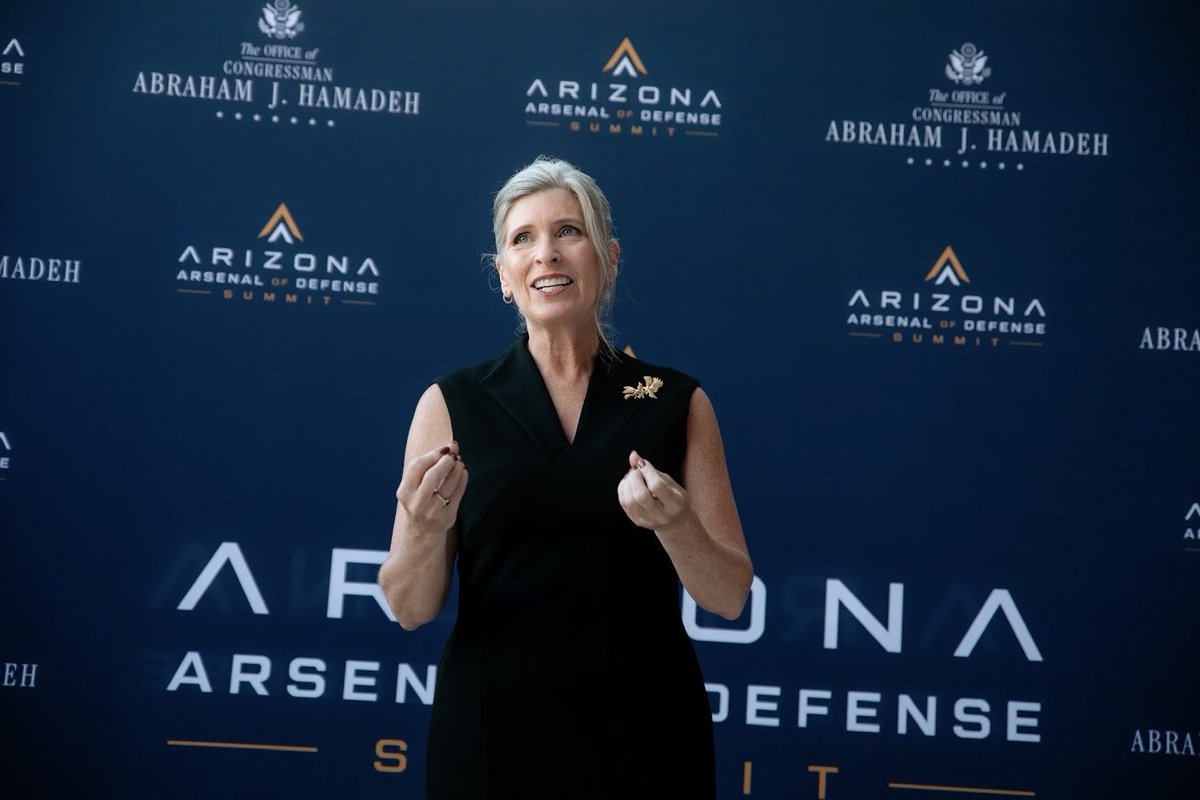
  • A woman with short gray hair, wearing a sleeveless black dress and a gold brooch, speaks with her hands raised in front of a dark blue event backdrop. The backdrop contains repeated logos and text.
    A woman with short gray hair, wearing a sleeveless black dress and a gold brooch, speaks with her hands raised in front of a dark blue event backdrop. The backdrop contains repeated logos and text.View post
About the descriptions

Written by a vision model and may be wrong. Open the post to see the original. Five are shown; the toggle shows the rest.

Back to topNext: Methods and sources

Methods and sources

How this page was made. Profile built Nov 22, 2026; site last built Nov 22, 2026. Every number on the page is computed from the sources listed here, by the same rules for every official; nothing is written by hand.

The headline

The headline is the measure on which Ernst is most unusual among Senate Republicans, chosen by one rule for every official of every party. The candidates are the rate of each kind of statement and of extreme labels, party unity, attendance, the small-donor share, the in-state share and total receipts of the latest cycle, the share of sponsored bills that got out of committee, talk-to-bills agreement, and the CSIP score’s place within the party group.

The builder ranks every measure within the same peer group the page compares it with, and writes each official’s percentile: the share of the group below the value, ties counting half, so 0.5 is the median and a value shared by many never ranks first. A measure’s score is how far that percentile sits from the median (0 in the middle, 0.5 at either end), and the highest score leads if it is above 0.25, outside the middle half of the group. Scores within 0.03 of each other are a tie, broken in this order: votes against the party majority, kinds of statement, ideology, roll calls missed, small donations, in-state money, legislation, agreement, extreme labels, receipts.

A measure counts only with at least 200 statements, 100 roll calls or 5 sponsored bills behind it and a peer group of at least 10. Two things never lead: high party unity or attendance, where most members sit, and a high rate of a kind of statement backed by fewer than 10 statements. When nothing qualifies, the headline is a neutral fact instead: statements classified, or years in office. The wording always names the direction (“in the bottom 5% of …”, “votes against the majority of …”).


Identifiers

Profile id
E000295
Bioguide
E000295
FEC candidate ids
S4IA00129

Bulk files with the same data for every official:

Freshness of this profile’s data

  • What politicians sayNov 21, 20261 days agoMembers of Congress: tweets since 2017; press releases, newsletters and floor speeches since 2022. State legislators: tweets since May 2024. Governors: tweets since January 2025. Labels from an LLM classifier.
  • Roll calls (Congress)Nov 20, 20262 days agoVoteview roll calls, 113th Congress (2013) on.
  • Bills (Congress)Nov 20, 20262 days agoGovInfo BILLSTATUS: sponsors, cosponsors, actions, CRS policy area.
  • Lawmark Achievement Scores (Congress)Nov 13, 20269 days agoLawmark Achievement Scores, Lawmark text in law and the bill progress share, every Congress from the 113th (2013), from the bill status files, the printed bill texts and public committee rosters; weekly.
  • Campaign money (FEC)Nov 20, 20262 days agoFEC committee financial summaries (totals, small donations) and itemized contributions (donor counts, states, employers), the 2020 cycle on; aggregates only.
  • Ideology (CSIP)Nov 3, 202619 days agoCommon-Space Ideal Points (CSIP), current validated run.
  • WebsitesNov 22, 2026todayWeekly crawls of federal sites since April 2026; monthly state crawls since June 2026.
  • ImagesNov 22, 2026todayImages in members' tweets with vision-model descriptions.

How the measures work

What politicians say
Every post, press release, newsletter and congressional floor speech is read by a language model and marked for personal attacks, policy criticism, policy discussion, bipartisanship and credit claiming. A statement can be in several. Rates are shares of statements in the window. The methods paper.
Extreme labels
A statement has an extreme label when it calls a politician, party or policy “far left”, “far right”, “MAGA”, “extreme”, “radical”, “woke”, “fascist” or “communist”. The target is who the label is aimed at.
Policy areas and agreement
Statements and bills share 25 Congressional Research Service policy areas (state bills are assigned by a language model). Agreement is 1 − Jensen–Shannon distance between the two distributions, shown with at least 20 policy statements and 5 bills.
Ideology (CSIP)
Common-Space Ideal Points place federal and state officials on one left–right scale, estimated jointly from roll calls, campaign contributions and the text of statements, with standard errors. Only a validated run is shown. The methods paper.
Campaign money
Campaigns report by name only donors who give more than $200 in a cycle; smaller gifts are reported as one total. Federal totals and the small-donor share come from the FEC’s financial summaries of each campaign committee. Donor counts, donor states, employers and occupations cover itemized donors only. State filings report no small-gift totals, so state figures are itemized only. The lab never publishes donor names.
Votes and key votes
Attendance, party unity and the count of votes against the majority of an official’s own party come from roll calls (Voteview for Congress, chamber records for the states). Key votes are final-passage or override votes that became law, were decided by under 10%, saw at least 10% of a party vote against its majority, or concerned one of the 25 bills most mentioned in officials’ statements.
Peers and ranks
Comparisons are with the same party, chamber and level (for example House Democrats); state legislators are compared within their state and chamber for votes. Every comparison names its group. Rank 1 is the highest value in the group; tied values share the average of their ranks, and the percentile is the share of the group below the value, ties counting half.

America’s Political Pulse · Polarization Research Lab

Back to top