Skip to content

Democrat · U.S. House, California’s 39th district

2024 presidential vote here Harris +9.7 (the district as drawn for 2024; The Downballot)Won 2024 with 56.7%, by 13.4 points

Serving since Jan 3, 2013119th Congress (2025–27)next election Nov 7, 2028

Bioguide T000472FEC H2CA43245

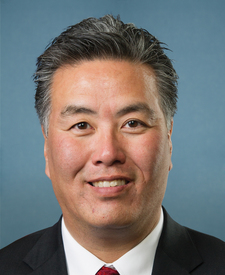
Portrait of Mark Takano, rendered as a two-tone print
Official portrait
94%
of House Democrats score to the right of Takano on the CSIP scale

CSIP score −1.38 (approximate range −1.40 to −1.36, which understates the uncertainty); negative is left of the scale’s centre, positive right. From 1,884 donors and 7,507 roll calls.

CSIP places every official on one left–right scale estimated from roll-call votes, campaign donations and the text of statements; 0 is the centre of the scale, not a definition of moderate. The share says where Takano sits among House Democrats, not how far from the centre.

At a glance

6 measures against House Democrats. 16% of Takano’s statements use bipartisan language, 1.7 times the House Democrat average of 9.7%. 38% of Takano’s statements criticize a policy, in the top quarter of House Democrats (average 27%).

The measures on which Takano sits furthest from the middle of House Democrats, each against the same group, with the CSIP score when there is one. Every number is explained in its own section below.

Party unity

100%

House Democrats average 96.3% · ranks 9th of 217 · 12 votes against the majority of House Democrats

CSIP ideology

−1.38

More liberal than 94% of House Democrats · ± 0.02

Bipartisanship

16%

House Democrats average 9.7% · ranks 24th of 216

Policy criticism

38%

House Democrats average 27% · ranks 25th of 216

Talk-to-bills agreement

0.71

House Democrats average 0.67 · ranks 48th of 216

Raised, 2026

$1.1M

House Democrats’ median $2.0M · ranks 167th of 214

Peer group: House Democrats. Rank 1 is the highest value in the group; the thick bar is Takano, the thin grey bar the peer average. The headline is the measure on which Takano is most unusual among peers (Methods, §08).

The district at a glance

Congressional District 39 (119th Congress): the district as drawn for 2024

The district’s page

Of every 100 people

765,795 people (±3,254)

District

United States

California

Race and ethnicity, of every 100 people: district, California and the United States
GroupDistrictCaliforniaU.S.
White183457
Black8512
Hispanic or Latino634019
Asian6156
Another race or more than one465

Hispanic or Latino people may be of any race; the other groups are not Hispanic.

Compared with the typical House district

Where it falls among the House districts: the centre rule is the median, the edges the lowest and the highest

← Lower than mostHigher than most →
Median household income
$91,800typical $78,700
Below the poverty line
12%typical 12%
Bachelor’s degree or moreadults 25 and over
20%typical 33%
Median age
33.1typical 39.1
Aged 65 and over
11%typical 17%
Born outside the U.S.
25%typical 10%
Veteranscivilian adults
4.1%typical 6.3%
Living in rural areas2020 Census
1.6%typical 15%
bottom 10%mediantop 10%
Show the data
Where it falls among the House districts
MeasureHere±The typical House districtPercentileStanding
Median household income$91,800±$1,345$78,70071higher than in 2 of every 3 House districts
Below the poverty line12%±0.612%49near the middle of the House districts
Bachelor’s degree or more20%±0.633%2fewer than in 19 of every 20 House districts
Median age33.1±0.339.13lower than in 19 of every 20 House districts
Aged 65 and over11%±0.317%2fewer than in 19 of every 20 House districts
Born outside the U.S.25%±0.610%83more than in 3 of every 4 House districts
Veterans4.1%±0.26.3%19fewer than in 3 of every 4 House districts
Living in rural areas1.6%—15%26fewer than in 2 of every 3 House districts

Source: ACS 2020–2024 5-year estimates (Census Bureau); rural share from the 2020 Census.

About these figures

The figures from the American Community Survey are estimates from a sample, not a count. The ± beside each is its 90 percent margin of error: nine times in ten the true value lies within that range. In small districts the margins are wide, so a gap of a few points from California may be noise. Shares are of everyone in the district, except education (adults 25 and over), poverty (people whose poverty status is known) and veterans (civilian adults).

These are the Census Bureau’s own estimates for the district; margins on shares are approximated from the counts’ margins.

The rural share counts the people living outside the urban areas the Census Bureau drew from the 2020 Census; it is a count, with no margin of error.

Back to topNext: What politicians say

What Takano says

Takano stresses bipartisanship more than 88% of House Democrats. Bipartisanship in 16% of 640 statements, against 9.7% for the average House Democrat; 24th of 216.

An AI model reads each of Takano’s 640 statements in the 119th Congress (279 Congressional Record speeches, 272 posts on X, 46 press releases, 43 newsletters) and marks the kinds of statement it contains: a personal attack, criticism of a policy, discussion of policy, bipartisanship, credit claiming, and extreme labels. A statement can carry several. Every rate is compared with the average for House Democrats and ranked among them.

Kinds of statement

Share of statements carrying each label, the 119th Congress

0%80%
Takano
Peers
Rank
Policy discussion463 statements
72%
73%
132nd of 216
Policy criticism240 statements
38%
27%
25th of 216
Credit claiming130 statements
20%
23%
123rd of 216
Bipartisanship105 statements
16%
10%
24th of 216
Personal attacks55 statements
9%
7%
58th of 216
Show the data
Takano's share of statements in each category against the House Democrats average.
RowTakanoPeers
Policy discussion72%73%
Policy criticism38%27%
Credit claiming20%23%
Bipartisanship16%10%
Personal attacks9%7%
640

statements classified

279 Congressional Record speeches, 272 posts on X, 46 press releases, 43 newsletters.

Congressional Record speeches: 279 (43.6%)Congressional Record speeches 279posts on X: 272 (42.5%)posts on X 272press releases: 46 (7.2%)newsletters: 43 (6.7%)
Show the data
Takano's statements by source
PartValue
Congressional Record speeches279
posts on X272
press releases46
newsletters43
How to read the bars

The thick bar is Takano, in the colour of that kind of statement; the thin grey bar is the average House Democrats. A longer thick bar means Takano does this more than peers. Rank 1 is the highest rate in the group.

Extreme labels

Takano used extreme labels in 2.2% of statements, above the peer average. 14 statements, most often aimed at bill; peers 1.9%.

  1. “extreme”11
  2. “MAGA”3

Who gets the labels

Targets named alongside an extreme label, by number of statements

  1. bill1
  2. Chairman Bost1
  3. Chairman Van Orden1
  4. government1
  5. MAGA Republicans1
What an extreme label is

Calls a politician, a party or a policy “far left”, “far right”, “MAGA”, “extreme”, “radical”, “woke”, “fascist” or “communist”. The target is who or what the label was aimed at. The lists show the five most used labels and targets; the toggle shows the rest.

Month by month

Share of statements per month, the 119th Congress

Statements2025-01: 372025-02: 382025-03: 472025-04: 572025-05: 382025-06: 392025-07: 322025-08: 92025-09: 682025-10: 242025-11: 172025-12: 162026-01: 332026-02: 302026-03: 122026-04: 142026-05: 402026-06: 182026-07: 282026-08: 22026-09: 32026-10: 22026-11: 36peak 68 · Sep ’25Personal attackspeak 33.3% · Oct ’25 · latest 2.8%Personal attacks, 2025-01: 8.1% of 37Personal attacks, 2025-02: 7.9% of 38Personal attacks, 2025-03: 17.0% of 47Personal attacks, 2025-04: 8.8% of 57Personal attacks, 2025-05: 2.6% of 38Personal attacks, 2025-06: 12.8% of 39Personal attacks, 2025-07: 6.3% of 32Personal attacks, 2025-08: not plotted (fewer than 10 statements)Personal attacks, 2025-09: 0.0% of 68Personal attacks, 2025-10: 33.3% of 24Personal attacks, 2025-11: 5.9% of 17Personal attacks, 2025-12: 18.8% of 16Personal attacks, 2026-01: 3.0% of 33Personal attacks, 2026-02: 3.3% of 30Personal attacks, 2026-03: 16.7% of 12Personal attacks, 2026-04: 28.6% of 14Personal attacks, 2026-05: 2.5% of 40Personal attacks, 2026-06: 11.1% of 18Personal attacks, 2026-07: 7.1% of 28Personal attacks, 2026-08: not plotted (fewer than 10 statements)Personal attacks, 2026-09: not plotted (fewer than 10 statements)Personal attacks, 2026-10: not plotted (fewer than 10 statements)Personal attacks, 2026-11: 2.8% of 36Policy criticismpeak 56.7% · Feb ’26 · latest 0.0%Policy criticism, 2025-01: 37.8% of 37Policy criticism, 2025-02: 39.5% of 38Policy criticism, 2025-03: 44.7% of 47Policy criticism, 2025-04: 38.6% of 57Policy criticism, 2025-05: 39.5% of 38Policy criticism, 2025-06: 53.8% of 39Policy criticism, 2025-07: 50.0% of 32Policy criticism, 2025-08: not plotted (fewer than 10 statements)Policy criticism, 2025-09: 33.8% of 68Policy criticism, 2025-10: 20.8% of 24Policy criticism, 2025-11: 17.6% of 17Policy criticism, 2025-12: 43.8% of 16Policy criticism, 2026-01: 27.3% of 33Policy criticism, 2026-02: 56.7% of 30Policy criticism, 2026-03: 41.7% of 12Policy criticism, 2026-04: 35.7% of 14Policy criticism, 2026-05: 47.5% of 40Policy criticism, 2026-06: 38.9% of 18Policy criticism, 2026-07: 39.3% of 28Policy criticism, 2026-08: not plotted (fewer than 10 statements)Policy criticism, 2026-09: not plotted (fewer than 10 statements)Policy criticism, 2026-10: not plotted (fewer than 10 statements)Policy criticism, 2026-11: 0.0% of 36Policy discussionpeak 97.0% · Jan ’26 · latest 38.9%Policy discussion, 2025-01: 81.1% of 37Policy discussion, 2025-02: 79.0% of 38Policy discussion, 2025-03: 78.7% of 47Policy discussion, 2025-04: 66.7% of 57Policy discussion, 2025-05: 81.6% of 38Policy discussion, 2025-06: 71.8% of 39Policy discussion, 2025-07: 81.3% of 32Policy discussion, 2025-08: not plotted (fewer than 10 statements)Policy discussion, 2025-09: 67.7% of 68Policy discussion, 2025-10: 45.8% of 24Policy discussion, 2025-11: 52.9% of 17Policy discussion, 2025-12: 87.5% of 16Policy discussion, 2026-01: 97.0% of 33Policy discussion, 2026-02: 83.3% of 30Policy discussion, 2026-03: 58.3% of 12Policy discussion, 2026-04: 92.9% of 14Policy discussion, 2026-05: 67.5% of 40Policy discussion, 2026-06: 55.6% of 18Policy discussion, 2026-07: 71.4% of 28Policy discussion, 2026-08: not plotted (fewer than 10 statements)Policy discussion, 2026-09: not plotted (fewer than 10 statements)Policy discussion, 2026-10: not plotted (fewer than 10 statements)Policy discussion, 2026-11: 38.9% of 36Bipartisanshippeak 30.3% · Jan ’26 · latest 16.7%Bipartisanship, 2025-01: 16.2% of 37Bipartisanship, 2025-02: 13.2% of 38Bipartisanship, 2025-03: 8.5% of 47Bipartisanship, 2025-04: 19.3% of 57Bipartisanship, 2025-05: 26.3% of 38Bipartisanship, 2025-06: 5.1% of 39Bipartisanship, 2025-07: 12.5% of 32Bipartisanship, 2025-08: not plotted (fewer than 10 statements)Bipartisanship, 2025-09: 25.0% of 68Bipartisanship, 2025-10: 0.0% of 24Bipartisanship, 2025-11: 17.6% of 17Bipartisanship, 2025-12: 25.0% of 16Bipartisanship, 2026-01: 30.3% of 33Bipartisanship, 2026-02: 23.3% of 30Bipartisanship, 2026-03: 0.0% of 12Bipartisanship, 2026-04: 7.1% of 14Bipartisanship, 2026-05: 22.5% of 40Bipartisanship, 2026-06: 5.6% of 18Bipartisanship, 2026-07: 10.7% of 28Bipartisanship, 2026-08: not plotted (fewer than 10 statements)Bipartisanship, 2026-09: not plotted (fewer than 10 statements)Bipartisanship, 2026-10: not plotted (fewer than 10 statements)Bipartisanship, 2026-11: 16.7% of 36Credit claimingpeak 50.0% · Jun ’26 · latest 16.7%Credit claiming, 2025-01: 32.4% of 37Credit claiming, 2025-02: 13.2% of 38Credit claiming, 2025-03: 8.5% of 47Credit claiming, 2025-04: 21.1% of 57Credit claiming, 2025-05: 34.2% of 38Credit claiming, 2025-06: 10.3% of 39Credit claiming, 2025-07: 25.0% of 32Credit claiming, 2025-08: not plotted (fewer than 10 statements)Credit claiming, 2025-09: 25.0% of 68Credit claiming, 2025-10: 4.2% of 24Credit claiming, 2025-11: 11.8% of 17Credit claiming, 2025-12: 6.3% of 16Credit claiming, 2026-01: 27.3% of 33Credit claiming, 2026-02: 30.0% of 30Credit claiming, 2026-03: 8.3% of 12Credit claiming, 2026-04: 7.1% of 14Credit claiming, 2026-05: 30.0% of 40Credit claiming, 2026-06: 50.0% of 18Credit claiming, 2026-07: 0.0% of 28Credit claiming, 2026-08: not plotted (fewer than 10 statements)Credit claiming, 2026-09: not plotted (fewer than 10 statements)Credit claiming, 2026-10: not plotted (fewer than 10 statements)Credit claiming, 2026-11: 16.7% of 36Extreme labelspeak 12.5% · Dec ’25 · latest 0.0%Extreme labels, 2025-01: 0.0% of 37Extreme labels, 2025-02: 5.3% of 38Extreme labels, 2025-03: 6.4% of 47Extreme labels, 2025-04: 1.8% of 57Extreme labels, 2025-05: 2.6% of 38Extreme labels, 2025-06: 5.1% of 39Extreme labels, 2025-07: 0.0% of 32Extreme labels, 2025-08: not plotted (fewer than 10 statements)Extreme labels, 2025-09: 2.9% of 68Extreme labels, 2025-10: 0.0% of 24Extreme labels, 2025-11: 0.0% of 17Extreme labels, 2025-12: 12.5% of 16Extreme labels, 2026-01: 0.0% of 33Extreme labels, 2026-02: 0.0% of 30Extreme labels, 2026-03: 0.0% of 12Extreme labels, 2026-04: 0.0% of 14Extreme labels, 2026-05: 2.5% of 40Extreme labels, 2026-06: 0.0% of 18Extreme labels, 2026-07: 0.0% of 28Extreme labels, 2026-08: not plotted (fewer than 10 statements)Extreme labels, 2026-09: not plotted (fewer than 10 statements)Extreme labels, 2026-10: not plotted (fewer than 10 statements)Extreme labels, 2026-11: 0.0% of 36Jan ’25Jul ’25Jan ’26Jul ’26Nov ’26
Show the data
Monthly rates for Takano, each row shaded against its own peak, with statement volume. Months with fewer than 10 statements are left blank.
ColumnStatementsPersonal attacksPolicy criticismPolicy discussionBipartisanshipCredit claimingExtreme labels
Jan ’25378.1%37.8%81.1%16.2%32.4%0.0%
Feb ’25387.9%39.5%79.0%13.2%13.2%5.3%
Mar ’254717.0%44.7%78.7%8.5%8.5%6.4%
Apr ’25578.8%38.6%66.7%19.3%21.1%1.8%
May ’25382.6%39.5%81.6%26.3%34.2%2.6%
Jun ’253912.8%53.8%71.8%5.1%10.3%5.1%
Jul ’25326.3%50.0%81.3%12.5%25.0%0.0%
Aug ’259— (fewer than 10 statements)— (fewer than 10 statements)— (fewer than 10 statements)— (fewer than 10 statements)— (fewer than 10 statements)— (fewer than 10 statements)
Sep ’25680.0%33.8%67.7%25.0%25.0%2.9%
Oct ’252433.3%20.8%45.8%0.0%4.2%0.0%
Nov ’25175.9%17.6%52.9%17.6%11.8%0.0%
Dec ’251618.8%43.8%87.5%25.0%6.3%12.5%
Jan ’26333.0%27.3%97.0%30.3%27.3%0.0%
Feb ’26303.3%56.7%83.3%23.3%30.0%0.0%
Mar ’261216.7%41.7%58.3%0.0%8.3%0.0%
Apr ’261428.6%35.7%92.9%7.1%7.1%0.0%
May ’26402.5%47.5%67.5%22.5%30.0%2.5%
Jun ’261811.1%38.9%55.6%5.6%50.0%0.0%
Jul ’26287.1%39.3%71.4%10.7%0.0%0.0%
Aug ’262— (fewer than 10 statements)— (fewer than 10 statements)— (fewer than 10 statements)— (fewer than 10 statements)— (fewer than 10 statements)— (fewer than 10 statements)
Sep ’263— (fewer than 10 statements)— (fewer than 10 statements)— (fewer than 10 statements)— (fewer than 10 statements)— (fewer than 10 statements)— (fewer than 10 statements)
Oct ’262— (fewer than 10 statements)— (fewer than 10 statements)— (fewer than 10 statements)— (fewer than 10 statements)— (fewer than 10 statements)— (fewer than 10 statements)
Nov ’26362.8%0.0%38.9%16.7%16.7%0.0%
How to read the strips

Each row is one kind of statement; each cell is a month, shaded against that row’s own peak (darker = closer to the peak), with the peak and the latest value written at the right. The top row counts statements. The strip covers every month of the 119th Congress, the same span as the rates above, including months with no statements. A month with fewer than 10 statements is hatched, not shaded: one or two posts would swing its rate to 0% or 100%. 4 months are hatched here.

In Takano’s words

Real statements from the classifier’s example set, with the labels it assigned

Policy criticism

Reps. Takano, Casten, Foster, Beyer, and Obernolte Lead Bipartisan Coalition to Create the Congressional Office of Technology WASHINGTON, D.C. — Today, Reps. Mark Takano (CA-39), Sean Casten (IL-6), Bill Foster (IL-11), Don Beyer (VA-8), and Jay Obernolte (CA-23) introduced the Congressional Office…

Oct 29, 2026 · Press releases · policy criticism; policy discussion; bipartisanship; credit claiming; Government Operations and Politics; Science, Technology, Communications · Source

Bipartisanship

HONORING OUR VETERANS [Rep. Mark Takano banner] Dear political, Last week, the country paused to honor the sacrifice and service of our veterans. I have spent much of my time in Congress ensuring that veterans, their families, and survivors receive the benefits to which they are entitled. We too…

Nov 16, 2026 · Newsletters · policy discussion; bipartisanship; credit claiming; Armed Forces and National Security

Extreme label

Mr. Speaker, I yield myself such time as I may consume. I do think the gentleman doth protest too much. The gentleman cheerleaded and encouraged Secretary Collins to end the VASP program over a year ago, forthwith. He is now on the floor arguing to take away the last remaining tool that veterans who…

May 21, 2026 · Congressional Record · policy criticism; policy discussion; credit claiming; Housing and Community Development; Finance and Financial Sector; Armed Forces and National Security; Economics and Public Finance; extreme label “extreme” aimed at Chairman Van Orden, Chairman Bost · Source

Examples by category

Up to five recent statements in each category

Category

Overtly questions a named person’s character, integrity or loyalty, or calls them names. Criticising a record or a policy does not count.

  1. Congressional Record

    Mr. Speaker, I thank Congressman Cisneros for his comments. We appreciate his service, and we thank him for his service. Mr. Speaker, I will share as much as I can of a statement that was put out by the Veterans of Foreign Wars. It is titled: ``VFW Condemns Cowardly and Dishonorable House Passage of Benefit Cuts on Veterans Day.'' ``House shirks accountability and quickly claims to pass controversial and unprecedented benefit cuts by voice vote.'' ``On a day dedicated to honoring America's veterans, the House of Representatives took the reprehensible step to quickly pass the so- called Take Ca

    personal attacks · policy discussion · bipartisanship · credit claiming · Armed Forces and National Security · Crime and Law Enforcement · Economics and Public Finance · Government Operations and Politics · Housing and Community Development · Labor and Employment · Health · Education · TaxationSource

  2. Congressional Record

    I yield myself such time as I may consume. In listening to the chairman today and at the Rules Committee several weeks ago, it is clear to me that he has been picking his words very carefully. He has been very specific that this bill, the so-called Take Care of America's Veterans Act, would not impair current veterans. I am not sure if the chairman fully understands how the disability benefits system works or if he truly believes what he is saying, but what he is saying isn't even remotely the full truth. The bill can and will lead to cuts for those who already have service-connected disabilit

    personal attacks · policy discussion · Armed Forces and National Security · International Affairs · Economics and Public FinanceSource

  3. Congressional Record

    Mr. Speaker, I yield myself such time as I may consume. Mr. Speaker, I rise today in strong opposition to HR 9237. It is a beautiful day here in Washington, DC, but Republicans are casting a dark cloud over all of us and especially over America's veterans. We have before us today a bill that, despite its name, does the exact opposite of taking care of veterans. It enshrines into law the largest cut to veterans' benefits ever in the history of this Nation. The premise of this bill is that some veterans must be made worse off in order to make others better off. Mr. Speaker, I reject that premise

    personal attacks · policy discussion · bipartisanship · Armed Forces and National Security · Economics and Public Finance · Education · Health · Housing and Community Development · Labor and Employment · Taxation · target: BostSource

  4. Congressional Record

    I thank Congressman Jackson for yielding. I thank him for that wonderful introduction. I won't claim to be the first Japanese American in Congress. There were many that came before me, such as Senator Inouye, Senator Spark Matsunaga, and many others such as Bob Matsui in the House of Representatives. But all of what you said about my family having been interned or incarcerated during World War II, that is the burden of history that I do carry and it is something that I think is very important and relevant to today. I want to focus on the Voting Rights Act, which is the topic of this Special Or

    personal attacks · policy criticism · policy discussion · Civil Rights and Liberties, Minority Issues · Government Operations and Politics · LawSource

  5. Congressional Record

    Mr. Speaker, yesterday I proudly voted to pass an Iran War Powers Resolution to rein in this unraveling President. This was the fourth attempt by Democrats to assert our authority as a coequal branch of government and to say: No more to this war of choice. Every Democrat in this House Chamber heard the cries of Americans saying no more to the billions spent on war instead of investing here at home. Mr. Speaker, why did it take us this long? This war has gone on for more than 90 days. The price tag continues to rise by the billions every week, and every American feels the economic pain of this

    personal attacks · policy criticism · policy discussion · credit claiming · Armed Forces and National Security · Government Operations and Politics · Economics and Public Finance · Energy · target: unraveling PresidentSource

All 640 statements

Newest first, the 119th Congress

The full feed

Five statements at a time, newest first; filters apply to the statements loaded so far. Export saves the statements that match. Sources: 279 Congressional Record speeches, 272 posts on X, 46 press releases, 43 newsletters.

Back to topNext: Policy

Policy

Armed Forces and National Security is what Takano talks about most: 44% of policy statements, 2.8 times the peer share. Talk and legislation agree at 0.71 on a 0–1 scale (House Democrats average 0.67; 48th of 216).

Each policy statement is tagged by the AI model with one or more of 25 policy areas from the Congressional Research Service list, so the shares say what Takano talks about. The bills Takano sponsors and cosponsors carry the same areas, so the two can be compared.

What Takano talks about

Share of policy statements by area, the 119th Congress

0%48%
Takano
Peers
Armed Forces and National Security202 statements
44%
16%
Health132 statements
29%
25%
Economics and Public Finance92 statements
20%
20%
Civil Rights and Liberties, Minority Issues86 statements
19%
13%
Government Operations and Politics84 statements
18%
20%
Show the data
Policy areas Takano talks about, as a share of policy statements, against the House Democrats average.
RowTakanoPeers
Armed Forces and National Security44%16%
Health29%25%
Economics and Public Finance20%20%
Civil Rights and Liberties, Minority Issues19%13%
Government Operations and Politics18%20%
How to read the bars

The thick bar is the share of Takano’s policy statements in an area; the thin grey bar is the average share for House Democrats. A statement counts once in each of its areas, so shares can add to more than 100%. The five largest areas are shown; the toggle shows the rest.

Talks about · legislates on

Left: share of statements by policy area. Right: share of bills. Areas in order of their share of statements; both sides run from 0 to 48%. Grey ticks are the House Democrats averages.

Talks aboutLegislates onArmed Forces and NationalSecurityArmed Forces and National Security, talks about: 44% (House Democrats 16%)44%Armed Forces and National Security, legislates on: 14% (House Democrats 7%)14%HealthHealth, talks about: 29% (House Democrats 25%)29%Health, legislates on: 15% (House Democrats 16%)15%Economics and Public FinanceEconomics and Public Finance, talks about: 20% (House Democrats 20%)20%Economics and Public Finance, legislates on: 0% (House Democrats 1%)0%Civil Rights and Liberties,Minority IssuesCivil Rights and Liberties, Minority Issues, talks about: 19% (House Democrats 13%)19%Civil Rights and Liberties, Minority Issues, legislates on: 10% (House Democrats 5%)10%Government Operations andPoliticsGovernment Operations and Politics, talks about: 18% (House Democrats 20%)18%Government Operations and Politics, legislates on: 13% (House Democrats 11%)13%
Show the data
Takano's share of statements against share of bills in each policy area.
AreaTalks aboutHouse Democrats, talks aboutLegislates onHouse Democrats, legislates on
Armed Forces and National Security44%16%14%7%
Health29%25%15%16%
Economics and Public Finance20%20%0%1%
Civil Rights and Liberties, Minority Issues19%13%10%5%
Government Operations and Politics18%20%13%11%
0.71

talk-to-bills agreement, 0 to 1

House Democrats average 0.67. Ranks 48th of 216.

What agreement means, and what it doesn’t

Agreement is 1 minus the distance between the two distributions (Jensen–Shannon): 1 means Takano legislates on exactly the areas Takano talks about, in the same proportions; 0 means no overlap. It does not say whether the bills match the positions in the statements, only the subjects. Bills Takano sponsored count fully, cosponsored bills a quarter. Shown with at least 20 policy statements and 5 bills.

Back to topNext: Ideology

Ideology

Takano sits at −1.38 on the CSIP scale, left of 0, more liberal than 94% of House Democrats. Approximate range −1.40 to −1.36, which understates the uncertainty; from 1,884 donors and 7,507 roll calls.

CSIP, the lab’s Common-Space Ideal Point, places every official, federal and state, on one left–right scale, estimated from roll-call votes, who gives money to whom, and the text of statements. Negative is left of 0, positive right of it; 0 is the centre of the scale, not a definition of “moderate”.

−1.38

CSIP ideal point

Approximate range −1.40 to −1.36. From 1,884 donors and 7,507 roll calls. Run 2026-11-03T100151. Blue is left of 0, red right of 0.

← More liberalMore conservative →0Takano −1.4House Democrats −1.0All House +0.4

The outlined dot is Takano, coloured by its side of 0 (blue left, red right, deeper further out); the bar through it is the approximate range (±1.96 standard errors), which understates the uncertainty; the grey ticks below are the medians of Takano’s groups. 0 is the centre of the scale, not “moderate” by definition.

What this means, and what it doesn’t

The score summarises how an official votes, who funds them and how they talk, relative to everyone else. It does not grade positions as good or bad, and two officials with the same score can differ on any single issue. The ± range is 1.96 standard errors, which understates the uncertainty: scores whose ranges overlap may not differ at all, and even scores whose ranges do not overlap may not differ.

Where Takano sits

Every official in each group, on the CSIP scale

−2.0−1.00.0+1.0+2.0← More liberalMore conservative →House Democratsmedian −1.0Takano −1.4All Housemedian +0.4
Show the data
Takano's CSIP score of −1.38 placed against House Democrats, All House.
GroupOfficialsMedianShare left of Takano
House Democrats217−1.06%
All House439+0.43%
How to read the strips

Every small dot is one official on the same scale, coloured by its own score (blue left of 0, red right of 0, grey at 0, deeper further out) and spread up and down only to keep dots apart; where a group is crowded the dots overlap, and darker patches mean more officials. The large outlined dot is Takano in every row; the rule is each group’s median. The table under the figure gives the share of each group to the left of Takano.

Back to topNext: Money

Money

Takano raised $1.1M in the 2026 cycle, below the House Democrats’ median of $2.0M. 20% of individual money came in gifts of $200 or less. 73% of itemized individual money came from California.

Campaign money from Federal Election Commission filings, as aggregates only; the lab never shows an individual donor. Campaigns must report by name every person who gives them more than $200 in a cycle (“itemized”); smaller gifts are reported only as one total (“unitemized”), so donor counts, donor states, employers and occupations describe itemized donors only.

Election cycle
$1.1M

raised in the 2026 cycle

From 256 itemized donors. House Democrats’ median $2.0M.

Where the money came from

Each square is one percent of 2026-cycle receipts, from FEC summary totals.

Itemized individual (over $200): $499.2K (45.0%)Itemized individual (over $200): $499.2K (45.0%)Itemized individual (over $200): $499.2K (45.0%)Itemized individual (over $200): $499.2K (45.0%)Itemized individual (over $200): $499.2K (45.0%)Itemized individual (over $200): $499.2K (45.0%)Itemized individual (over $200): $499.2K (45.0%)Itemized individual (over $200): $499.2K (45.0%)Itemized individual (over $200): $499.2K (45.0%)Itemized individual (over $200): $499.2K (45.0%)Itemized individual (over $200): $499.2K (45.0%)Itemized individual (over $200): $499.2K (45.0%)Itemized individual (over $200): $499.2K (45.0%)Itemized individual (over $200): $499.2K (45.0%)Itemized individual (over $200): $499.2K (45.0%)Itemized individual (over $200): $499.2K (45.0%)Itemized individual (over $200): $499.2K (45.0%)Itemized individual (over $200): $499.2K (45.0%)Itemized individual (over $200): $499.2K (45.0%)Itemized individual (over $200): $499.2K (45.0%)Itemized individual (over $200): $499.2K (45.0%)Itemized individual (over $200): $499.2K (45.0%)Itemized individual (over $200): $499.2K (45.0%)Itemized individual (over $200): $499.2K (45.0%)Itemized individual (over $200): $499.2K (45.0%)Itemized individual (over $200): $499.2K (45.0%)Itemized individual (over $200): $499.2K (45.0%)Itemized individual (over $200): $499.2K (45.0%)Itemized individual (over $200): $499.2K (45.0%)Itemized individual (over $200): $499.2K (45.0%)Itemized individual (over $200): $499.2K (45.0%)Itemized individual (over $200): $499.2K (45.0%)Itemized individual (over $200): $499.2K (45.0%)Itemized individual (over $200): $499.2K (45.0%)Itemized individual (over $200): $499.2K (45.0%)Itemized individual (over $200): $499.2K (45.0%)Itemized individual (over $200): $499.2K (45.0%)Itemized individual (over $200): $499.2K (45.0%)Itemized individual (over $200): $499.2K (45.0%)Itemized individual (over $200): $499.2K (45.0%)Itemized individual (over $200): $499.2K (45.0%)Itemized individual (over $200): $499.2K (45.0%)Itemized individual (over $200): $499.2K (45.0%)Itemized individual (over $200): $499.2K (45.0%)Itemized individual (over $200): $499.2K (45.0%)Unitemized individual (gifts of $200 or less): $123.5K (11.1%)Unitemized individual (gifts of $200 or less): $123.5K (11.1%)Unitemized individual (gifts of $200 or less): $123.5K (11.1%)Unitemized individual (gifts of $200 or less): $123.5K (11.1%)Unitemized individual (gifts of $200 or less): $123.5K (11.1%)Unitemized individual (gifts of $200 or less): $123.5K (11.1%)Unitemized individual (gifts of $200 or less): $123.5K (11.1%)Unitemized individual (gifts of $200 or less): $123.5K (11.1%)Unitemized individual (gifts of $200 or less): $123.5K (11.1%)Unitemized individual (gifts of $200 or less): $123.5K (11.1%)Unitemized individual (gifts of $200 or less): $123.5K (11.1%)PACs and other committees: $487.3K (43.9%)PACs and other committees: $487.3K (43.9%)PACs and other committees: $487.3K (43.9%)PACs and other committees: $487.3K (43.9%)PACs and other committees: $487.3K (43.9%)PACs and other committees: $487.3K (43.9%)PACs and other committees: $487.3K (43.9%)PACs and other committees: $487.3K (43.9%)PACs and other committees: $487.3K (43.9%)PACs and other committees: $487.3K (43.9%)PACs and other committees: $487.3K (43.9%)PACs and other committees: $487.3K (43.9%)PACs and other committees: $487.3K (43.9%)PACs and other committees: $487.3K (43.9%)PACs and other committees: $487.3K (43.9%)PACs and other committees: $487.3K (43.9%)PACs and other committees: $487.3K (43.9%)PACs and other committees: $487.3K (43.9%)PACs and other committees: $487.3K (43.9%)PACs and other committees: $487.3K (43.9%)PACs and other committees: $487.3K (43.9%)PACs and other committees: $487.3K (43.9%)PACs and other committees: $487.3K (43.9%)PACs and other committees: $487.3K (43.9%)PACs and other committees: $487.3K (43.9%)PACs and other committees: $487.3K (43.9%)PACs and other committees: $487.3K (43.9%)PACs and other committees: $487.3K (43.9%)PACs and other committees: $487.3K (43.9%)PACs and other committees: $487.3K (43.9%)PACs and other committees: $487.3K (43.9%)PACs and other committees: $487.3K (43.9%)PACs and other committees: $487.3K (43.9%)PACs and other committees: $487.3K (43.9%)PACs and other committees: $487.3K (43.9%)PACs and other committees: $487.3K (43.9%)PACs and other committees: $487.3K (43.9%)PACs and other committees: $487.3K (43.9%)PACs and other committees: $487.3K (43.9%)PACs and other committees: $487.3K (43.9%)PACs and other committees: $487.3K (43.9%)PACs and other committees: $487.3K (43.9%)PACs and other committees: $487.3K (43.9%)PACs and other committees: $487.3K (43.9%)
  • Itemized individual (over $200)45 squares$499.2K
  • Unitemized individual (gifts of $200 or less)11 squares$123.5K
  • PACs and other committees44 squares$487.3K
Show the data
Sources of Takano's money, 2026 cycle, one square per percent
SourceAmountShare
Itemized individual (over $200)$499.2K45.0%
Unitemized individual (gifts of $200 or less)$123.5K11.1%
PACs and other committees$487.3K43.9%
What this means, and what it doesn’t

Totals say how much a campaign took in, not how it was spent, and they rise sharply when a seat is up for election; compare cycles with that in mind. The small-donor share understates small giving when a campaign itemizes gifts made through ActBlue or WinRed.

Receipts by cycle

Total receipts, 2020 to 2026. The grey line is the House Democrats’ median for 2026.

2020 cycle: $1.0M$1.0M20202022 cycle: $1.3M$1.3M20222024 cycle: $1.2M$1.2M20242026 cycle: $1.1M$1.1M2026House Democrats median $2.0M
Show the data
Takano's receipts by cycle against the 2026 House Democrats median.
ItemValue
2020 cycle$1.0M
2022 cycle$1.3M
2024 cycle$1.2M
2026 cycle$1.1M

Top donor states, 2026

Itemized contributions by donor state. 73% came from California.

  1. California$256.4K
  2. District of Columbia$22.0K
  3. New York$19.4K
  4. Hawaii$12.5K
  5. Missouri$12.0K

Small donations

Gifts of $200 or less as a share of individual money, by cycle. The thin grey bar is the 2026 House Democrats’ median.

0%60%
Takano
Median
2026
20%
13%
2024
18%
13%
2022
16%
13%
2020
11%
13%
Show the data
Small-donor share by cycle against the House Democrats median
RowTakanoMedian
2026 cycle20%13%
2024 cycle18%13%
2022 cycle16%13%
2020 cycle11%13%

Where itemized donors live

Individuals who gave more than $200, by donor state

Alaska: no dataAKMaine: no dataMEVermont: no dataVTNew Hampshire: no dataNHWashington: $1,125WAIdaho: no dataIDMontana: no dataMTNorth Dakota: no dataNDMinnesota: no dataMNIllinois: $2,453ILWisconsin: no dataWIMichigan: no dataMINew York: $19.4KNYRhode Island: $1,000RIMassachusetts: $600MAOregon: $250ORNevada: no dataNVWyoming: no dataWYSouth Dakota: no dataSDIowa: no dataIAIndiana: no dataINOhio: no dataOHPennsylvania: $1,184PANew Jersey: no dataNJConnecticut: $250CTCalifornia: $256.4KCAUtah: no dataUTColorado: $1,500CONebraska: no dataNEMissouri: $12.0KMOKentucky: no dataKYWest Virginia: no dataWVVirginia: $1,750VAMaryland: $3,250MDDelaware: no dataDEArizona: no dataAZNew Mexico: $3,000NMKansas: no dataKSArkansas: no dataARTennessee: no dataTNNorth Carolina: no dataNCSouth Carolina: no dataSCDistrict of Columbia: $22.0KDCOklahoma: $30OKLouisiana: no dataLAMississippi: no dataMSAlabama: no dataALGeorgia: no dataGAHawaii: $12.5KHITexas: $250TXFlorida: $11.1KFL
Show the data
Takano's itemized individual contributions by donor state, 2026 cycle
StateValue
California$256.4K
District of Columbia$22.0K
New York$19.4K
Hawaii$12.5K
Missouri$12.0K
Florida$11.1K
Maryland$3,250
New Mexico$3,000
Illinois$2,453
Virginia$1,750
Colorado$1,500
Pennsylvania$1,184
Washington$1,125
Rhode Island$1,000
Massachusetts$600
Oregon$250
Connecticut$250
Texas$250
Oklahoma$30
AlaskaNo data
MaineNo data
VermontNo data
New HampshireNo data
IdahoNo data
MontanaNo data
North DakotaNo data
MinnesotaNo data
WisconsinNo data
MichiganNo data
NevadaNo data
WyomingNo data
South DakotaNo data
IowaNo data
IndianaNo data
OhioNo data
New JerseyNo data
UtahNo data
NebraskaNo data
KentuckyNo data
West VirginiaNo data
DelawareNo data
ArizonaNo data
KansasNo data
ArkansasNo data
TennesseeNo data
North CarolinaNo data
South CarolinaNo data
LouisianaNo data
MississippiNo data
AlabamaNo data
GeorgiaNo data
256

itemized donors

People who gave more than $200

73%

from California

Of itemized individual dollars

How to read the map

Every state the same size. Darker states gave more itemized money; hatched states had no itemized donors; the outlined state is California. Gifts of $200 or less carry no address and are left out.

Donors’ ideology

Distribution of itemized donors’ own CSIP scores

CSIP −1.75 to −1.50: 0.1%CSIP −1.50 to −1.25: 33%CSIP −1.25 to −1.00: 56%56%CSIP −1.00 to −0.75: 6.2%CSIP −0.75 to −0.50: 1.8%CSIP −0.50 to −0.25: 0.1%CSIP −0.25 to 0.00: 0.1%CSIP +0.25 to +0.50: 2.7%CSIP +0.50 to +0.75: 0.3%← More liberalMore conservative →
Show the data
Ideology of Takano's itemized donors in 2026, from −1.75 to +0.75: 33% between −1.50 and −1.25, 56% between −1.25 and −1.00, 6.2% between −1.00 and −0.75.
ItemValue
CSIP −1.75 to −1.500.1%
CSIP −1.50 to −1.2533%
CSIP −1.25 to −1.0056%
CSIP −1.00 to −0.756.2%
CSIP −0.75 to −0.501.8%
CSIP −0.50 to −0.250.1%
CSIP −0.25 to 0.000.1%
CSIP +0.25 to +0.502.7%
CSIP +0.50 to +0.750.3%
How to read the columns

Donors who give to many candidates get their own CSIP score. Each column is the share of Takano’s itemized money from donors in that part of the scale, blue left of 0 and red right of 0, deeper further out; Takano’s own score is −1.38.

Top donor occupations

Itemized, 2026 cycle.

  1. NOT EMPLOYED$50.0K 87 donors
  2. RETIRED$46.0K 25 donors
  3. ATTORNEY$41.4K 17 donors
  4. EXECUTIVE$13.0K 4 donors
  5. CEO$9,750 5 donors

Top committees

PAC and committee contributions, 2026 cycle.

  1. AMERICAN CRYSTAL SUGAR COMPANY POLITICAL ACTION COMMITTEE$10.0K
  2. AMERICAN FEDERATION OF STATE COUNTY & MUNICIPAL EMPLOYEES P E O P L E$10.0K
  3. CARPENTERS LEGISLATIVE IMPROVEMENT COMMITTEE UNITED BROTHERHOOD OF CARPENTERS AND JOINERS$10.0K
  4. EQUALITY PAC$10.0K
  5. EQUALITY PROJECT PAC$10.0K

Top employers

Itemized, 2026 cycle.

  1. UCR$2,150 3 donors
  2. UNIVERSITY OF CALIFORNIA RIVERSIDE$1,010 3 donors

Aggregates only. Individual donors are never named.

Back to topNext: Votes

Votes

Takano voted with the majority of House Democrats on 100% of party-line votes and missed 0.7% of 687 roll calls. House Democrats on average: 96.3% party unity, 96.9% attendance. Across all roll calls, Takano voted against the majority of House Democrats 12 times.

687 roll calls Takano could vote on in the 119th Congress, compared with House Democrats. Attendance is the share with a vote recorded. Party unity counts only party-line roll calls, where most Democrats and most Republicans voted on opposite sides, and is the share of those where Takano voted with the majority of House Democrats. The count of votes against that majority covers every roll call where the majority took a side.

12

votes against the majority of House Democrats

Party unity 100%, House Democrats average 96.3%, ranks 9th of 217. 687 roll calls in the 119th Congress.

Attendance and party unity

The thick bar is Takano, the thin grey bar the House Democrats average. The scale runs from 80% to 100% to show the gap.

80%100%
Takano
Peers
Rank
Attendance
99.2%
96.9%
56th of 217
Party unity
100%
96.3%
9th of 217
Show the data
Takano's attendance and party unity against House Democrats.
RowTakanoPeers
Attendance99.2%96.9%
Party unity100%96.3%
What this means, and what it doesn’t

A missed roll call has many causes, from illness to campaigning, so attendance says how often, not why. A vote against the majority can be on procedure as well as substance, and many fall on roll calls where both parties split; the key votes below show the ones that decided something.

Key votes

25 roll calls the lab flagged as key in the 119th Congress

Key votes
Party split (yea–nay)Why it’s key
Nov 17, 2026
H.R. 9600
Common Sense 250 Act
On Motion to Suspend the Rules and Pass
YeaWith majorityPassedD 202–0 · R 163–36Democrats 202 yea, 0 nay; Republicans 163 yea, 36 nayparty crossover
Nov 11, 2026
H.R. 1013
Retirement Fairness for Charities and Educational Institutions Act
On Passage
NayWith majorityPassedD 83–128 · R 211–0 · I 1–0Democrats 83 yea, 128 nay; Republicans 211 yea, 0 nay; Independents 1 yea, 0 nayparty crossover
Sep 16, 2026
S. 2403
Retire through Ownership Act
On Motion to Suspend the Rules and Pass
YeaWith majorityPassedD 209–0 · R 191–14 · I 1–0Democrats 209 yea, 0 nay; Republicans 191 yea, 14 nay; Independents 1 yea, 0 naybecame law
Sep 16, 2026
H.J.Res. 213
Providing for congressional disapproval under chapter 8 of title 5, United States Code, of the rule issued by the Environmental Protection Agency relating to the “California State Nonroad Engine Pollution Control Standards; Commercial Harbor Craft Regulations; Notice of Decision”
On Passage
NayWith majorityPassedD 3–207 · R 210–1 · I 1–0Democrats 3 yea, 207 nay; Republicans 210 yea, 1 nay; Independents 1 yea, 0 nayclose vote
Sep 16, 2026
H.R. 10326
PROOF Act
On Passage
NayWith majorityPassedD 6–206 · R 210–1 · I 1–0Democrats 6 yea, 206 nay; Republicans 210 yea, 1 nay; Independents 1 yea, 0 nayclose vote
How key votes are chosen

Automatically: a final-passage or override vote where the measure became law, the margin was under 10%, at least 10% of either party voted against its majority, or the bill was among the 25 most mentioned in officials’ own statements. Up to 25 per window, most recent first; five are shown. Bars show yea on the left, nay on the right, per party.

Votes most often with

The colleagues who voted the same way as Takano most often

  1. Valerie FousheeD669 shared votes99%
  2. Bonnie Watson ColemanD675 shared votes99%
  3. Suzanne BonamiciD673 shared votes99%
  4. Mark PocanD673 shared votes99%
  5. LaMonica McIverD679 shared votes99%

Votes least often with

The colleagues who voted the same way as Takano least often

  1. Chip RoyR641 shared votes16%
  2. Ralph NormanR603 shared votes17%
  3. Eric BurlisonR651 shared votes18%
  4. Josh BrecheenR646 shared votes18%
  5. Andy BiggsR617 shared votes18%
How to read the agreement lists

The share of roll calls both members voted on where they voted the same way, among colleagues sharing at least 50 such votes. High agreement with members of the other party is common on routine votes.

Full voting record

119th Congress (2025–27), loads in batches

Back to topNext: Legislation

Legislation

Takano sponsored 28 bills in the 119th Congress; none became law. Cosponsored 392 others. 7.1% of sponsored bills got out of committee (House Democrats average 4.9%; 50th of 209).

The bills Takano sponsored and cosponsored in the 119th Congress, from the official bill records, and how far each got: introduced, referred to or acted on in committee, passed one chamber, passed both, became law. A bill counts at every stage it has reached, so the blocks only shrink to the right.

Bills by stage

Counts for the 119th Congress

Sponsored28 billsSponsored, Introduced: 2828Sponsored, In committee: 2828Sponsored, Passed one chamber: 11Sponsored, Passed both chambers: 00Sponsored, Became law: 00Cosponsored392 billsCosponsored, Introduced: 392392Cosponsored, In committee: 392392Cosponsored, Passed one chamber: 88Cosponsored, Passed both chambers: 11Cosponsored, Became law: 11IntroducedIncommitteePassed onechamberPassed bothchambersBecamelaw
Show the data
Bills Takano sponsored and cosponsored, by furthest stage reached
RoleIntroducedIn committeePassed one chamberPassed both chambersBecame law
Sponsored2828100
Cosponsored392392811
How to read the blocks

Ink blocks are bills Takano sponsored, ochre blocks bills Takano cosponsored; the figure above each block is the count. Most bills in any legislature never leave committee, so a short staircase is the norm.

7.1%

of sponsored bills got out of committee

House Democrats average 4.9%. Ranks 50th of 209.

Cosponsorship partners

Colleagues who most often cosponsor with Takano, by number of shared bills in the 119th Congress; the square shows their party.

  1. Eleanor Norton63
  2. Rashida Tlaib39
  3. André Carson32
  4. Judy Chu32
  5. Shri Thanedar28
What this means, and what it doesn’t

The score is the share of sponsored bills that a committee reported out or a chamber passed, with at least 5 sponsored bills, ranked within the peer group. Members of the majority party and committee chairs move more bills, so the rank reflects position in the chamber as well as effort. Cosponsorship partners are the five colleagues who share the most of Takano’s bills; the toggle shows more.

Bill list

Sponsored and cosponsored, with status and policy area; five are shown, the toggle shows the rest

Bills sponsored and cosponsored
H.Res. 1674↗ official page (opens in a new tab)Supporting the goals and principles of Transgender Day of Remembrance by recognizing the epidemic of violence toward transgender people and memorializing the lives lost this year.CosponsorNov 20, 2026In committeeUnassignedReferred to the House Committee on the Judiciary. Nov 20, 2026
H.R. 11091↗ official page (opens in a new tab)To improve nutrition assistance for people experiencing homelessness, and for other purposes.CosponsorNov 19, 2026In committeeUnassignedReferred to the House Committee on Agriculture. Nov 19, 2026
H.R. 11113↗ official page (opens in a new tab)Commission To Study the Potential Creation of a National Museum of American LGBTQI+ History and Culture ActCosponsorNov 19, 2026In committeeUnassignedReferred to the Committee on Natural Resources, and in addition to the Committees on House Administration, and the Budget, for a period to be subsequently determined by the Speaker, in each case for consideration of such provisions as fall within the jurisdiction of the committee concerned. Nov 19, 2026
H.R. 11114↗ official page (opens in a new tab)National Museum of American LGBTQI+ History and Culture ActCosponsorNov 19, 2026In committeeUnassignedReferred to the Committee on House Administration, and in addition to the Committee on Transportation and Infrastructure, for a period to be subsequently determined by the Speaker, in each case for consideration of such provisions as fall within the jurisdiction of the committee concerned. Nov 19, 2026
H.R. 11056↗ official page (opens in a new tab)To protect victims of crime or serious labor violations from removal during Department of Homeland Security enforcement actions, and for other purposes.CosponsorNov 18, 2026In committeeUnassignedReferred to the House Committee on the Judiciary. Nov 18, 2026

Back to topNext: Lawmark

Lawmark Achievement Scores

Takano’s Lawmark Achievement Score in the 119th Congress stands at +1.3. The 90% interval runs from 0.0 to +2.5, which takes in the median for the House (+1.0): the score is not distinguishable from the typical House member’s. Position contributes +0.6 and Takano’s personal part +0.7.

The Lawmark Achievement Score measures how far a member’s own bills get against how far the same bills would be expected to get with another sponsor, step by step: committee action, leaving committee, passing the chamber, passing the other chamber, becoming law. It adds two parts. The part from position is what the member’s posts are worth (the majority party, chairs, ranking seats, leadership, seniority); the personal part is what the member adds beyond them. The unit is one standard deviation of members’ personal parts, and 0 is a first-term member of the minority with no committee post and an average personal record.

+1.3

Lawmark Achievement Score, 119th Congress

90% interval 0.0 to +2.5. Provisional: the Congress is still under way.

From position
+0.6 (+0.3 to +0.8)
Personal
+0.7 (−0.5 to +2.0)

Posts held: minority party · ranking member · 7th Congress in the chamber.

With Takano as sponsor, 1.2% of the House’s own bills in the 119th Congress would become law (90% interval 0.7% to 1.8%), against 1.0% for the median House member.

24 bills sponsored: 3 saw committee action, 3 left committee, 0 passed the House, 0 became law.

Takano in the 119th Congress

The grey ticks are the 429 members of the House with at least five bills; the line is their median score

−2.00.0+2.0+4.0+6.0+8.0Median +1.0Score: +1.3 (90% interval 0.0 to +2.5)+1.3Scoreposition + personalFrom position: +0.6 (90% interval +0.3 to +0.8)+0.6From positionPersonal: +0.7 (90% interval −0.5 to +2.0)+0.7Personal
Show the data
Takano’s Lawmark Achievement Score in the 119th Congress +1.3 (90% interval 0.0 to +2.5), from position +0.6, personal +0.7; the chamber median is +1.0.
PartEstimate90% interval
Score (position + personal)+1.30.0 to +2.5
From position+0.6+0.3 to +0.8
Personal+0.7−0.5 to +2.0
What this means, and what it doesn’t

The score credits a member for bills that move, not for bills filed: a member who introduces two hundred bills and sees six become law scores below one who introduces twenty and sees five. Each bill is compared with bills like it (its policy area, when in the Congress it was introduced, how many committees it went to, whether it is commemorative or an appropriations bill, how significant it looked when introduced), so an easy bill earns less than a hard one. Every score carries a 90% interval; where two members’ intervals overlap, the data do not tell them apart.

A Congress still under way is provisional: pending bills are counted as still able to move, on the schedule bills kept in past Congresses, and the score will change as they do. With fewer than five bills in a Congress, Takano’s own contribution cannot be measured, and only the part from position is shown.

A methods paper on how the scores are estimated, and how to reproduce them, is forthcoming.

Congress by Congress

Newest first

−2.00.0+2.0+4.0+6.0119th: +1.3 (90% interval 0.0 to +2.5)+1.3119thHouse, provisional118th: +1.6 (90% interval +0.3 to +2.9)+1.6118thHouse117th: +4.5 (90% interval +3.3 to +5.8)+4.5117thHouse116th: +3.3 (90% interval +2.1 to +4.6)+3.3116thHouse115th: −0.2 (90% interval −1.5 to +1.0)−0.2115thHouse114th: +0.9 (90% interval −0.4 to +2.2)+0.9114thHouse113th: +1.4 (90% interval +0.1 to +2.7)+1.4113thHouse
Show the data
Takano’s Lawmark Achievement Score by Congress: 119th +1.3; 118th +1.6; 117th +4.5; 116th +3.3; 115th −0.2; 114th +0.9; 113th +1.4.
CongressScore90% interval
119th (House, provisional)+1.30.0 to +2.5
118th (House)+1.6+0.3 to +2.9
117th (House)+4.5+3.3 to +5.8
116th (House)+3.3+2.1 to +4.6
115th (House)−0.2−1.5 to +1.0
114th (House)+0.9−0.4 to +2.2
113th (House)+1.4+0.1 to +2.7
How to read the rows

Each row is one Congress: the dot is the score and the bar its 90% interval. An open gold dot is the part from position alone, shown where Takano had fewer than five bills. Scores compare members within a chamber and Congress; a member’s own scores are linked across Congresses, so a long record steadies each one.

Lawmark text in law

Words of enacted text that came from Takano’s bills in the 119th Congress

No text from Takano’s bills of the 119th Congress is in a law yet.

Bill progress share

Volden–Wiseman method

0.45

119th Congress

1.0 is the average member of the House; a member with the same posts would be expected to reach 0.5, so this is in line with expectations.

The standard count: the member’s share of the chamber’s bills at each stage (introduced, committee action, out of committee, passed the chamber, became law), with commemorative bills counting least and significant ones most, scaled so the chamber averages 1. It rewards volume as well as success; the Lawmark Achievement Score does not.

Back to topNext: Online

Online

A site that changed 78 times in 90 days. Takano’s official site had 33 pages when last crawled on Nov 22, 2026. The lab last catalogued the images Takano posted on Apr 17, 2026.

The lab crawls Takano’s official and campaign websites (weekly for Congress, monthly for the states) and keeps every page’s text, so changes can be read later; it also records social accounts and describes the images Takano posts with a vision model.

Websites

  • Official site

    takano.house.gov

    Last crawled Nov 22, 2026

    33

    pages crawled

    78

    changes in 90 days

  • Campaign site

    www.marktakano.com

    Last crawled Nov 22, 2026

    2

    pages crawled

    1

    changes in 90 days

How to read the counts

“Pages crawled” is the size of the site at the last crawl; “changes in 90 days” counts pages whose text differed from the previous crawl. Sites change for many routine reasons, such as new press releases, so a high count is not by itself notable.

Images Takano posted

The latest 24, with model-written descriptions

  • A three-panel collage from a congressional hearing. In the top panels, a man in a suit speaks at a table while a seated woman and a displayed religious painting are visible behind him. In the bottom panel, an older man in a suit gestures as he responds, with two suited men seated behind him. Large yellow subtitles appear across all three panels.
    A three-panel collage from a congressional hearing. In the top panels, a man in a suit speaks at a table while a seated woman and a displayed religious painting are visible behind him. In the bottom panel, an older man in a suit gestures as he responds, with two suited men seated behind him. Large yellow subtitles appear across all three panels.View post
  • The image shows three individuals, including one in uniform and two in business attire, set against a background that includes a dome-like structure. There is prominent text overlay.
    The image shows three individuals, including one in uniform and two in business attire, set against a background that includes a dome-like structure. There is prominent text overlay.View post
  • The image shows a bathroom filled with numerous stacked cardboard boxes. There is a sink with a marble countertop, a toilet, and a tissue box on the countertop. Some light fixtures are also visible on the wall. Text is present on the boxes.
    The image shows a bathroom filled with numerous stacked cardboard boxes. There is a sink with a marble countertop, a toilet, and a tissue box on the countertop. Some light fixtures are also visible on the wall. Text is present on the boxes.View post
  • The image shows a construction site where a building is being demolished. A large excavator is in operation, tearing down parts of the structure. There are construction workers wearing safety vests and helmets on the site. The scene is surrounded by a fence, and there is some text visible on the machinery.
    The image shows a construction site where a building is being demolished. A large excavator is in operation, tearing down parts of the structure. There are construction workers wearing safety vests and helmets on the site. The scene is surrounded by a fence, and there is some text visible on the machinery.View post
  • The image shows two people in suits in front of the U.S. Capitol building with prominent text overlaid.
    The image shows two people in suits in front of the U.S. Capitol building with prominent text overlaid.View post
About the descriptions

Written by a vision model and may be wrong. Open the post to see the original. Five are shown; the toggle shows the rest.

Back to topNext: Methods and sources

Methods and sources

How this page was made. Profile built Nov 22, 2026; site last built Nov 22, 2026. Every number on the page is computed from the sources listed here, by the same rules for every official; nothing is written by hand.

The headline

The headline is the measure on which Takano is most unusual among House Democrats, chosen by one rule for every official of every party. The candidates are the rate of each kind of statement and of extreme labels, party unity, attendance, the small-donor share, the in-state share and total receipts of the latest cycle, the share of sponsored bills that got out of committee, talk-to-bills agreement, and the CSIP score’s place within the party group.

The builder ranks every measure within the same peer group the page compares it with, and writes each official’s percentile: the share of the group below the value, ties counting half, so 0.5 is the median and a value shared by many never ranks first. A measure’s score is how far that percentile sits from the median (0 in the middle, 0.5 at either end), and the highest score leads if it is above 0.25, outside the middle half of the group. Scores within 0.03 of each other are a tie, broken in this order: votes against the party majority, kinds of statement, ideology, roll calls missed, small donations, in-state money, legislation, agreement, extreme labels, receipts.

A measure counts only with at least 200 statements, 100 roll calls or 5 sponsored bills behind it and a peer group of at least 10. Two things never lead: high party unity or attendance, where most members sit, and a high rate of a kind of statement backed by fewer than 10 statements. When nothing qualifies, the headline is a neutral fact instead: statements classified, or years in office. The wording always names the direction (“in the bottom 5% of …”, “votes against the majority of …”).


Identifiers

Profile id
T000472
Bioguide
T000472
FEC candidate ids
H2CA43245

Bulk files with the same data for every official:

Freshness of this profile’s data

  • What politicians sayNov 21, 20261 days agoMembers of Congress: tweets since 2017; press releases, newsletters and floor speeches since 2022. State legislators: tweets since May 2024. Governors: tweets since January 2025. Labels from an LLM classifier.
  • Roll calls (Congress)Nov 20, 20262 days agoVoteview roll calls, 113th Congress (2013) on.
  • Bills (Congress)Nov 20, 20262 days agoGovInfo BILLSTATUS: sponsors, cosponsors, actions, CRS policy area.
  • Lawmark Achievement Scores (Congress)Nov 13, 20269 days agoLawmark Achievement Scores, Lawmark text in law and the bill progress share, every Congress from the 113th (2013), from the bill status files, the printed bill texts and public committee rosters; weekly.
  • Campaign money (FEC)Nov 20, 20262 days agoFEC committee financial summaries (totals, small donations) and itemized contributions (donor counts, states, employers), the 2020 cycle on; aggregates only.
  • Ideology (CSIP)Nov 3, 202619 days agoCommon-Space Ideal Points (CSIP), current validated run.
  • WebsitesNov 22, 2026todayWeekly crawls of federal sites since April 2026; monthly state crawls since June 2026.
  • ImagesNov 22, 2026todayImages in members' tweets with vision-model descriptions.

How the measures work

What politicians say
Every post, press release, newsletter and congressional floor speech is read by a language model and marked for personal attacks, policy criticism, policy discussion, bipartisanship and credit claiming. A statement can be in several. Rates are shares of statements in the window. The methods paper.
Extreme labels
A statement has an extreme label when it calls a politician, party or policy “far left”, “far right”, “MAGA”, “extreme”, “radical”, “woke”, “fascist” or “communist”. The target is who the label is aimed at.
Policy areas and agreement
Statements and bills share 25 Congressional Research Service policy areas (state bills are assigned by a language model). Agreement is 1 − Jensen–Shannon distance between the two distributions, shown with at least 20 policy statements and 5 bills.
Ideology (CSIP)
Common-Space Ideal Points place federal and state officials on one left–right scale, estimated jointly from roll calls, campaign contributions and the text of statements, with standard errors. Only a validated run is shown. The methods paper.
Campaign money
Campaigns report by name only donors who give more than $200 in a cycle; smaller gifts are reported as one total. Federal totals and the small-donor share come from the FEC’s financial summaries of each campaign committee. Donor counts, donor states, employers and occupations cover itemized donors only. State filings report no small-gift totals, so state figures are itemized only. The lab never publishes donor names.
Votes and key votes
Attendance, party unity and the count of votes against the majority of an official’s own party come from roll calls (Voteview for Congress, chamber records for the states). Key votes are final-passage or override votes that became law, were decided by under 10%, saw at least 10% of a party vote against its majority, or concerned one of the 25 bills most mentioned in officials’ statements.
Peers and ranks
Comparisons are with the same party, chamber and level (for example House Democrats); state legislators are compared within their state and chamber for votes. Every comparison names its group. Rank 1 is the highest value in the group; tied values share the average of their ranks, and the percentile is the share of the group below the value, ties counting half.

America’s Political Pulse · Polarization Research Lab

Back to top