Skip to content

Democrat · U.S. Senate, Hawaii

2024 presidential vote here Harris +22.9 (statewide; MEDSL)Won 2024 with 64.6%, by 32.7 points

Serving since Jan 3, 2013119th Congress (2025–27)next election Nov 5, 2030

Bioguide H001042FEC H6HI02251, S2HI00106

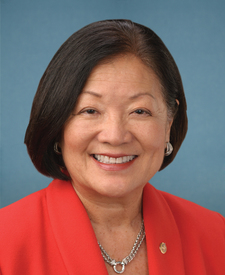
Portrait of Mazie Hirono, rendered as a two-tone print
Official portrait
77%
of itemized money from Hawaii donors, in the top 5% of Senate Democrats

77% of the itemized money from individuals in the 2026 cycle came from donors with an address in Hawaii. Ranks 2nd of 41, where 1st is the highest share. 399 itemized donors.

Only donors who give more than $200 are reported with an address, so this is the share of that itemized money from donors living in Hawaii, ranked among Senate Democrats. Small gifts are not counted either way. Candidates running statewide or for federal office often draw more money from out of state.

At a glance

6 measures against Senate Democrats. 45% of Hirono’s statements criticize a policy, in the top tenth of Senate Democrats (average 36%). 7.6% of Hirono’s statements use bipartisan language, in the bottom tenth of Senate Democrats (average 18%).

The measures on which Hirono sits furthest from the middle of Senate Democrats, each against the same group, with the CSIP score when there is one. Every number is explained in its own section below.

From Hawaii, 2026

77%

Of itemized individual dollars · ranks 2nd of 41 Senate Democrats

Policy criticism

45%

Senate Democrats average 36% · ranks 3rd of 45

Bipartisanship

7.6%

Senate Democrats average 18% · ranks 43rd of 45

CSIP ideology

−1.54

More liberal than 92% of Senate Democrats · ± 0.01

Attendance

99.5%

Senate Democrats average 96.7% · ranks 4th of 45 · 938 roll calls

Credit claiming

16%

Senate Democrats average 26% · ranks 40th of 45

Peer group: Senate Democrats. Rank 1 is the highest value in the group; the thick bar is Hirono, the thin grey bar the peer average. The headline is the measure on which Hirono is most unusual among peers (Methods, §08).

Back to topNext: What politicians say

What Hirono says

Hirono stresses bipartisanship less than 93% of Senate Democrats. Bipartisanship in 7.6% of 1,936 statements, against 18% for the average Senate Democrat; 43rd of 45.

An AI model reads each of Hirono’s 1,936 statements in the 119th Congress (1,452 posts on X, 394 press releases, 65 Congressional Record speeches, 25 newsletters) and marks the kinds of statement it contains: a personal attack, criticism of a policy, discussion of policy, bipartisanship, credit claiming, and extreme labels. A statement can carry several. Every rate is compared with the average for Senate Democrats and ranked among them.

Kinds of statement

Share of statements carrying each label, the 119th Congress

0%80%
Hirono
Peers
Rank
Policy discussion1,566 statements
81%
78%
20th of 45
Policy criticism869 statements
45%
36%
3rd of 45
Personal attacks336 statements
17%
11%
7th of 45
Credit claiming301 statements
16%
26%
40th of 45
Bipartisanship147 statements
8%
18%
43rd of 45
Show the data
Hirono's share of statements in each category against the Senate Democrats average.
RowHironoPeers
Policy discussion81%78%
Policy criticism45%36%
Personal attacks17%11%
Credit claiming16%26%
Bipartisanship8%18%
1,936

statements classified

1,452 posts on X, 394 press releases, 65 Congressional Record speeches, 25 newsletters.

posts on X: 1,452 (75.0%)posts on X 1,452press releases: 394 (20.4%)Congressional Record speeches: 65 (3.4%)newsletters: 25 (1.3%)
Show the data
Hirono's statements by source
PartValue
posts on X1,452
press releases394
Congressional Record speeches65
newsletters25
How to read the bars

The thick bar is Hirono, in the colour of that kind of statement; the thin grey bar is the average Senate Democrats. A longer thick bar means Hirono does this more than peers. Rank 1 is the highest rate in the group.

Extreme labels

Hirono used extreme labels in 2.9% of statements, above the peer average. 57 statements, most often aimed at Republicans; peers 2.3%.

  1. “extreme”16
  2. “MAGA”7
  3. “far right”7
  4. “radical”4

Who gets the labels

Targets named alongside an extreme label, by number of statements

  1. Republicans12
  2. Trump7
  3. Donald Trump5
  4. regime3
  5. Trump regime3
What an extreme label is

Calls a politician, a party or a policy “far left”, “far right”, “MAGA”, “extreme”, “radical”, “woke”, “fascist” or “communist”. The target is who or what the label was aimed at. The lists show the five most used labels and targets; the toggle shows the rest.

Month by month

Share of statements per month, the 119th Congress

Statements2025-01: 722025-02: 1032025-03: 1082025-04: 1272025-05: 872025-06: 812025-07: 1152025-08: 912025-09: 1112025-10: 1272025-11: 1102025-12: 892026-01: 742026-02: 832026-03: 1012026-04: 822026-05: 542026-06: 752026-07: 522026-08: 492026-09: 442026-10: 542026-11: 47peak 127 · Apr ’25Personal attackspeak 30.1% · Feb ’25 · latest 10.6%Personal attacks, 2025-01: 27.8% of 72Personal attacks, 2025-02: 30.1% of 103Personal attacks, 2025-03: 17.6% of 108Personal attacks, 2025-04: 12.6% of 127Personal attacks, 2025-05: 17.2% of 87Personal attacks, 2025-06: 14.8% of 81Personal attacks, 2025-07: 6.1% of 115Personal attacks, 2025-08: 13.2% of 91Personal attacks, 2025-09: 18.9% of 111Personal attacks, 2025-10: 15.8% of 127Personal attacks, 2025-11: 20.9% of 110Personal attacks, 2025-12: 18.0% of 89Personal attacks, 2026-01: 20.3% of 74Personal attacks, 2026-02: 19.3% of 83Personal attacks, 2026-03: 15.8% of 101Personal attacks, 2026-04: 15.8% of 82Personal attacks, 2026-05: 22.2% of 54Personal attacks, 2026-06: 20.0% of 75Personal attacks, 2026-07: 23.1% of 52Personal attacks, 2026-08: 16.3% of 49Personal attacks, 2026-09: 13.6% of 44Personal attacks, 2026-10: 11.1% of 54Personal attacks, 2026-11: 10.6% of 47Policy criticismpeak 62.6% · Aug ’25 · latest 4.3%Policy criticism, 2025-01: 31.9% of 72Policy criticism, 2025-02: 47.6% of 103Policy criticism, 2025-03: 40.7% of 108Policy criticism, 2025-04: 47.2% of 127Policy criticism, 2025-05: 51.7% of 87Policy criticism, 2025-06: 54.3% of 81Policy criticism, 2025-07: 62.6% of 115Policy criticism, 2025-08: 62.6% of 91Policy criticism, 2025-09: 52.3% of 111Policy criticism, 2025-10: 61.4% of 127Policy criticism, 2025-11: 57.3% of 110Policy criticism, 2025-12: 28.1% of 89Policy criticism, 2026-01: 16.2% of 74Policy criticism, 2026-02: 50.6% of 83Policy criticism, 2026-03: 58.4% of 101Policy criticism, 2026-04: 40.2% of 82Policy criticism, 2026-05: 42.6% of 54Policy criticism, 2026-06: 54.7% of 75Policy criticism, 2026-07: 26.9% of 52Policy criticism, 2026-08: 16.3% of 49Policy criticism, 2026-09: 15.9% of 44Policy criticism, 2026-10: 18.5% of 54Policy criticism, 2026-11: 4.3% of 47Policy discussionpeak 94.4% · Oct ’26 · latest 61.7%Policy discussion, 2025-01: 75.0% of 72Policy discussion, 2025-02: 85.4% of 103Policy discussion, 2025-03: 87.0% of 108Policy discussion, 2025-04: 88.2% of 127Policy discussion, 2025-05: 94.3% of 87Policy discussion, 2025-06: 77.8% of 81Policy discussion, 2025-07: 83.5% of 115Policy discussion, 2025-08: 74.7% of 91Policy discussion, 2025-09: 72.1% of 111Policy discussion, 2025-10: 77.2% of 127Policy discussion, 2025-11: 79.1% of 110Policy discussion, 2025-12: 82.0% of 89Policy discussion, 2026-01: 93.2% of 74Policy discussion, 2026-02: 71.1% of 83Policy discussion, 2026-03: 77.2% of 101Policy discussion, 2026-04: 87.8% of 82Policy discussion, 2026-05: 81.5% of 54Policy discussion, 2026-06: 74.7% of 75Policy discussion, 2026-07: 75.0% of 52Policy discussion, 2026-08: 87.8% of 49Policy discussion, 2026-09: 70.5% of 44Policy discussion, 2026-10: 94.4% of 54Policy discussion, 2026-11: 61.7% of 47Bipartisanshippeak 21.8% · May ’25 · latest 0.0%Bipartisanship, 2025-01: 9.7% of 72Bipartisanship, 2025-02: 13.6% of 103Bipartisanship, 2025-03: 16.7% of 108Bipartisanship, 2025-04: 10.2% of 127Bipartisanship, 2025-05: 21.8% of 87Bipartisanship, 2025-06: 7.4% of 81Bipartisanship, 2025-07: 8.7% of 115Bipartisanship, 2025-08: 4.4% of 91Bipartisanship, 2025-09: 6.3% of 111Bipartisanship, 2025-10: 7.1% of 127Bipartisanship, 2025-11: 10.0% of 110Bipartisanship, 2025-12: 4.5% of 89Bipartisanship, 2026-01: 5.4% of 74Bipartisanship, 2026-02: 2.4% of 83Bipartisanship, 2026-03: 2.0% of 101Bipartisanship, 2026-04: 4.9% of 82Bipartisanship, 2026-05: 7.4% of 54Bipartisanship, 2026-06: 4.0% of 75Bipartisanship, 2026-07: 1.9% of 52Bipartisanship, 2026-08: 0.0% of 49Bipartisanship, 2026-09: 4.5% of 44Bipartisanship, 2026-10: 5.6% of 54Bipartisanship, 2026-11: 0.0% of 47Credit claimingpeak 31.0% · May ’25 · latest 4.3%Credit claiming, 2025-01: 26.4% of 72Credit claiming, 2025-02: 27.2% of 103Credit claiming, 2025-03: 30.6% of 108Credit claiming, 2025-04: 26.8% of 127Credit claiming, 2025-05: 31.0% of 87Credit claiming, 2025-06: 8.6% of 81Credit claiming, 2025-07: 13.9% of 115Credit claiming, 2025-08: 14.3% of 91Credit claiming, 2025-09: 11.7% of 111Credit claiming, 2025-10: 13.4% of 127Credit claiming, 2025-11: 12.7% of 110Credit claiming, 2025-12: 14.6% of 89Credit claiming, 2026-01: 9.5% of 74Credit claiming, 2026-02: 12.0% of 83Credit claiming, 2026-03: 7.9% of 101Credit claiming, 2026-04: 9.8% of 82Credit claiming, 2026-05: 11.1% of 54Credit claiming, 2026-06: 12.0% of 75Credit claiming, 2026-07: 7.7% of 52Credit claiming, 2026-08: 4.1% of 49Credit claiming, 2026-09: 4.5% of 44Credit claiming, 2026-10: 16.7% of 54Credit claiming, 2026-11: 4.3% of 47Extreme labelspeak 8.1% · Sep ’25 · latest 0.0%Extreme labels, 2025-01: 1.4% of 72Extreme labels, 2025-02: 4.9% of 103Extreme labels, 2025-03: 0.9% of 108Extreme labels, 2025-04: 2.4% of 127Extreme labels, 2025-05: 2.3% of 87Extreme labels, 2025-06: 3.7% of 81Extreme labels, 2025-07: 0.9% of 115Extreme labels, 2025-08: 6.6% of 91Extreme labels, 2025-09: 8.1% of 111Extreme labels, 2025-10: 4.7% of 127Extreme labels, 2025-11: 0.9% of 110Extreme labels, 2025-12: 2.3% of 89Extreme labels, 2026-01: 1.4% of 74Extreme labels, 2026-02: 4.8% of 83Extreme labels, 2026-03: 3.0% of 101Extreme labels, 2026-04: 1.2% of 82Extreme labels, 2026-05: 1.8% of 54Extreme labels, 2026-06: 6.7% of 75Extreme labels, 2026-07: 3.9% of 52Extreme labels, 2026-08: 0.0% of 49Extreme labels, 2026-09: 0.0% of 44Extreme labels, 2026-10: 0.0% of 54Extreme labels, 2026-11: 0.0% of 47Jan ’25Jul ’25Jan ’26Jul ’26Nov ’26
Show the data
Monthly rates for Hirono, each row shaded against its own peak, with statement volume. Months with fewer than 10 statements are left blank.
ColumnStatementsPersonal attacksPolicy criticismPolicy discussionBipartisanshipCredit claimingExtreme labels
Jan ’257227.8%31.9%75.0%9.7%26.4%1.4%
Feb ’2510330.1%47.6%85.4%13.6%27.2%4.9%
Mar ’2510817.6%40.7%87.0%16.7%30.6%0.9%
Apr ’2512712.6%47.2%88.2%10.2%26.8%2.4%
May ’258717.2%51.7%94.3%21.8%31.0%2.3%
Jun ’258114.8%54.3%77.8%7.4%8.6%3.7%
Jul ’251156.1%62.6%83.5%8.7%13.9%0.9%
Aug ’259113.2%62.6%74.7%4.4%14.3%6.6%
Sep ’2511118.9%52.3%72.1%6.3%11.7%8.1%
Oct ’2512715.8%61.4%77.2%7.1%13.4%4.7%
Nov ’2511020.9%57.3%79.1%10.0%12.7%0.9%
Dec ’258918.0%28.1%82.0%4.5%14.6%2.3%
Jan ’267420.3%16.2%93.2%5.4%9.5%1.4%
Feb ’268319.3%50.6%71.1%2.4%12.0%4.8%
Mar ’2610115.8%58.4%77.2%2.0%7.9%3.0%
Apr ’268215.8%40.2%87.8%4.9%9.8%1.2%
May ’265422.2%42.6%81.5%7.4%11.1%1.8%
Jun ’267520.0%54.7%74.7%4.0%12.0%6.7%
Jul ’265223.1%26.9%75.0%1.9%7.7%3.9%
Aug ’264916.3%16.3%87.8%0.0%4.1%0.0%
Sep ’264413.6%15.9%70.5%4.5%4.5%0.0%
Oct ’265411.1%18.5%94.4%5.6%16.7%0.0%
Nov ’264710.6%4.3%61.7%0.0%4.3%0.0%
How to read the strips

Each row is one kind of statement; each cell is a month, shaded against that row’s own peak (darker = closer to the peak), with the peak and the latest value written at the right. The top row counts statements. The strip covers every month of the 119th Congress, the same span as the rates above, including months with no statements. A month with fewer than 10 statements is hatched, not shaded: one or two posts would swing its rate to 0% or 100%.

In Hirono’s words

Real statements from the classifier’s example set, with the labels it assigned

Credit claiming

Hirono Leads Colleagues in Commemorating Transgender Day of Remembrance WASHINGTON, D.C.–Today, U.S. Senator Mazie K. Hirono (D-HI), led 15 of her colleagues in commemorating November 20th, 2026, as Transgender Day of Remembrance (TDOR). Each year, Senator Hirono introduces the Transgender Day of R…

Nov 20, 2026 · Press releases · policy discussion; credit claiming; Civil Rights and Liberties, Minority Issues; Crime and Law Enforcement · Source

Bipartisanship

Hirono, Murphy, Kelly, Schiff Slam Attorney General Blanche for Illegally Allowing Sale of Guns to Teenagers, Increasing Likelihood of School Shootings WASHINGTON, D.C. - U.S. Senator Mazie K. Hirono (D-HI) joined Senators Chris Murphy (D-CT), Mark Kelly (D-AZ), and Adam Schiff (D-CA) on Friday in…

Oct 19, 2026 · Press releases · policy criticism; policy discussion; bipartisanship; credit claiming; Crime and Law Enforcement; Law; Civil Rights and Liberties, Minority Issues; Government Operations and Politics · Source

Extreme label

Hirono, Duckworth, Colleagues Introduce WARRIOR Act to Codify Women’s Right to Serve in Combat WASHINGTON, D.C. – Today, U.S. Senators Mazie K. Hirono (D-HI), a senior member of the Senate Committee on Armed Services (SASC), and Tammy Duckworth (D-IL) led 19 of their Democratic colleagues in the Se…

Jul 30, 2026 · Press releases · personal attacks; policy discussion; credit claiming; Armed Forces and National Security; Civil Rights and Liberties, Minority Issues; extreme label “extreme” aimed at Pete Hegseth; target: Pete Hegseth · Source

Examples by category

Up to five recent statements in each category

Category

Overtly questions a named person’s character, integrity or loyalty, or calls them names. Criticising a record or a policy does not count.

  1. Posts on X

    The text of this post is on X; follow the source link to read it.

    personal attacks · target: Donald TrumpSource

  2. Posts on X

    The text of this post is on X; follow the source link to read it.

    personal attacks · target: Pete HegsethSource

  3. Posts on X

    The text of this post is on X; follow the source link to read it.

    personal attacks · policy discussion · Armed Forces and National Security · target: Donald TrumpSource

  4. Posts on X

    The text of this post is on X; follow the source link to read it.

    personal attacks · policy discussion · Armed Forces and National Security · target: TrumpSource

  5. Posts on X

    The text of this post is on X; follow the source link to read it.

    personal attacks · policy discussion · Armed Forces and National Security · target: Pete HegsethSource

All 1,936 statements

Newest first, the 119th Congress

The full feed

Five statements at a time, newest first; filters apply to the statements loaded so far. Export saves the statements that match. Sources: 1,452 posts on X, 394 press releases, 65 Congressional Record speeches, 25 newsletters.

Back to topNext: Policy

Policy

Health is what Hirono talks about most: 29% of policy statements. Talk and legislation agree at 0.69 on a 0–1 scale (Senate Democrats average 0.66; 8th of 45).

Each policy statement is tagged by the AI model with one or more of 25 policy areas from the Congressional Research Service list, so the shares say what Hirono talks about. The bills Hirono sponsors and cosponsors carry the same areas, so the two can be compared.

What Hirono talks about

Share of policy statements by area, the 119th Congress

0%35%
Hirono
Peers
Health460 statements
29%
27%
Government Operations and Politics398 statements
25%
22%
Economics and Public Finance372 statements
24%
23%
Armed Forces and National Security326 statements
21%
21%
Civil Rights and Liberties, Minority Issues267 statements
17%
11%
Show the data
Policy areas Hirono talks about, as a share of policy statements, against the Senate Democrats average.
RowHironoPeers
Health29%27%
Government Operations and Politics25%22%
Economics and Public Finance24%23%
Armed Forces and National Security21%21%
Civil Rights and Liberties, Minority Issues17%11%
How to read the bars

The thick bar is the share of Hirono’s policy statements in an area; the thin grey bar is the average share for Senate Democrats. A statement counts once in each of its areas, so shares can add to more than 100%. The five largest areas are shown; the toggle shows the rest.

Talks about · legislates on

Left: share of statements by policy area. Right: share of bills. Areas in order of their share of statements; both sides run from 0 to 35%. Grey ticks are the Senate Democrats averages.

Talks aboutLegislates onHealthHealth, talks about: 29% (Senate Democrats 27%)29%Health, legislates on: 10% (Senate Democrats 14%)10%Government Operations andPoliticsGovernment Operations and Politics, talks about: 25% (Senate Democrats 22%)25%Government Operations and Politics, legislates on: 10% (Senate Democrats 9%)10%Economics and Public FinanceEconomics and Public Finance, talks about: 24% (Senate Democrats 23%)24%Economics and Public Finance, legislates on: 0% (Senate Democrats 0%)0%Armed Forces and NationalSecurityArmed Forces and National Security, talks about: 21% (Senate Democrats 21%)21%Armed Forces and National Security, legislates on: 9% (Senate Democrats 7%)9%Civil Rights and Liberties,Minority IssuesCivil Rights and Liberties, Minority Issues, talks about: 17% (Senate Democrats 11%)17%Civil Rights and Liberties, Minority Issues, legislates on: 9% (Senate Democrats 5%)9%
Show the data
Hirono's share of statements against share of bills in each policy area.
AreaTalks aboutSenate Democrats, talks aboutLegislates onSenate Democrats, legislates on
Health29%27%10%14%
Government Operations and Politics25%22%10%9%
Economics and Public Finance24%23%0%0%
Armed Forces and National Security21%21%9%7%
Civil Rights and Liberties, Minority Issues17%11%9%5%
0.69

talk-to-bills agreement, 0 to 1

Senate Democrats average 0.66. Ranks 8th of 45.

What agreement means, and what it doesn’t

Agreement is 1 minus the distance between the two distributions (Jensen–Shannon): 1 means Hirono legislates on exactly the areas Hirono talks about, in the same proportions; 0 means no overlap. It does not say whether the bills match the positions in the statements, only the subjects. Bills Hirono sponsored count fully, cosponsored bills a quarter. Shown with at least 20 policy statements and 5 bills.

Back to topNext: Ideology

Ideology

Hirono sits at −1.54 on the CSIP scale, left of 0, more liberal than 92% of Senate Democrats. Approximate range −1.55 to −1.52, which understates the uncertainty; from 3,858 donors and 4,984 roll calls.

CSIP, the lab’s Common-Space Ideal Point, places every official, federal and state, on one left–right scale, estimated from roll-call votes, who gives money to whom, and the text of statements. Negative is left of 0, positive right of it; 0 is the centre of the scale, not a definition of “moderate”.

−1.54

CSIP ideal point

Approximate range −1.55 to −1.52. From 3,858 donors and 4,984 roll calls. Run 2026-11-03T100151. Blue is left of 0, red right of 0.

← More liberalMore conservative →0Hirono −1.5Senate Democrats −1.1All Senate +0.4

The outlined dot is Hirono, coloured by its side of 0 (blue left, red right, deeper further out); the bar through it is the approximate range (±1.96 standard errors), which understates the uncertainty; the grey ticks below are the medians of Hirono’s groups. 0 is the centre of the scale, not “moderate” by definition.

What this means, and what it doesn’t

The score summarises how an official votes, who funds them and how they talk, relative to everyone else. It does not grade positions as good or bad, and two officials with the same score can differ on any single issue. The ± range is 1.96 standard errors, which understates the uncertainty: scores whose ranges overlap may not differ at all, and even scores whose ranges do not overlap may not differ.

Where Hirono sits

Every official in each group, on the CSIP scale

−2.0−1.00.0+1.0+2.0← More liberalMore conservative →Senate Democratsmedian −1.1Hirono −1.5All Senatemedian +0.4
Show the data
Hirono's CSIP score of −1.54 placed against Senate Democrats, All Senate.
GroupOfficialsMedianShare left of Hirono
Senate Democrats45−1.17%
All Senate98+0.43%
How to read the strips

Every small dot is one official on the same scale, coloured by its own score (blue left of 0, red right of 0, grey at 0, deeper further out) and spread up and down only to keep dots apart; where a group is crowded the dots overlap, and darker patches mean more officials. The large outlined dot is Hirono in every row; the rule is each group’s median. The table under the figure gives the share of each group to the left of Hirono.

Back to topNext: Money

Money

Hirono raised $616.9K in the 2026 cycle, 23% of the Senate Democrats’ median of $2.6M. 41% of individual money came in gifts of $200 or less. 77% of itemized individual money came from Hawaii.

Campaign money from Federal Election Commission filings, as aggregates only; the lab never shows an individual donor. Campaigns must report by name every person who gives them more than $200 in a cycle (“itemized”); smaller gifts are reported only as one total (“unitemized”), so donor counts, donor states, employers and occupations describe itemized donors only.

Election cycle
$616.9K

raised in the 2026 cycle

From 399 itemized donors. Senate Democrats’ median $2.6M.

Where the money came from

Each square is one percent of 2026-cycle receipts, from FEC summary totals.

Itemized individual (over $200): $323.1K (52.4%)Itemized individual (over $200): $323.1K (52.4%)Itemized individual (over $200): $323.1K (52.4%)Itemized individual (over $200): $323.1K (52.4%)Itemized individual (over $200): $323.1K (52.4%)Itemized individual (over $200): $323.1K (52.4%)Itemized individual (over $200): $323.1K (52.4%)Itemized individual (over $200): $323.1K (52.4%)Itemized individual (over $200): $323.1K (52.4%)Itemized individual (over $200): $323.1K (52.4%)Itemized individual (over $200): $323.1K (52.4%)Itemized individual (over $200): $323.1K (52.4%)Itemized individual (over $200): $323.1K (52.4%)Itemized individual (over $200): $323.1K (52.4%)Itemized individual (over $200): $323.1K (52.4%)Itemized individual (over $200): $323.1K (52.4%)Itemized individual (over $200): $323.1K (52.4%)Itemized individual (over $200): $323.1K (52.4%)Itemized individual (over $200): $323.1K (52.4%)Itemized individual (over $200): $323.1K (52.4%)Itemized individual (over $200): $323.1K (52.4%)Itemized individual (over $200): $323.1K (52.4%)Itemized individual (over $200): $323.1K (52.4%)Itemized individual (over $200): $323.1K (52.4%)Itemized individual (over $200): $323.1K (52.4%)Itemized individual (over $200): $323.1K (52.4%)Itemized individual (over $200): $323.1K (52.4%)Itemized individual (over $200): $323.1K (52.4%)Itemized individual (over $200): $323.1K (52.4%)Itemized individual (over $200): $323.1K (52.4%)Itemized individual (over $200): $323.1K (52.4%)Itemized individual (over $200): $323.1K (52.4%)Itemized individual (over $200): $323.1K (52.4%)Itemized individual (over $200): $323.1K (52.4%)Itemized individual (over $200): $323.1K (52.4%)Itemized individual (over $200): $323.1K (52.4%)Itemized individual (over $200): $323.1K (52.4%)Itemized individual (over $200): $323.1K (52.4%)Itemized individual (over $200): $323.1K (52.4%)Itemized individual (over $200): $323.1K (52.4%)Itemized individual (over $200): $323.1K (52.4%)Itemized individual (over $200): $323.1K (52.4%)Itemized individual (over $200): $323.1K (52.4%)Itemized individual (over $200): $323.1K (52.4%)Itemized individual (over $200): $323.1K (52.4%)Itemized individual (over $200): $323.1K (52.4%)Itemized individual (over $200): $323.1K (52.4%)Itemized individual (over $200): $323.1K (52.4%)Itemized individual (over $200): $323.1K (52.4%)Itemized individual (over $200): $323.1K (52.4%)Itemized individual (over $200): $323.1K (52.4%)Itemized individual (over $200): $323.1K (52.4%)Unitemized individual (gifts of $200 or less): $225.2K (36.5%)Unitemized individual (gifts of $200 or less): $225.2K (36.5%)Unitemized individual (gifts of $200 or less): $225.2K (36.5%)Unitemized individual (gifts of $200 or less): $225.2K (36.5%)Unitemized individual (gifts of $200 or less): $225.2K (36.5%)Unitemized individual (gifts of $200 or less): $225.2K (36.5%)Unitemized individual (gifts of $200 or less): $225.2K (36.5%)Unitemized individual (gifts of $200 or less): $225.2K (36.5%)Unitemized individual (gifts of $200 or less): $225.2K (36.5%)Unitemized individual (gifts of $200 or less): $225.2K (36.5%)Unitemized individual (gifts of $200 or less): $225.2K (36.5%)Unitemized individual (gifts of $200 or less): $225.2K (36.5%)Unitemized individual (gifts of $200 or less): $225.2K (36.5%)Unitemized individual (gifts of $200 or less): $225.2K (36.5%)Unitemized individual (gifts of $200 or less): $225.2K (36.5%)Unitemized individual (gifts of $200 or less): $225.2K (36.5%)Unitemized individual (gifts of $200 or less): $225.2K (36.5%)Unitemized individual (gifts of $200 or less): $225.2K (36.5%)Unitemized individual (gifts of $200 or less): $225.2K (36.5%)Unitemized individual (gifts of $200 or less): $225.2K (36.5%)Unitemized individual (gifts of $200 or less): $225.2K (36.5%)Unitemized individual (gifts of $200 or less): $225.2K (36.5%)Unitemized individual (gifts of $200 or less): $225.2K (36.5%)Unitemized individual (gifts of $200 or less): $225.2K (36.5%)Unitemized individual (gifts of $200 or less): $225.2K (36.5%)Unitemized individual (gifts of $200 or less): $225.2K (36.5%)Unitemized individual (gifts of $200 or less): $225.2K (36.5%)Unitemized individual (gifts of $200 or less): $225.2K (36.5%)Unitemized individual (gifts of $200 or less): $225.2K (36.5%)Unitemized individual (gifts of $200 or less): $225.2K (36.5%)Unitemized individual (gifts of $200 or less): $225.2K (36.5%)Unitemized individual (gifts of $200 or less): $225.2K (36.5%)Unitemized individual (gifts of $200 or less): $225.2K (36.5%)Unitemized individual (gifts of $200 or less): $225.2K (36.5%)Unitemized individual (gifts of $200 or less): $225.2K (36.5%)Unitemized individual (gifts of $200 or less): $225.2K (36.5%)Unitemized individual (gifts of $200 or less): $225.2K (36.5%)PACs and other committees: $54.5K (8.8%)PACs and other committees: $54.5K (8.8%)PACs and other committees: $54.5K (8.8%)PACs and other committees: $54.5K (8.8%)PACs and other committees: $54.5K (8.8%)PACs and other committees: $54.5K (8.8%)PACs and other committees: $54.5K (8.8%)PACs and other committees: $54.5K (8.8%)PACs and other committees: $54.5K (8.8%)Remainder not broken out in the FEC summary (transfers, loans, refunds): $14.1K (2.3%)Remainder not broken out in the FEC summary (transfers, loans, refunds): $14.1K (2.3%)
  • Itemized individual (over $200)52 squares$323.1K
  • Unitemized individual (gifts of $200 or less)37 squares$225.2K
  • PACs and other committees9 squares$54.5K
  • Remainder not broken out in the FEC summary (transfers, loans, refunds)2 squares$14.1K
Show the data
Sources of Hirono's money, 2026 cycle, one square per percent
SourceAmountShare
Itemized individual (over $200)$323.1K52.4%
Unitemized individual (gifts of $200 or less)$225.2K36.5%
PACs and other committees$54.5K8.8%
Remainder not broken out in the FEC summary (transfers, loans, refunds)$14.1K2.3%
What this means, and what it doesn’t

Totals say how much a campaign took in, not how it was spent, and they rise sharply when a seat is up for election; compare cycles with that in mind. The small-donor share understates small giving when a campaign itemizes gifts made through ActBlue or WinRed.

Receipts by cycle

Total receipts, 2020 to 2026. The grey line is the Senate Democrats’ median for 2026.

2020 cycle: $797.4K$797.4K20202022 cycle: $957.5K$957.5K20222024 cycle: $3.3M$3.3M20242026 cycle: $616.9K$616.9K2026Senate Democrats median $2.6M
Show the data
Hirono's receipts by cycle against the 2026 Senate Democrats median.
ItemValue
2020 cycle$797.4K
2022 cycle$957.5K
2024 cycle$3.3M
2026 cycle$616.9K

Top donor states, 2026

Itemized contributions by donor state. 77% came from Hawaii.

  1. Hawaii$226.2K
  2. California$28.0K
  3. Texas$7,835
  4. New York$6,750
  5. Washington$3,110

Small donations

Gifts of $200 or less as a share of individual money, by cycle. The thin grey bar is the 2026 Senate Democrats’ median.

0%60%
Hirono
Median
2026
41%
35%
2024
24%
35%
2022
25%
35%
2020
39%
35%
Show the data
Small-donor share by cycle against the Senate Democrats median
RowHironoMedian
2026 cycle41%35%
2024 cycle24%35%
2022 cycle25%35%
2020 cycle39%35%

Where itemized donors live

Individuals who gave more than $200, by donor state

Alaska: no dataAKMaine: no dataMEVermont: $478VTNew Hampshire: $250NHWashington: $3,110WAIdaho: no dataIDMontana: no dataMTNorth Dakota: no dataNDMinnesota: no dataMNIllinois: $700ILWisconsin: no dataWIMichigan: $1,250MINew York: $6,750NYRhode Island: $885RIMassachusetts: $2,965MAOregon: $2,525ORNevada: no dataNVWyoming: no dataWYSouth Dakota: no dataSDIowa: no dataIAIndiana: $750INOhio: $452OHPennsylvania: $891PANew Jersey: $200NJConnecticut: $900CTCalifornia: $28.0KCAUtah: no dataUTColorado: $550CONebraska: no dataNEMissouri: no dataMOKentucky: no dataKYWest Virginia: no dataWVVirginia: $1,150VAMaryland: $625MDDelaware: $200DEArizona: $207AZNew Mexico: $100NMKansas: $75KSArkansas: no dataARTennessee: $460TNNorth Carolina: no dataNCSouth Carolina: $350SCDistrict of Columbia: $3,000DCOklahoma: $100OKLouisiana: no dataLAMississippi: no dataMSAlabama: no dataALGeorgia: $500GAHawaii: $226.2KHITexas: $7,835TXFlorida: $700FL
Show the data
Hirono's itemized individual contributions by donor state, 2026 cycle
StateValue
Hawaii$226.2K
California$28.0K
Texas$7,835
New York$6,750
Washington$3,110
District of Columbia$3,000
Massachusetts$2,965
Oregon$2,525
Michigan$1,250
Virginia$1,150
Connecticut$900
Pennsylvania$891
Rhode Island$885
Indiana$750
Illinois$700
Florida$700
Maryland$625
Colorado$550
Georgia$500
Vermont$478
Tennessee$460
Ohio$452
South Carolina$350
New Hampshire$250
Arizona$207
New Jersey$200
Delaware$200
New Mexico$100
Oklahoma$100
Kansas$75
AlaskaNo data
MaineNo data
IdahoNo data
MontanaNo data
North DakotaNo data
MinnesotaNo data
WisconsinNo data
NevadaNo data
WyomingNo data
South DakotaNo data
IowaNo data
UtahNo data
NebraskaNo data
MissouriNo data
KentuckyNo data
West VirginiaNo data
ArkansasNo data
North CarolinaNo data
LouisianaNo data
MississippiNo data
AlabamaNo data
399

itemized donors

People who gave more than $200

77%

from Hawaii

Of itemized individual dollars

How to read the map

Every state the same size. Darker states gave more itemized money; hatched states had no itemized donors; the outlined state is Hawaii. Gifts of $200 or less carry no address and are left out.

Donors’ ideology

Distribution of itemized donors’ own CSIP scores

CSIP −1.75 to −1.50: 28%CSIP −1.50 to −1.25: 30%CSIP −1.25 to −1.00: 39%39%CSIP −1.00 to −0.75: 1.7%CSIP +0.25 to +0.50: 1.2%← More liberalMore conservative →
Show the data
Ideology of Hirono's itemized donors in 2026, from −1.75 to +0.50: 28% between −1.75 and −1.50, 30% between −1.50 and −1.25, 39% between −1.25 and −1.00.
ItemValue
CSIP −1.75 to −1.5028%
CSIP −1.50 to −1.2530%
CSIP −1.25 to −1.0039%
CSIP −1.00 to −0.751.7%
CSIP +0.25 to +0.501.2%
How to read the columns

Donors who give to many candidates get their own CSIP score. Each column is the share of Hirono’s itemized money from donors in that part of the scale, blue left of 0 and red right of 0, deeper further out; Hirono’s own score is −1.54.

Top donor occupations

Itemized, 2026 cycle.

  1. NOT EMPLOYED$114.9K 215 donors
  2. ATTORNEY$48.9K 49 donors
  3. RETIRED$21.1K 49 donors
  4. PRESIDENT$13.0K 5 donors
  5. PHYSICIAN$11.0K 7 donors

Top committees

PAC and committee contributions, 2026 cycle.

  1. INTERNATIONAL BROTHERHOOD OF ELECTRICAL WORKERS POLITICAL ACTION COMMITTEE$5,000
  2. PFIZER INC. PAC$5,000
  3. BOOZ ALLEN HAMILTON INC. PAC (BOOZ ALLEN PAC)$4,500
  4. ELI LILLY AND COMPANY POLITICAL ACTION COMMITTEE$4,000
  5. VERTEX PHARMACEUTICALS INCORPORATED POLITICAL ACTION COMMITTEE (VPAC)$3,500

Top employers

Itemized, 2026 cycle.

  1. KOBAYASHI SUGITA & GODA, LLP$6,000 6 donors
  2. HEI$4,050 5 donors
  3. HAWAIIAN ELECTRIC COMPANY$3,750 10 donors
  4. STATE OF HAWAII$2,035 5 donors

Aggregates only. Individual donors are never named.

Back to topNext: Votes

Votes

Hirono voted with the majority of Senate Democrats on 98.4% of party-line votes and missed 0.4% of 938 roll calls. Senate Democrats on average: 95.1% party unity, 96.7% attendance. Across all roll calls, Hirono voted against the majority of Senate Democrats 36 times.

938 roll calls Hirono could vote on in the 119th Congress, compared with Senate Democrats. Attendance is the share with a vote recorded. Party unity counts only party-line roll calls, where most Democrats and most Republicans voted on opposite sides, and is the share of those where Hirono voted with the majority of Senate Democrats. The count of votes against that majority covers every roll call where the majority took a side.

36

votes against the majority of Senate Democrats

Party unity 98.4%, Senate Democrats average 95.1%, ranks 10th of 45. 938 roll calls in the 119th Congress.

Attendance and party unity

The thick bar is Hirono, the thin grey bar the Senate Democrats average. The scale runs from 80% to 100% to show the gap.

80%100%
Hirono
Peers
Rank
Attendance
99.5%
96.7%
4th of 45
Party unity
98.4%
95.1%
10th of 45
Show the data
Hirono's attendance and party unity against Senate Democrats.
RowHironoPeers
Attendance99.5%96.7%
Party unity98.4%95.1%
What this means, and what it doesn’t

A missed roll call has many causes, from illness to campaigning, so attendance says how often, not why. A vote against the majority can be on procedure as well as substance, and many fall on roll calls where both parties split; the key votes below show the ones that decided something.

Key votes

25 roll calls the lab flagged as key in the 119th Congress

Key votes
Party split (yea–nay)Why it’s key
Nov 19, 2026
H.R. 2347
A bill to amend the Internal Revenue Code of 1986 to exclude from gross income any damages, other than punitive damages, received on account of any sexual acts or sexual contact.
On Passage of the Bill
NayWith majorityBill PassedD 14–30 · R 47–2 · I 1–1Democrats 14 yea, 30 nay; Republicans 47 yea, 2 nay; Independents 1 yea, 1 nayparty crossover
Nov 19, 2026
H.Con.Res. 93
A concurrent resolution directing the President, pursuant to section 5(c) of the War Powers Resolution, to remove United States Armed Forces from hostilities with Iran.
On the Concurrent Resolution
YeaWith majorityConcurrent Resolution RejectedD 43–1 · R 3–50 · I 2–0Democrats 43 yea, 1 nay; Republicans 3 yea, 50 nay; Independents 2 yea, 0 nayclose vote
Sep 28, 2026
S. 4668
A bill to protect the name, image, and likeness rights of, and provide protections for, student athletes and to promote fair competition among intercollegiate athletics, and for other purposes.
On Passage of the Bill
YeaWith majorityBill PassedD 26–19 · R 50–2 · I 1–1Democrats 26 yea, 19 nay; Republicans 50 yea, 2 nay; Independents 1 yea, 1 nayparty crossover
Sep 24, 2026
H.Con.Res. 89
A concurrent resolution directing the President, pursuant to section 5(c) of the War Powers Resolution, to remove United States Armed Forces from hostilities with Iran.
On the Concurrent Resolution
YeaWith majorityConcurrent Resolution RejectedD 43–1 · R 4–49 · I 2–0Democrats 43 yea, 1 nay; Republicans 4 yea, 49 nay; Independents 2 yea, 0 nayclose vote
Aug 8, 2026
H.R. 6500
An act making continuing appropriations and extensions for fiscal year 2027, and for other purposes.
On Passage of the Bill
YeaWith majorityBill PassedD 42–3 · R 47–2 · I 1–1Democrats 42 yea, 3 nay; Republicans 47 yea, 2 nay; Independents 1 yea, 1 naybecame law
How key votes are chosen

Automatically: a final-passage or override vote where the measure became law, the margin was under 10%, at least 10% of either party voted against its majority, or the bill was among the 25 most mentioned in officials’ own statements. Up to 25 per window, most recent first; five are shown. Bars show yea on the left, nay on the right, per party.

Votes most often with

The colleagues who voted the same way as Hirono most often

  1. Patty MurrayD883 shared votes97%
  2. Lisa Blunt RochesterD924 shared votes97%
  3. Jeff MerkleyD925 shared votes97%
  4. Chris Van HollenD920 shared votes96%
  5. Ron WydenD913 shared votes96%

Votes least often with

The colleagues who voted the same way as Hirono least often

  1. Mike LeeR904 shared votes4.2%
  2. Rick ScottR932 shared votes4.5%
  3. Ron JohnsonR922 shared votes4.7%
  4. Ted CruzR887 shared votes4.9%
  5. Tommy TubervilleR862 shared votes5.3%
How to read the agreement lists

The share of roll calls both members voted on where they voted the same way, among colleagues sharing at least 50 such votes. High agreement with members of the other party is common on routine votes.

Full voting record

119th Congress (2025–27), loads in batches

Back to topNext: Legislation

Legislation

Hirono sponsored 67 bills in the 119th Congress; none became law. Cosponsored 556 others. 10% of sponsored bills got out of committee (Senate Democrats average 14%; 31st of 45).

The bills Hirono sponsored and cosponsored in the 119th Congress, from the official bill records, and how far each got: introduced, referred to or acted on in committee, passed one chamber, passed both, became law. A bill counts at every stage it has reached, so the blocks only shrink to the right.

Bills by stage

Counts for the 119th Congress

Sponsored67 billsSponsored, Introduced: 6767Sponsored, In committee: 6767Sponsored, Passed one chamber: 77Sponsored, Passed both chambers: 11Sponsored, Became law: 00Cosponsored556 billsCosponsored, Introduced: 556556Cosponsored, In committee: 554554Cosponsored, Passed one chamber: 8989Cosponsored, Passed both chambers: 33Cosponsored, Became law: 22IntroducedIncommitteePassed onechamberPassed bothchambersBecamelaw
Show the data
Bills Hirono sponsored and cosponsored, by furthest stage reached
RoleIntroducedIn committeePassed one chamberPassed both chambersBecame law
Sponsored6767710
Cosponsored5565548932
How to read the blocks

Ink blocks are bills Hirono sponsored, ochre blocks bills Hirono cosponsored; the figure above each block is the count. Most bills in any legislature never leave committee, so a short staircase is the norm.

10%

of sponsored bills got out of committee

Senate Democrats average 14%. Ranks 31st of 45.

Cosponsorship partners

Colleagues who most often cosponsor with Hirono, by number of shared bills in the 119th Congress; the square shows their party.

  1. Richard Blumenthal243
  2. Cory Booker205
  3. Alex Padilla203
  4. Jeff Merkley167
  5. Ed Markey164
What this means, and what it doesn’t

The score is the share of sponsored bills that a committee reported out or a chamber passed, with at least 5 sponsored bills, ranked within the peer group. Members of the majority party and committee chairs move more bills, so the rank reflects position in the chamber as well as effort. Cosponsorship partners are the five colleagues who share the most of Hirono’s bills; the toggle shows more.

Bill list

Sponsored and cosponsored, with status and policy area; five are shown, the toggle shows the rest

Bills sponsored and cosponsored
S. 5816↗ official page (opens in a new tab)A bill to amend the Agriculture Improvement Act of 2018 with respect to micro-grants for food security, and for other purposes.CosponsorNov 20, 2026In committeeUnassignedRead twice and referred to the Committee on Finance. Nov 20, 2026
S.Res. 969↗ official page (opens in a new tab)A resolution recognizing National Native American Heritage Month and celebrating the heritages and cultures of Native Americans and the contributions of Native Americans to the United States.CosponsorNov 20, 2026Passed one chamberUnassignedSubmitted in the Senate, considered, and agreed to without amendment and with a preamble by Unanimous Consent. Nov 20, 2026
S.Res. 971↗ official page (opens in a new tab)A resolution expressing support for the designation of November 8, 2026, as "National First-Generation College Celebration Day".CosponsorNov 20, 2026Passed one chamberUnassignedSubmitted in the Senate, considered, and agreed to without amendment and with a preamble by Unanimous Consent. Nov 20, 2026
S. 5789↗ official page (opens in a new tab)A bill to amend the Federal Election Campaign Act of 1971 to provide for additional disclosure requirements for certain communications, and for other purposes.CosponsorNov 19, 2026In committeeUnassignedRead twice and referred to the Committee on Rules and Administration. Nov 19, 2026
S. 5794↗ official page (opens in a new tab)A bill to ensure merit-based promotions, and for other purposes.CosponsorNov 19, 2026In committeeUnassignedRead twice and referred to the Committee on Armed Services. Nov 19, 2026

Back to topNext: Lawmark

Lawmark Achievement Scores

Hirono’s Lawmark Achievement Score in the 119th Congress stands at −1.5. The 90% interval runs from −2.6 to −0.2, wholly below the median for the Senate (+0.1). Position contributes −0.4 and Hirono’s personal part −1.0.

The Lawmark Achievement Score measures how far a member’s own bills get against how far the same bills would be expected to get with another sponsor, step by step: committee action, leaving committee, passing the chamber, passing the other chamber, becoming law. It adds two parts. The part from position is what the member’s posts are worth (the majority party, chairs, ranking seats, leadership, seniority); the personal part is what the member adds beyond them. The unit is one standard deviation of members’ personal parts, and 0 is a first-term member of the minority with no committee post and an average personal record.

−1.5

Lawmark Achievement Score, 119th Congress

90% interval −2.6 to −0.2. Provisional: the Congress is still under way.

From position
−0.4 (−0.6 to −0.3)
Personal
−1.0 (−2.2 to +0.2)

Posts held: minority party · subcommittee ranking member · power committee · 7th Congress in the chamber.

With Hirono as sponsor, 0.6% of the Senate’s own bills in the 119th Congress would become law (90% interval 0.3% to 1.0%), against 1.4% for the median senator.

41 bills sponsored: 1 saw committee action, 0 left committee, 0 passed the Senate, 0 became law.

Hirono in the 119th Congress

The grey ticks are the 100 members of the Senate with at least five bills; the line is their median score

−3.0−2.0−1.00.0+1.0+2.0+3.0Median +0.1Score: −1.5 (90% interval −2.6 to −0.2)−1.5Scoreposition + personalFrom position: −0.4 (90% interval −0.6 to −0.3)−0.4From positionPersonal: −1.0 (90% interval −2.2 to +0.2)−1.0Personal
Show the data
Hirono’s Lawmark Achievement Score in the 119th Congress −1.5 (90% interval −2.6 to −0.2), from position −0.4, personal −1.0; the chamber median is +0.1.
PartEstimate90% interval
Score (position + personal)−1.5−2.6 to −0.2
From position−0.4−0.6 to −0.3
Personal−1.0−2.2 to +0.2
What this means, and what it doesn’t

The score credits a member for bills that move, not for bills filed: a member who introduces two hundred bills and sees six become law scores below one who introduces twenty and sees five. Each bill is compared with bills like it (its policy area, when in the Congress it was introduced, how many committees it went to, whether it is commemorative or an appropriations bill, how significant it looked when introduced), so an easy bill earns less than a hard one. Every score carries a 90% interval; where two members’ intervals overlap, the data do not tell them apart.

A Congress still under way is provisional: pending bills are counted as still able to move, on the schedule bills kept in past Congresses, and the score will change as they do. With fewer than five bills in a Congress, Hirono’s own contribution cannot be measured, and only the part from position is shown.

A methods paper on how the scores are estimated, and how to reproduce them, is forthcoming.

Congress by Congress

Newest first

−3.0−2.0−1.00.0+1.0+2.0119th: −1.5 (90% interval −2.6 to −0.2)−1.5119thSenate, provisional118th: −0.5 (90% interval −1.7 to +0.8)−0.5118thSenate117th: −0.1 (90% interval −1.3 to +1.0)−0.1117thSenate116th: −1.1 (90% interval −2.2 to +0.1)−1.1116thSenate115th: −0.6 (90% interval −1.7 to +0.6)−0.6115thSenate114th: −0.5 (90% interval −1.7 to +0.6)−0.5114thSenate113th: −0.1 (90% interval −1.3 to +1.0)−0.1113thSenate
Show the data
Hirono’s Lawmark Achievement Score by Congress: 119th −1.5; 118th −0.5; 117th −0.1; 116th −1.1; 115th −0.6; 114th −0.5; 113th −0.1.
CongressScore90% interval
119th (Senate, provisional)−1.5−2.6 to −0.2
118th (Senate)−0.5−1.7 to +0.8
117th (Senate)−0.1−1.3 to +1.0
116th (Senate)−1.1−2.2 to +0.1
115th (Senate)−0.6−1.7 to +0.6
114th (Senate)−0.5−1.7 to +0.6
113th (Senate)−0.1−1.3 to +1.0
How to read the rows

Each row is one Congress: the dot is the score and the bar its 90% interval. An open gold dot is the part from position alone, shown where Hirono had fewer than five bills. Scores compare members within a chamber and Congress; a member’s own scores are linked across Congresses, so a long record steadies each one.

Lawmark text in law

Words of enacted text that came from Hirono’s bills in the 119th Congress

183

words in law

183 words in 1 law, from 1 bill

Inside other laws: 183 (100.0%)Inside other laws 183
Show the data
Hirono’s words in law in the 119th Congress: 0 from laws Hirono sponsored, 183 from Hirono’s bills enacted inside other laws, 0 from major vehicles Hirono sponsored.
PartValue
Own laws0
Inside other laws183
Major vehicles0

A further 18 words came from Hirono’s bills of the previous Congress; they are reported apart and not counted here.

  • P.L. 119-56 Veteran Fraud Reimbursement Act of 2025

    183 words in 1 section, from S. 892 · Dec 12, 2025

Bill progress share

Volden–Wiseman method

0.17

119th Congress

1.0 is the average member of the Senate; a member with the same posts would be expected to reach 0.8, so this is below expectations.

The standard count: the member’s share of the chamber’s bills at each stage (introduced, committee action, out of committee, passed the chamber, became law), with commemorative bills counting least and significant ones most, scaled so the chamber averages 1. It rewards volume as well as success; the Lawmark Achievement Score does not.

Back to topNext: Online

Online

A site that changed 78 times in 90 days. Hirono’s official site had 28 pages when last crawled on Nov 22, 2026. The lab last catalogued the images Hirono posted on Nov 20, 2026.

The lab crawls Hirono’s official and campaign websites (weekly for Congress, monthly for the states) and keeps every page’s text, so changes can be read later; it also records social accounts and describes the images Hirono posts with a vision model.

Websites

How to read the counts

“Pages crawled” is the size of the site at the last crawl; “changes in 90 days” counts pages whose text differed from the previous crawl. Sites change for many routine reasons, such as new press releases, so a high count is not by itself notable.

Images Hirono posted

The latest 24, with model-written descriptions

  • A three-panel collage shows a woman in a bright green blazer speaking at a congressional hearing, seated behind a desk with a microphone. Subtitle text appears across each panel.
    A three-panel collage shows a woman in a bright green blazer speaking at a congressional hearing, seated behind a desk with a microphone. Subtitle text appears across each panel.View post
  • A graphic showing a large number above a date, with a photograph of the U.S. Senate chamber during a vote. A results banner appears along the bottom of the photograph, and a right-pointing arrow is below it.
    A graphic showing a large number above a date, with a photograph of the U.S. Senate chamber during a vote. A results banner appears along the bottom of the photograph, and a right-pointing arrow is below it.View post
  • A dated graphic showing a scene in the U.S. Senate chamber during a vote, with a large numeral above it and a right-pointing arrow below. Text appears in the graphic and overlaid on the chamber image.
    A dated graphic showing a scene in the U.S. Senate chamber during a vote, with a large numeral above it and a right-pointing arrow below. Text appears in the graphic and overlaid on the chamber image.View post
  • A numbered infographic slide shows a wide view of the U.S. Senate chamber during a vote, with a broadcast-style vote tally and caption across the bottom. A right-pointing arrow appears beneath the image. Text is present.
    A numbered infographic slide shows a wide view of the U.S. Senate chamber during a vote, with a broadcast-style vote tally and caption across the bottom. A right-pointing arrow appears beneath the image. Text is present.View post
  • A graphic dated September 24, 2026, featuring a screenshot of the U.S. Senate chamber during a vote. The vote tally and resolution summary are shown in the screenshot, with a caption and arrow below. The image contains text.
    A graphic dated September 24, 2026, featuring a screenshot of the U.S. Senate chamber during a vote. The vote tally and resolution summary are shown in the screenshot, with a caption and arrow below. The image contains text.View post
About the descriptions

Written by a vision model and may be wrong. Open the post to see the original. Five are shown; the toggle shows the rest.

Back to topNext: Methods and sources

Methods and sources

How this page was made. Profile built Nov 22, 2026; site last built Nov 22, 2026. Every number on the page is computed from the sources listed here, by the same rules for every official; nothing is written by hand.

The headline

The headline is the measure on which Hirono is most unusual among Senate Democrats, chosen by one rule for every official of every party. The candidates are the rate of each kind of statement and of extreme labels, party unity, attendance, the small-donor share, the in-state share and total receipts of the latest cycle, the share of sponsored bills that got out of committee, talk-to-bills agreement, and the CSIP score’s place within the party group.

The builder ranks every measure within the same peer group the page compares it with, and writes each official’s percentile: the share of the group below the value, ties counting half, so 0.5 is the median and a value shared by many never ranks first. A measure’s score is how far that percentile sits from the median (0 in the middle, 0.5 at either end), and the highest score leads if it is above 0.25, outside the middle half of the group. Scores within 0.03 of each other are a tie, broken in this order: votes against the party majority, kinds of statement, ideology, roll calls missed, small donations, in-state money, legislation, agreement, extreme labels, receipts.

A measure counts only with at least 200 statements, 100 roll calls or 5 sponsored bills behind it and a peer group of at least 10. Two things never lead: high party unity or attendance, where most members sit, and a high rate of a kind of statement backed by fewer than 10 statements. When nothing qualifies, the headline is a neutral fact instead: statements classified, or years in office. The wording always names the direction (“in the bottom 5% of …”, “votes against the majority of …”).


Identifiers

Profile id
H001042
Bioguide
H001042
FEC candidate ids
H6HI02251, S2HI00106

Bulk files with the same data for every official:

Freshness of this profile’s data

  • What politicians sayNov 21, 20261 days agoMembers of Congress: tweets since 2017; press releases, newsletters and floor speeches since 2022. State legislators: tweets since May 2024. Governors: tweets since January 2025. Labels from an LLM classifier.
  • Roll calls (Congress)Nov 20, 20262 days agoVoteview roll calls, 113th Congress (2013) on.
  • Bills (Congress)Nov 20, 20262 days agoGovInfo BILLSTATUS: sponsors, cosponsors, actions, CRS policy area.
  • Lawmark Achievement Scores (Congress)Nov 13, 20269 days agoLawmark Achievement Scores, Lawmark text in law and the bill progress share, every Congress from the 113th (2013), from the bill status files, the printed bill texts and public committee rosters; weekly.
  • Campaign money (FEC)Nov 20, 20262 days agoFEC committee financial summaries (totals, small donations) and itemized contributions (donor counts, states, employers), the 2020 cycle on; aggregates only.
  • Ideology (CSIP)Nov 3, 202619 days agoCommon-Space Ideal Points (CSIP), current validated run.
  • WebsitesNov 22, 2026todayWeekly crawls of federal sites since April 2026; monthly state crawls since June 2026.
  • ImagesNov 22, 2026todayImages in members' tweets with vision-model descriptions.

How the measures work

What politicians say
Every post, press release, newsletter and congressional floor speech is read by a language model and marked for personal attacks, policy criticism, policy discussion, bipartisanship and credit claiming. A statement can be in several. Rates are shares of statements in the window. The methods paper.
Extreme labels
A statement has an extreme label when it calls a politician, party or policy “far left”, “far right”, “MAGA”, “extreme”, “radical”, “woke”, “fascist” or “communist”. The target is who the label is aimed at.
Policy areas and agreement
Statements and bills share 25 Congressional Research Service policy areas (state bills are assigned by a language model). Agreement is 1 − Jensen–Shannon distance between the two distributions, shown with at least 20 policy statements and 5 bills.
Ideology (CSIP)
Common-Space Ideal Points place federal and state officials on one left–right scale, estimated jointly from roll calls, campaign contributions and the text of statements, with standard errors. Only a validated run is shown. The methods paper.
Campaign money
Campaigns report by name only donors who give more than $200 in a cycle; smaller gifts are reported as one total. Federal totals and the small-donor share come from the FEC’s financial summaries of each campaign committee. Donor counts, donor states, employers and occupations cover itemized donors only. State filings report no small-gift totals, so state figures are itemized only. The lab never publishes donor names.
Votes and key votes
Attendance, party unity and the count of votes against the majority of an official’s own party come from roll calls (Voteview for Congress, chamber records for the states). Key votes are final-passage or override votes that became law, were decided by under 10%, saw at least 10% of a party vote against its majority, or concerned one of the 25 bills most mentioned in officials’ statements.
Peers and ranks
Comparisons are with the same party, chamber and level (for example House Democrats); state legislators are compared within their state and chamber for votes. Every comparison names its group. Rank 1 is the highest value in the group; tied values share the average of their ranks, and the percentile is the share of the group below the value, ties counting half.

America’s Political Pulse · Polarization Research Lab

Back to top