Skip to content

Democrat · U.S. House, Illinois’s 8th district

Serving since Jan 3, 2017119th Congress (2025–27)next election Nov 3, 2026

Bioguide K000391FEC H6IL08147, S6IL00482

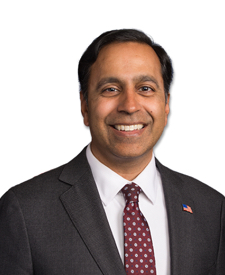
Portrait of Raja Krishnamoorthi, rendered as a two-tone print
Official portrait
1.6×
the House Democrat rate of policy criticism

45% of 2,155 statements criticize a policy (972 statements); the average for House Democrats is 28%. Ranks 3rd of 216, where 1st is the highest rate.

An AI model reads each of Krishnamoorthi’s posts on X, press releases, newsletters and Congressional Record speeches and marks whether it criticizes a specific policy, law or ruling. The rate is the share of statements marked; it is compared with the average among House Democrats and ranked against the same group.

At a glance

6 measures against House Democrats. Krishnamoorthi raised $16.4M in the 2026 cycle, in the top 5% of House Democrats (median $2.0M). 83% of Krishnamoorthi’s statements discuss policy, in the top tenth of House Democrats (average 73%).

The measures on which Krishnamoorthi sits furthest from the middle of House Democrats, each against the same group, with the CSIP score when there is one. Every number is explained in its own section below.

Policy criticism

45%

House Democrats average 28% · ranks 3rd of 216

Raised, 2026

$16.4M

House Democrats’ median $2.0M · ranks 4th of 214

Policy discussion

83%

House Democrats average 73% · ranks 14th of 216

Small donations, 2026

6.1%

House Democrats’ median 13% · ranks 161st of 214

Personal attacks

8.3%

House Democrats average 6.6% · ranks 63rd of 216

CSIP ideology

−1.04

Left of 0, the centre of the scale · ± 0.01

Peer group: House Democrats. Rank 1 is the highest value in the group; the thick bar is Krishnamoorthi, the thin grey bar the peer average. The headline is the measure on which Krishnamoorthi is most unusual among peers (Methods, §08).

Back to topNext: What politicians say

What Krishnamoorthi says

Krishnamoorthi criticizes policies more than 98% of House Democrats. Policy criticism in 45% of 2,155 statements, against 28% for the average House Democrat; 3rd of 216.

An AI model reads each of Krishnamoorthi’s 2,155 statements in the 119th Congress (1,571 posts on X, 446 press releases, 98 newsletters, 40 Congressional Record speeches) and marks the kinds of statement it contains: a personal attack, criticism of a policy, discussion of policy, bipartisanship, credit claiming, and extreme labels. A statement can carry several. Every rate is compared with the average for House Democrats and ranked among them.

Kinds of statement

Share of statements carrying each label, the 119th Congress

0%80%
Krishnamoorthi
Peers
Rank
Policy discussion1,784 statements
83%
73%
14th of 216
Policy criticism972 statements
45%
28%
3rd of 216
Credit claiming408 statements
19%
23%
138th of 216
Bipartisanship232 statements
11%
10%
70th of 216
Personal attacks178 statements
8%
7%
63rd of 216
Show the data
Krishnamoorthi's share of statements in each category against the House Democrats average.
RowKrishnamoorthiPeers
Policy discussion83%73%
Policy criticism45%28%
Credit claiming19%23%
Bipartisanship11%10%
Personal attacks8%7%
2,155

statements classified

1,571 posts on X, 446 press releases, 98 newsletters, 40 Congressional Record speeches.

posts on X: 1,571 (72.9%)posts on X 1,571press releases: 446 (20.7%)newsletters: 98 (4.5%)Congressional Record speeches: 40 (1.9%)
Show the data
Krishnamoorthi's statements by source
PartValue
posts on X1,571
press releases446
newsletters98
Congressional Record speeches40
How to read the bars

The thick bar is Krishnamoorthi; the thin grey bar is the average House Democrats. A longer thick bar means Krishnamoorthi does this more than peers. Rank 1 is the highest rate in the group.

Extreme labels

Krishnamoorthi used extreme labels in 1.9% of statements, close to the peer average. 41 statements, most often aimed at Trump; peers 1.9%.

  1. “extreme”12
  2. “communist”7
  3. “MAGA”5
  4. “radical”4
  5. “far right”3

Who gets the labels

Targets named alongside an extreme label, by number of statements

  1. Trump4
  2. Donald Trump2
  3. Trump Administration2
  4. budget package1
  5. CCP1
What an extreme label is

Calls a politician, a party or a policy “far left”, “far right”, “MAGA”, “extreme”, “radical”, “woke”, “fascist” or “communist”. The target is who or what the label was aimed at. The lists show the five most used labels and targets; the toggle shows the rest.

Month by month

Share of statements per month, the 119th Congress

Statements2025-01: 732025-02: 972025-03: 902025-04: 852025-05: 982025-06: 1082025-07: 982025-08: 742025-09: 762025-10: 1082025-11: 742025-12: 972026-01: 992026-02: 772026-03: 672026-04: 1092026-05: 1132026-06: 1372026-07: 1222026-08: 1002026-09: 1522026-10: 101peak 152 · Sep ’26Personal attackspeak 17.2% · Jul ’26 · latest 8.9%Personal attacks, 2025-01: 1.4% of 73Personal attacks, 2025-02: 7.2% of 97Personal attacks, 2025-03: 14.4% of 90Personal attacks, 2025-04: 4.7% of 85Personal attacks, 2025-05: 3.1% of 98Personal attacks, 2025-06: 7.4% of 108Personal attacks, 2025-07: 2.0% of 98Personal attacks, 2025-08: 12.2% of 74Personal attacks, 2025-09: 10.5% of 76Personal attacks, 2025-10: 6.5% of 108Personal attacks, 2025-11: 6.8% of 74Personal attacks, 2025-12: 4.1% of 97Personal attacks, 2026-01: 6.1% of 99Personal attacks, 2026-02: 7.8% of 77Personal attacks, 2026-03: 3.0% of 67Personal attacks, 2026-04: 15.6% of 109Personal attacks, 2026-05: 9.7% of 113Personal attacks, 2026-06: 7.3% of 137Personal attacks, 2026-07: 17.2% of 122Personal attacks, 2026-08: 10.0% of 100Personal attacks, 2026-09: 9.9% of 152Personal attacks, 2026-10: 8.9% of 101Policy criticismpeak 70.2% · Mar ’26 · latest 33.7%Policy criticism, 2025-01: 37.0% of 73Policy criticism, 2025-02: 49.5% of 97Policy criticism, 2025-03: 46.7% of 90Policy criticism, 2025-04: 32.9% of 85Policy criticism, 2025-05: 45.9% of 98Policy criticism, 2025-06: 34.3% of 108Policy criticism, 2025-07: 59.2% of 98Policy criticism, 2025-08: 46.0% of 74Policy criticism, 2025-09: 52.6% of 76Policy criticism, 2025-10: 50.9% of 108Policy criticism, 2025-11: 55.4% of 74Policy criticism, 2025-12: 45.4% of 97Policy criticism, 2026-01: 35.4% of 99Policy criticism, 2026-02: 50.6% of 77Policy criticism, 2026-03: 70.2% of 67Policy criticism, 2026-04: 37.6% of 109Policy criticism, 2026-05: 48.7% of 113Policy criticism, 2026-06: 50.4% of 137Policy criticism, 2026-07: 30.3% of 122Policy criticism, 2026-08: 42.0% of 100Policy criticism, 2026-09: 48.7% of 152Policy criticism, 2026-10: 33.7% of 101Policy discussionpeak 93.0% · Aug ’26 · latest 88.1%Policy discussion, 2025-01: 74.0% of 73Policy discussion, 2025-02: 78.3% of 97Policy discussion, 2025-03: 73.3% of 90Policy discussion, 2025-04: 74.1% of 85Policy discussion, 2025-05: 75.5% of 98Policy discussion, 2025-06: 80.6% of 108Policy discussion, 2025-07: 86.7% of 98Policy discussion, 2025-08: 82.4% of 74Policy discussion, 2025-09: 82.9% of 76Policy discussion, 2025-10: 79.6% of 108Policy discussion, 2025-11: 83.8% of 74Policy discussion, 2025-12: 88.7% of 97Policy discussion, 2026-01: 91.9% of 99Policy discussion, 2026-02: 81.8% of 77Policy discussion, 2026-03: 89.5% of 67Policy discussion, 2026-04: 86.2% of 109Policy discussion, 2026-05: 81.4% of 113Policy discussion, 2026-06: 71.5% of 137Policy discussion, 2026-07: 82.8% of 122Policy discussion, 2026-08: 93.0% of 100Policy discussion, 2026-09: 92.1% of 152Policy discussion, 2026-10: 88.1% of 101Bipartisanshippeak 17.5% · Jun ’26 · latest 14.8%Bipartisanship, 2025-01: 16.4% of 73Bipartisanship, 2025-02: 12.4% of 97Bipartisanship, 2025-03: 5.6% of 90Bipartisanship, 2025-04: 8.2% of 85Bipartisanship, 2025-05: 6.1% of 98Bipartisanship, 2025-06: 14.8% of 108Bipartisanship, 2025-07: 10.2% of 98Bipartisanship, 2025-08: 10.8% of 74Bipartisanship, 2025-09: 15.8% of 76Bipartisanship, 2025-10: 11.1% of 108Bipartisanship, 2025-11: 8.1% of 74Bipartisanship, 2025-12: 15.5% of 97Bipartisanship, 2026-01: 3.0% of 99Bipartisanship, 2026-02: 7.8% of 77Bipartisanship, 2026-03: 9.0% of 67Bipartisanship, 2026-04: 9.2% of 109Bipartisanship, 2026-05: 10.6% of 113Bipartisanship, 2026-06: 17.5% of 137Bipartisanship, 2026-07: 9.0% of 122Bipartisanship, 2026-08: 9.0% of 100Bipartisanship, 2026-09: 9.9% of 152Bipartisanship, 2026-10: 14.8% of 101Credit claimingpeak 28.9% · Sep ’25 · latest 24.8%Credit claiming, 2025-01: 23.3% of 73Credit claiming, 2025-02: 18.6% of 97Credit claiming, 2025-03: 16.7% of 90Credit claiming, 2025-04: 17.6% of 85Credit claiming, 2025-05: 13.3% of 98Credit claiming, 2025-06: 11.1% of 108Credit claiming, 2025-07: 17.3% of 98Credit claiming, 2025-08: 20.3% of 74Credit claiming, 2025-09: 28.9% of 76Credit claiming, 2025-10: 15.7% of 108Credit claiming, 2025-11: 18.9% of 74Credit claiming, 2025-12: 15.5% of 97Credit claiming, 2026-01: 22.2% of 99Credit claiming, 2026-02: 26.0% of 77Credit claiming, 2026-03: 19.4% of 67Credit claiming, 2026-04: 20.2% of 109Credit claiming, 2026-05: 18.6% of 113Credit claiming, 2026-06: 22.6% of 137Credit claiming, 2026-07: 18.0% of 122Credit claiming, 2026-08: 18.0% of 100Credit claiming, 2026-09: 15.8% of 152Credit claiming, 2026-10: 24.8% of 101Extreme labelspeak 5.9% · Apr ’25 · latest 0.0%Extreme labels, 2025-01: 0.0% of 73Extreme labels, 2025-02: 4.1% of 97Extreme labels, 2025-03: 4.4% of 90Extreme labels, 2025-04: 5.9% of 85Extreme labels, 2025-05: 3.1% of 98Extreme labels, 2025-06: 1.8% of 108Extreme labels, 2025-07: 4.1% of 98Extreme labels, 2025-08: 4.0% of 74Extreme labels, 2025-09: 2.6% of 76Extreme labels, 2025-10: 4.6% of 108Extreme labels, 2025-11: 1.4% of 74Extreme labels, 2025-12: 1.0% of 97Extreme labels, 2026-01: 0.0% of 99Extreme labels, 2026-02: 2.6% of 77Extreme labels, 2026-03: 1.5% of 67Extreme labels, 2026-04: 1.8% of 109Extreme labels, 2026-05: 0.0% of 113Extreme labels, 2026-06: 1.5% of 137Extreme labels, 2026-07: 0.0% of 122Extreme labels, 2026-08: 0.0% of 100Extreme labels, 2026-09: 0.0% of 152Extreme labels, 2026-10: 0.0% of 101Jan ’25Jul ’25Jan ’26Jul ’26Oct ’26
Show the data
Monthly rates for Krishnamoorthi, each row shaded against its own peak, with statement volume. Months with fewer than 10 statements are left blank.
ColumnStatementsPersonal attacksPolicy criticismPolicy discussionBipartisanshipCredit claimingExtreme labels
Jan ’25731.4%37.0%74.0%16.4%23.3%0.0%
Feb ’25977.2%49.5%78.3%12.4%18.6%4.1%
Mar ’259014.4%46.7%73.3%5.6%16.7%4.4%
Apr ’25854.7%32.9%74.1%8.2%17.6%5.9%
May ’25983.1%45.9%75.5%6.1%13.3%3.1%
Jun ’251087.4%34.3%80.6%14.8%11.1%1.8%
Jul ’25982.0%59.2%86.7%10.2%17.3%4.1%
Aug ’257412.2%46.0%82.4%10.8%20.3%4.0%
Sep ’257610.5%52.6%82.9%15.8%28.9%2.6%
Oct ’251086.5%50.9%79.6%11.1%15.7%4.6%
Nov ’25746.8%55.4%83.8%8.1%18.9%1.4%
Dec ’25974.1%45.4%88.7%15.5%15.5%1.0%
Jan ’26996.1%35.4%91.9%3.0%22.2%0.0%
Feb ’26777.8%50.6%81.8%7.8%26.0%2.6%
Mar ’26673.0%70.2%89.5%9.0%19.4%1.5%
Apr ’2610915.6%37.6%86.2%9.2%20.2%1.8%
May ’261139.7%48.7%81.4%10.6%18.6%0.0%
Jun ’261377.3%50.4%71.5%17.5%22.6%1.5%
Jul ’2612217.2%30.3%82.8%9.0%18.0%0.0%
Aug ’2610010.0%42.0%93.0%9.0%18.0%0.0%
Sep ’261529.9%48.7%92.1%9.9%15.8%0.0%
Oct ’261018.9%33.7%88.1%14.8%24.8%0.0%
How to read the strips

Each row is one kind of statement; each cell is a month, shaded against that row’s own peak (darker = closer to the peak), with the peak and the latest value written at the right. The top row counts statements. The strip covers every month of the 119th Congress, the same span as the rates above, including months with no statements. A month with fewer than 10 statements is hatched, not shaded: one or two posts would swing its rate to 0% or 100%.

In Krishnamoorthi’s words

Real statements from the classifier’s example set, with the labels it assigned

Personal attacks

Krishnamoorthi Leads 105 Lawmakers Urging FBI Hate Crime Probe After Attempted Mass Shooting at His Family’s Hindu Temple in Aurora WASHINGTON — Congressman Raja Krishnamoorthi (D-IL) today led 105 members of Congress, including the entire Illinois House Democratic delegation, every Indian American…

Oct 20, 2026 · Press releases · personal attacks; policy discussion; Crime and Law Enforcement; Civil Rights and Liberties, Minority Issues; target: Alexandros Paporakis · Source

Policy criticism

The text of this post is on X; follow the source link to read it.

Oct 26, 2026 · Posts on X · policy criticism; policy discussion; credit claiming; Civil Rights and Liberties, Minority Issues; Crime and Law Enforcement; Immigration; Science, Technology, Communications · Source

Extreme label

The text of this post is on X; follow the source link to read it.

Jun 26, 2026 · Posts on X · policy criticism; policy discussion; Health; extreme label “extreme” aimed at Trump Administration · Source

Examples by category

Up to five recent statements in each category

Category

Overtly questions a named person’s character, integrity or loyalty, or calls them names. Criticising a record or a policy does not count.

  1. Press releases

    Krishnamoorthi Leads 105 Lawmakers Urging FBI Hate Crime Probe After Attempted Mass Shooting at His Family’s Hindu Temple in Aurora WASHINGTON — Congressman Raja Krishnamoorthi (D-IL) today led 105 members of Congress, including the entire Illinois House Democratic delegation, every Indian American member of Congress, and Senators Dick Durbin, Tammy Duckworth, Andy Kim, and Chris Van Hollen, in urging FBI Director Ka…

    personal attacks · policy discussion · Crime and Law Enforcement · Civil Rights and Liberties, Minority Issues · target: Alexandros PaporakisSource

  2. Posts on X

    The text of this post is on X; follow the source link to read it.

    personal attacks · policy discussion · Energy · Armed Forces and National Security · International Affairs · Foreign Trade and International Finance · target: TrumpSource

  3. Newsletters

    Confronting Anti-Indian Hate After an Attempted Attack on My Family's Temple in Aurora Dear Neighbors, I hope this message finds you well. As always, if you have questions or concerns, please contact my office by calling (847) 413-1959, emailing me at IL08.helpline@mail.house.gov, or sending a message through my website at https://krishnamoorthi.house.gov/contact/email. For more frequent updates, I encourage you to…

    personal attacks · policy discussion · bipartisanship · credit claiming · Armed Forces and National Security · International Affairs · Civil Rights and Liberties, Minority Issues · Crime and Law Enforcement · Energy · Finance and Financial Sector · Law · target: Donald Trump

  4. Press releases

    Krishnamoorthi Responds to Attempted Mass Shooting at His Family’s Hindu Temple in Aurora, Warns of Surging Anti-Indian Hate SCHAUMBURG — Congressman Raja Krishnamoorthi (D-IL) issued the following statement after authorities arrested a 19-year-old man accused of attempting to carry out a mass shooting targeting Indian Americans at a Hindu temple in Aurora, Illinois. According to prosecutors, the suspect, who espouse…

    personal attacks · policy discussion · Civil Rights and Liberties, Minority Issues · Crime and Law EnforcementSource

  5. Posts on X

    The text of this post is on X; follow the source link to read it.

    personal attacks · policy discussion · International Affairs · Armed Forces and National Security · Energy · Economics and Public Finance · target: TrumpSource

All 2,155 statements

Newest first, the 119th Congress

The full feed

Five statements at a time, newest first; filters apply to the statements loaded so far. Export saves the statements that match. Sources: 1,571 posts on X, 446 press releases, 98 newsletters, 40 Congressional Record speeches.

Back to topNext: Policy

Policy

Government Operations and Politics is what Krishnamoorthi talks about most: 30% of policy statements, above the peer share. Talk and legislation agree at 0.69 on a 0–1 scale (House Democrats average 0.67; 78th of 216).

Each policy statement is tagged by the AI model with one or more of 25 policy areas from the Congressional Research Service list, so the shares say what Krishnamoorthi talks about. The bills Krishnamoorthi sponsors and cosponsors carry the same areas, so the two can be compared.

What Krishnamoorthi talks about

Share of policy statements by area, the 119th Congress

0%35%
Krishnamoorthi
Peers
Government Operations and Politics539 statements
30%
20%
Health430 statements
24%
26%
Armed Forces and National Security420 statements
24%
16%
Economics and Public Finance315 statements
18%
20%
Civil Rights and Liberties, Minority Issues313 statements
18%
13%
Show the data
Policy areas Krishnamoorthi talks about, as a share of policy statements, against the House Democrats average.
RowKrishnamoorthiPeers
Government Operations and Politics30%20%
Health24%26%
Armed Forces and National Security24%16%
Economics and Public Finance18%20%
Civil Rights and Liberties, Minority Issues18%13%
How to read the bars

The thick bar is the share of Krishnamoorthi’s policy statements in an area; the thin grey bar is the average share for House Democrats. A statement counts once in each of its areas, so shares can add to more than 100%. The five largest areas are shown; the toggle shows the rest.

Talks about · legislates on

Left: share of statements by policy area. Right: share of bills. Areas in order of their share of statements; both sides run from 0 to 35%. Grey ticks are the House Democrats averages.

Talks aboutLegislates onGovernment Operations andPoliticsGovernment Operations and Politics, talks about: 30% (House Democrats 20%)30%Government Operations and Politics, legislates on: 12% (House Democrats 11%)12%HealthHealth, talks about: 24% (House Democrats 26%)24%Health, legislates on: 15% (House Democrats 16%)15%Armed Forces and NationalSecurityArmed Forces and National Security, talks about: 24% (House Democrats 16%)24%Armed Forces and National Security, legislates on: 4% (House Democrats 7%)4%Economics and Public FinanceEconomics and Public Finance, talks about: 18% (House Democrats 20%)18%Economics and Public Finance, legislates on: 1% (House Democrats 1%)1%Civil Rights and Liberties,Minority IssuesCivil Rights and Liberties, Minority Issues, talks about: 18% (House Democrats 13%)18%Civil Rights and Liberties, Minority Issues, legislates on: 5% (House Democrats 5%)5%
Show the data
Krishnamoorthi's share of statements against share of bills in each policy area.
AreaTalks aboutHouse Democrats, talks aboutLegislates onHouse Democrats, legislates on
Government Operations and Politics30%20%12%11%
Health24%26%15%16%
Armed Forces and National Security24%16%4%7%
Economics and Public Finance18%20%1%1%
Civil Rights and Liberties, Minority Issues18%13%5%5%
0.69

talk-to-bills agreement, 0 to 1

House Democrats average 0.67. Ranks 78th of 216.

What agreement means, and what it doesn’t

Agreement is 1 minus the distance between the two distributions (Jensen–Shannon): 1 means Krishnamoorthi legislates on exactly the areas Krishnamoorthi talks about, in the same proportions; 0 means no overlap. It does not say whether the bills match the positions in the statements, only the subjects. Bills Krishnamoorthi sponsored count fully, cosponsored bills a quarter. Shown with at least 20 policy statements and 5 bills.

Back to topNext: Ideology

Ideology

Krishnamoorthi sits at −1.04 on the CSIP scale, left of 0, more liberal than 58% of House Democrats. Approximate range −1.05 to −1.03, which understates the uncertainty; from 10,921 donors and 5,029 roll calls.

CSIP, the lab’s Common-Space Ideal Point, places every official, federal and state, on one left–right scale, estimated from roll-call votes, who gives money to whom, and the text of statements. Negative is left of 0, positive right of it; 0 is the centre of the scale, not a definition of “moderate”.

−1.04

CSIP ideal point

Approximate range −1.05 to −1.03. From 10,921 donors and 5,029 roll calls. Run 2026-10-25T215945. Blue is left of 0, red right of 0.

← More liberalMore conservative →0Krishnamoorthi −1.0House Democrats −1.0All House +0.3

The outlined dot is Krishnamoorthi, coloured by its side of 0 (blue left, red right, deeper further out); the bar through it is the approximate range (±1.96 standard errors), which understates the uncertainty; the grey ticks below are the medians of Krishnamoorthi’s groups. 0 is the centre of the scale, not “moderate” by definition.

What this means, and what it doesn’t

The score summarises how an official votes, who funds them and how they talk, relative to everyone else. It does not grade positions as good or bad, and two officials with the same score can differ on any single issue. The ± range is 1.96 standard errors, which understates the uncertainty: scores whose ranges overlap may not differ at all, and even scores whose ranges do not overlap may not differ.

Where Krishnamoorthi sits

Every official in each group, on the CSIP scale

−2.0−1.00.0+1.0+2.0← More liberalMore conservative →House Democratsmedian −1.0Krishnamoorthi −1.0All Housemedian +0.3
Show the data
Krishnamoorthi's CSIP score of −1.04 placed against House Democrats, All House.
GroupOfficialsMedianShare left of Krishnamoorthi
House Democrats217−1.042%
All House439+0.321%
How to read the strips

Every small dot is one official on the same scale, coloured by its own score (blue left of 0, red right of 0, grey at 0, deeper further out) and spread up and down only to keep dots apart; where a group is crowded the dots overlap, and darker patches mean more officials. The large outlined dot is Krishnamoorthi in every row; the rule is each group’s median. The table under the figure gives the share of each group to the left of Krishnamoorthi.

Back to topNext: Money

Money

Krishnamoorthi raised $16.4M in the 2026 cycle, 8.3 times the House Democrats’ median of $2.0M. 6.1% of individual money came in gifts of $200 or less. 46% of itemized individual money came from Illinois.

Campaign money from Federal Election Commission filings, as aggregates only; the lab never shows an individual donor. Campaigns must report by name every person who gives them more than $200 in a cycle (“itemized”); smaller gifts are reported only as one total (“unitemized”), so donor counts, donor states, employers and occupations describe itemized donors only.

Election cycle
$16.4M

raised in the 2026 cycle

From 5,045 itemized donors. House Democrats’ median $2.0M.

Where the money came from

Each square is one percent of 2026-cycle receipts, from FEC summary totals.

Itemized individual (over $200): $13.3M (81.1%)Itemized individual (over $200): $13.3M (81.1%)Itemized individual (over $200): $13.3M (81.1%)Itemized individual (over $200): $13.3M (81.1%)Itemized individual (over $200): $13.3M (81.1%)Itemized individual (over $200): $13.3M (81.1%)Itemized individual (over $200): $13.3M (81.1%)Itemized individual (over $200): $13.3M (81.1%)Itemized individual (over $200): $13.3M (81.1%)Itemized individual (over $200): $13.3M (81.1%)Itemized individual (over $200): $13.3M (81.1%)Itemized individual (over $200): $13.3M (81.1%)Itemized individual (over $200): $13.3M (81.1%)Itemized individual (over $200): $13.3M (81.1%)Itemized individual (over $200): $13.3M (81.1%)Itemized individual (over $200): $13.3M (81.1%)Itemized individual (over $200): $13.3M (81.1%)Itemized individual (over $200): $13.3M (81.1%)Itemized individual (over $200): $13.3M (81.1%)Itemized individual (over $200): $13.3M (81.1%)Itemized individual (over $200): $13.3M (81.1%)Itemized individual (over $200): $13.3M (81.1%)Itemized individual (over $200): $13.3M (81.1%)Itemized individual (over $200): $13.3M (81.1%)Itemized individual (over $200): $13.3M (81.1%)Itemized individual (over $200): $13.3M (81.1%)Itemized individual (over $200): $13.3M (81.1%)Itemized individual (over $200): $13.3M (81.1%)Itemized individual (over $200): $13.3M (81.1%)Itemized individual (over $200): $13.3M (81.1%)Itemized individual (over $200): $13.3M (81.1%)Itemized individual (over $200): $13.3M (81.1%)Itemized individual (over $200): $13.3M (81.1%)Itemized individual (over $200): $13.3M (81.1%)Itemized individual (over $200): $13.3M (81.1%)Itemized individual (over $200): $13.3M (81.1%)Itemized individual (over $200): $13.3M (81.1%)Itemized individual (over $200): $13.3M (81.1%)Itemized individual (over $200): $13.3M (81.1%)Itemized individual (over $200): $13.3M (81.1%)Itemized individual (over $200): $13.3M (81.1%)Itemized individual (over $200): $13.3M (81.1%)Itemized individual (over $200): $13.3M (81.1%)Itemized individual (over $200): $13.3M (81.1%)Itemized individual (over $200): $13.3M (81.1%)Itemized individual (over $200): $13.3M (81.1%)Itemized individual (over $200): $13.3M (81.1%)Itemized individual (over $200): $13.3M (81.1%)Itemized individual (over $200): $13.3M (81.1%)Itemized individual (over $200): $13.3M (81.1%)Itemized individual (over $200): $13.3M (81.1%)Itemized individual (over $200): $13.3M (81.1%)Itemized individual (over $200): $13.3M (81.1%)Itemized individual (over $200): $13.3M (81.1%)Itemized individual (over $200): $13.3M (81.1%)Itemized individual (over $200): $13.3M (81.1%)Itemized individual (over $200): $13.3M (81.1%)Itemized individual (over $200): $13.3M (81.1%)Itemized individual (over $200): $13.3M (81.1%)Itemized individual (over $200): $13.3M (81.1%)Itemized individual (over $200): $13.3M (81.1%)Itemized individual (over $200): $13.3M (81.1%)Itemized individual (over $200): $13.3M (81.1%)Itemized individual (over $200): $13.3M (81.1%)Itemized individual (over $200): $13.3M (81.1%)Itemized individual (over $200): $13.3M (81.1%)Itemized individual (over $200): $13.3M (81.1%)Itemized individual (over $200): $13.3M (81.1%)Itemized individual (over $200): $13.3M (81.1%)Itemized individual (over $200): $13.3M (81.1%)Itemized individual (over $200): $13.3M (81.1%)Itemized individual (over $200): $13.3M (81.1%)Itemized individual (over $200): $13.3M (81.1%)Itemized individual (over $200): $13.3M (81.1%)Itemized individual (over $200): $13.3M (81.1%)Itemized individual (over $200): $13.3M (81.1%)Itemized individual (over $200): $13.3M (81.1%)Itemized individual (over $200): $13.3M (81.1%)Itemized individual (over $200): $13.3M (81.1%)Itemized individual (over $200): $13.3M (81.1%)Itemized individual (over $200): $13.3M (81.1%)Unitemized individual (gifts of $200 or less): $863.7K (5.3%)Unitemized individual (gifts of $200 or less): $863.7K (5.3%)Unitemized individual (gifts of $200 or less): $863.7K (5.3%)Unitemized individual (gifts of $200 or less): $863.7K (5.3%)Unitemized individual (gifts of $200 or less): $863.7K (5.3%)PACs and other committees: $862.0K (5.3%)PACs and other committees: $862.0K (5.3%)PACs and other committees: $862.0K (5.3%)PACs and other committees: $862.0K (5.3%)PACs and other committees: $862.0K (5.3%)Remainder not broken out in the FEC summary (transfers, loans, refunds): $1.4M (8.4%)Remainder not broken out in the FEC summary (transfers, loans, refunds): $1.4M (8.4%)Remainder not broken out in the FEC summary (transfers, loans, refunds): $1.4M (8.4%)Remainder not broken out in the FEC summary (transfers, loans, refunds): $1.4M (8.4%)Remainder not broken out in the FEC summary (transfers, loans, refunds): $1.4M (8.4%)Remainder not broken out in the FEC summary (transfers, loans, refunds): $1.4M (8.4%)Remainder not broken out in the FEC summary (transfers, loans, refunds): $1.4M (8.4%)Remainder not broken out in the FEC summary (transfers, loans, refunds): $1.4M (8.4%)Remainder not broken out in the FEC summary (transfers, loans, refunds): $1.4M (8.4%)
  • Itemized individual (over $200)81 squares$13.3M
  • Unitemized individual (gifts of $200 or less)5 squares$863.7K
  • PACs and other committees5 squares$862.0K
  • Party committees$500
  • Remainder not broken out in the FEC summary (transfers, loans, refunds)9 squares$1.4M
Show the data
Sources of Krishnamoorthi's money, 2026 cycle, one square per percent
SourceAmountShare
Itemized individual (over $200)$13.3M81.1%
Unitemized individual (gifts of $200 or less)$863.7K5.3%
PACs and other committees$862.0K5.3%
Party committees$5000.0%
Remainder not broken out in the FEC summary (transfers, loans, refunds)$1.4M8.4%
What this means, and what it doesn’t

Totals say how much a campaign took in, not how it was spent, and they rise sharply when a seat is up for election; compare cycles with that in mind. The small-donor share understates small giving when a campaign itemizes gifts made through ActBlue or WinRed.

Receipts by cycle

Total receipts, 2020 to 2026. The grey line is the House Democrats’ median for 2026.

2020 cycle: $6.4M$6.4M20202022 cycle: $8.5M$8.5M20222024 cycle: $10.9M$10.9M20242026 cycle: $16.4M$16.4M2026House Democrats median $2.0M
Show the data
Krishnamoorthi's receipts by cycle against the 2026 House Democrats median.
ItemValue
2020 cycle$6.4M
2022 cycle$8.5M
2024 cycle$10.9M
2026 cycle$16.4M

Top donor states, 2026

Itemized contributions by donor state. 46% came from Illinois.

  1. Illinois$4.6M
  2. California$1.4M
  3. New York$561.1K
  4. Texas$551.4K
  5. Florida$526.4K

Small donations

Gifts of $200 or less as a share of individual money, by cycle. The thin grey bar is the 2026 House Democrats’ median.

0%60%
Krishnamoorthi
Median
2026
6%
13%
2024
9%
13%
2022
10%
13%
2020
11%
13%
Show the data
Small-donor share by cycle against the House Democrats median
RowKrishnamoorthiMedian
2026 cycle6%13%
2024 cycle9%13%
2022 cycle10%13%
2020 cycle11%13%

Where itemized donors live

Individuals who gave more than $200, by donor state

Alaska: $400AKMaine: $7,743MEVermont: $5,750VTNew Hampshire: $2,000NHWashington: $112.3KWAIdaho: $1,609IDMontana: $220MTNorth Dakota: no dataNDMinnesota: $35.9KMNIllinois: $4.6MILWisconsin: $12.6KWIMichigan: $69.8KMINew York: $561.1KNYRhode Island: $14.9KRIMassachusetts: $195.7KMAOregon: $19.6KORNevada: $70.6KNVWyoming: $3,500WYSouth Dakota: $1,037SDIowa: $5,000IAIndiana: $115.3KINOhio: $92.4KOHPennsylvania: $98.8KPANew Jersey: $319.3KNJConnecticut: $73.3KCTCalifornia: $1.4MCAUtah: $19.0KUTColorado: $60.3KCONebraska: $28.3KNEMissouri: $42.2KMOKentucky: $4,750KYWest Virginia: no dataWVVirginia: $180.5KVAMaryland: $226.9KMDDelaware: $1,000DEArizona: $33.0KAZNew Mexico: $9,875NMKansas: $543KSArkansas: $4,050ARTennessee: $28.5KTNNorth Carolina: $61.4KNCSouth Carolina: $11.1KSCDistrict of Columbia: $204.2KDCOklahoma: $14.0KOKLouisiana: $16.6KLAMississippi: $2,410MSAlabama: $11.6KALGeorgia: $99.9KGAHawaii: $12.3KHITexas: $551.4KTXFlorida: $526.4KFL
Show the data
Krishnamoorthi's itemized individual contributions by donor state, 2026 cycle
StateValue
Illinois$4.6M
California$1.4M
New York$561.1K
Texas$551.4K
Florida$526.4K
New Jersey$319.3K
Maryland$226.9K
District of Columbia$204.2K
Massachusetts$195.7K
Virginia$180.5K
Indiana$115.3K
Washington$112.3K
Georgia$99.9K
Pennsylvania$98.8K
Ohio$92.4K
Connecticut$73.3K
Nevada$70.6K
Michigan$69.8K
North Carolina$61.4K
Colorado$60.3K
Missouri$42.2K
Minnesota$35.9K
Arizona$33.0K
Tennessee$28.5K
Nebraska$28.3K
Oregon$19.6K
Utah$19.0K
Louisiana$16.6K
Rhode Island$14.9K
Oklahoma$14.0K
Wisconsin$12.6K
Hawaii$12.3K
Alabama$11.6K
South Carolina$11.1K
New Mexico$9,875
Maine$7,743
Vermont$5,750
Iowa$5,000
Kentucky$4,750
Arkansas$4,050
Wyoming$3,500
Mississippi$2,410
New Hampshire$2,000
Idaho$1,609
South Dakota$1,037
Delaware$1,000
Kansas$543
Alaska$400
Montana$220
North DakotaNo data
West VirginiaNo data
5,045

itemized donors

People who gave more than $200

46%

from Illinois

Of itemized individual dollars

How to read the map

Every state the same size. Darker states gave more itemized money; hatched states had no itemized donors; the outlined state is Illinois. Gifts of $200 or less carry no address and are left out.

Donors’ ideology

Distribution of itemized donors’ own CSIP scores

CSIP −1.75 to −1.50: 0.0%CSIP −1.50 to −1.25: 0.3%CSIP −1.25 to −1.00: 23%CSIP −1.00 to −0.75: 39%39%CSIP −0.75 to −0.50: 32%CSIP −0.50 to −0.25: 2.2%CSIP −0.25 to 0.00: 1.7%CSIP 0.00 to +0.25: 1.0%CSIP +0.25 to +0.50: 0.4%CSIP +0.50 to +0.75: 0.3%CSIP +0.75 to +1.00: 0.1%← More liberalMore conservative →0
Show the data
Ideology of Krishnamoorthi's itemized donors in 2026, from −1.75 to +1.00: 23% between −1.25 and −1.00, 39% between −1.00 and −0.75, 32% between −0.75 and −0.50.
ItemValue
CSIP −1.75 to −1.500.0%
CSIP −1.50 to −1.250.3%
CSIP −1.25 to −1.0023%
CSIP −1.00 to −0.7539%
CSIP −0.75 to −0.5032%
CSIP −0.50 to −0.252.2%
CSIP −0.25 to 0.001.7%
CSIP 0.00 to +0.251.0%
CSIP +0.25 to +0.500.4%
CSIP +0.50 to +0.750.3%
CSIP +0.75 to +1.000.1%
How to read the columns

Donors who give to many candidates get their own CSIP score. Each column is the share of Krishnamoorthi’s itemized money from donors in that part of the scale, blue left of 0 and red right of 0, deeper further out; Krishnamoorthi’s own score is −1.04.

Top donor occupations

Itemized, 2026 cycle.

  1. NOT EMPLOYED$2.5M 1,183 donors
  2. ATTORNEY$1.6M 507 donors
  3. PHYSICIAN$1.3M 470 donors
  4. ENTREPRENEUR$893.6K 298 donors
  5. RETIRED$735.7K 305 donors

Top committees

PAC and committee contributions, 2026 cycle.

  1. KPMG PARTNERS/PRINCIPALS AND EMPLOYEES PAC$15.0K
  2. POLITICAL ACTION COMMITTEE OF THE AMERICAN ASSOCIATION OF ORTHOPAEDIC SURGEONS--PAC OF AAOS$15.0K
  3. ACCENTURE INC. POLITICAL ACTION COMMITTEE$10.0K
  4. AMERICAN SOCIETY OF ANESTHESIOLOGISTS POLITICAL ACTION COMMITTEE (ASA PAC)$10.0K
  5. ASIAN AMERICAN HOTEL OWNERS ASSOCIATION PAC (AAHOA PAC)$10.0K

Top employers

Itemized, 2026 cycle.

  1. KIRKLAND & ELLIS$219.6K 39 donors
  2. KIRKLAND & ELLIS LLP$141.9K 43 donors
  3. BLACKSTONE$70.0K 15 donors
  4. SIDLEY AUSTIN LLP$40.5K 17 donors
  5. NORTHWESTERN UNIVERSITY$37.1K 8 donors

Aggregates only. Individual donors are never named.

Back to topNext: Votes

Votes

Krishnamoorthi voted with the majority of House Democrats on 98.2% of party-line votes and missed 2.1% of 674 roll calls. House Democrats on average: 96.4% party unity, 96.9% attendance. Across all roll calls, Krishnamoorthi voted against the majority of House Democrats 18 times.

674 roll calls Krishnamoorthi could vote on in the 119th Congress, compared with House Democrats. Attendance is the share with a vote recorded. Party unity counts only party-line roll calls, where most Democrats and most Republicans voted on opposite sides, and is the share of those where Krishnamoorthi voted with the majority of House Democrats. The count of votes against that majority covers every roll call where the majority took a side.

18

votes against the majority of House Democrats

Party unity 98.2%, House Democrats average 96.4%, ranks 114th of 217. 674 roll calls in the 119th Congress.

Attendance and party unity

The thick bar is Krishnamoorthi, the thin grey bar the House Democrats average. The scale runs from 80% to 100% to show the gap.

80%100%
Krishnamoorthi
Peers
Rank
Attendance
97.9%
96.9%
120th of 217
Party unity
98.2%
96.4%
114th of 217
Show the data
Krishnamoorthi's attendance and party unity against House Democrats.
RowKrishnamoorthiPeers
Attendance97.9%96.9%
Party unity98.2%96.4%
What this means, and what it doesn’t

A missed roll call has many causes, from illness to campaigning, so attendance says how often, not why. A vote against the majority can be on procedure as well as substance, and many fall on roll calls where both parties split; the key votes below show the ones that decided something.

Key votes

25 roll calls the lab flagged as key in the 119th Congress

Key votes
Party split (yea–nay)Why it’s key
Sep 16, 2026
S. 2403
Retire through Ownership Act
On Motion to Suspend the Rules and Pass
YeaWith majorityPassedD 209–0 · R 191–14 · I 1–0Democrats 209 yea, 0 nay; Republicans 191 yea, 14 nay; Independents 1 yea, 0 naybecame law
Sep 16, 2026
H.J.Res. 213
Providing for congressional disapproval under chapter 8 of title 5, United States Code, of the rule issued by the Environmental Protection Agency relating to the “California State Nonroad Engine Pollution Control Standards; Commercial Harbor Craft Regulations; Notice of Decision”
On Passage
NayWith majorityPassedD 3–207 · R 210–1 · I 1–0Democrats 3 yea, 207 nay; Republicans 210 yea, 1 nay; Independents 1 yea, 0 nayclose vote
Sep 16, 2026
H.R. 10326
PROOF Act
On Passage
NayWith majorityPassedD 6–206 · R 210–1 · I 1–0Democrats 6 yea, 206 nay; Republicans 210 yea, 1 nay; Independents 1 yea, 0 nayclose vote
Sep 16, 2026
H.R. 9576
National Fraud Enforcement Division Act
On Passage
YeaWith majorityPassedD 139–72 · R 212–0 · I 1–0Democrats 139 yea, 72 nay; Republicans 212 yea, 0 nay; Independents 1 yea, 0 nayparty crossover
Sep 16, 2026
H.R. 5334
An Act to amend the Internal Revenue Code of 1986 to allow early childhood educators to take the educator expense deduction, and for other purposes
On Motion to Concur in the Senate Amendments
YeaAgainst majorityPassedD 58–152 · R 203–7 · I 1–0Democrats 58 yea, 152 nay; Republicans 203 yea, 7 nay; Independents 1 yea, 0 naybecame law · party crossover
How key votes are chosen

Automatically: a final-passage or override vote where the measure became law, the margin was under 10%, at least 10% of either party voted against its majority, or the bill was among the 25 most mentioned in officials’ own statements. Up to 25 per window, most recent first; five are shown. Bars show yea on the left, nay on the right, per party.

Votes most often with

The colleagues who voted the same way as Krishnamoorthi most often

  1. Robin KellyD656 shared votes98%
  2. Mark PocanD651 shared votes98%
  3. Betty McCollumD646 shared votes98%
  4. Danny DavisD636 shared votes98%
  5. Robert GarciaD625 shared votes98%

Votes least often with

The colleagues who voted the same way as Krishnamoorthi least often

  1. Chip RoyR625 shared votes16%
  2. Ralph NormanR591 shared votes18%
  3. Keith SelfR646 shared votes18%
  4. Eric BurlisonR629 shared votes19%
  5. Andy BiggsR595 shared votes19%
How to read the agreement lists

The share of roll calls both members voted on where they voted the same way, among colleagues sharing at least 50 such votes. High agreement with members of the other party is common on routine votes.

Full voting record

119th Congress (2025–27), loads in batches

Back to topNext: Legislation

Legislation

Krishnamoorthi sponsored 44 bills in the 119th Congress; none became law. Cosponsored 762 others. 2.3% of sponsored bills got out of committee (House Democrats average 4.9%; 124th of 207).

The bills Krishnamoorthi sponsored and cosponsored in the 119th Congress, from the official bill records, and how far each got: introduced, referred to or acted on in committee, passed one chamber, passed both, became law. A bill counts at every stage it has reached, so the blocks only shrink to the right.

Bills by stage

Counts for the 119th Congress

Sponsored44 billsSponsored, Introduced: 4444Sponsored, In committee: 4444Sponsored, Passed one chamber: 11Sponsored, Passed both chambers: 00Sponsored, Became law: 00Cosponsored762 billsCosponsored, Introduced: 762762Cosponsored, In committee: 762762Cosponsored, Passed one chamber: 2525Cosponsored, Passed both chambers: 33Cosponsored, Became law: 11IntroducedIncommitteePassed onechamberPassed bothchambersBecamelaw
Show the data
Bills Krishnamoorthi sponsored and cosponsored, by furthest stage reached
RoleIntroducedIn committeePassed one chamberPassed both chambersBecame law
Sponsored4444100
Cosponsored7627622531
How to read the blocks

Ink blocks are bills Krishnamoorthi sponsored, ochre blocks bills Krishnamoorthi cosponsored; the figure above each block is the count. Most bills in any legislature never leave committee, so a short staircase is the norm.

2.3%

of sponsored bills got out of committee

House Democrats average 4.9%. Ranks 124th of 207.

Cosponsorship partners

Colleagues who most often cosponsor with Krishnamoorthi, by number of shared bills in the 119th Congress; the square shows their party.

  1. Eleanor Norton137
  2. Rashida Tlaib60
  3. André Carson58
  4. Shri Thanedar48
  5. Dina Titus44
What this means, and what it doesn’t

The score is the share of sponsored bills that a committee reported out or a chamber passed, with at least 5 sponsored bills, ranked within the peer group. Members of the majority party and committee chairs move more bills, so the rank reflects position in the chamber as well as effort. Cosponsorship partners are the five colleagues who share the most of Krishnamoorthi’s bills; the toggle shows more.

Bill list

Sponsored and cosponsored, with status and policy area; five are shown, the toggle shows the rest

Bills sponsored and cosponsored
H.Res. 1635Supporting the designation of October 23, 2026, as "National Marine Sanctuary Day".CosponsorOct 22, 2026In committeeUnassignedReferred to the House Committee on Natural Resources. Oct 22, 2026
H.R. 10841Securing Elections From AI Deception ActCosponsorOct 19, 2026In committeeUnassignedReferred to the House Committee on Energy and Commerce. Oct 19, 2026
H.R. 10820Epstein Wall Street Records Act of 2026CosponsorOct 15, 2026In committeeFinance and Financial SectorReferred to the House Committee on Financial Services. Oct 15, 2026
H.Res. 1628Supporting the designation of the week beginning on October 10, 2026, as "National Wildlife Refuge Week".CosponsorOct 15, 2026In committeePublic Lands and Natural ResourcesReferred to the House Committee on Natural Resources. Oct 15, 2026
H.R. 10774SWIMS Act of 2026CosponsorOct 9, 2026In committeeEnvironmental ProtectionReferred to the Committee on Natural Resources, and in addition to the Committee on Agriculture, for a period to be subsequently determined by the Speaker, in each case for consideration of such provisions as fall within the jurisdiction of the committee concerned. Oct 9, 2026

Back to topNext: Online

Online

A site that changed 79 times in 90 days. Krishnamoorthi’s official site had 31 pages when last crawled on Oct 25, 2026. The lab last catalogued the images Krishnamoorthi posted on Oct 26, 2026.

The lab crawls Krishnamoorthi’s official and campaign websites (weekly for Congress, monthly for the states) and keeps every page’s text, so changes can be read later; it also records social accounts and describes the images Krishnamoorthi posts with a vision model.

Websites

How to read the counts

“Pages crawled” is the size of the site at the last crawl; “changes in 90 days” counts pages whose text differed from the previous crawl. Sites change for many routine reasons, such as new press releases, so a high count is not by itself notable.

Images Krishnamoorthi posted

The latest 24, with model-written descriptions

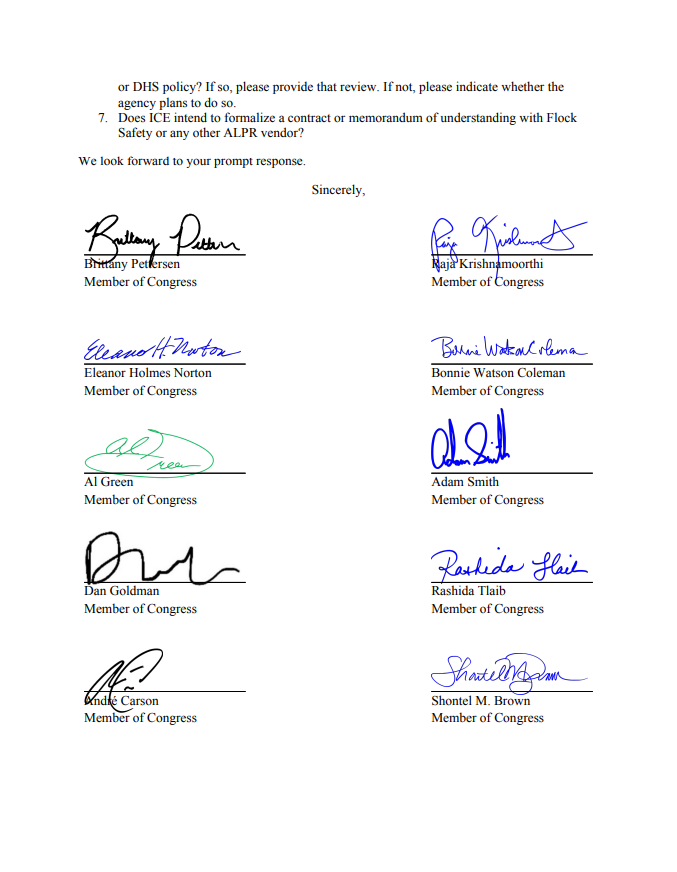
  • A page from a formal letter, showing the closing remarks and multiple handwritten signatures above printed names and congressional titles. There is also numbered text near the top.
    A page from a formal letter, showing the closing remarks and multiple handwritten signatures above printed names and congressional titles. There is also numbered text near the top.View post
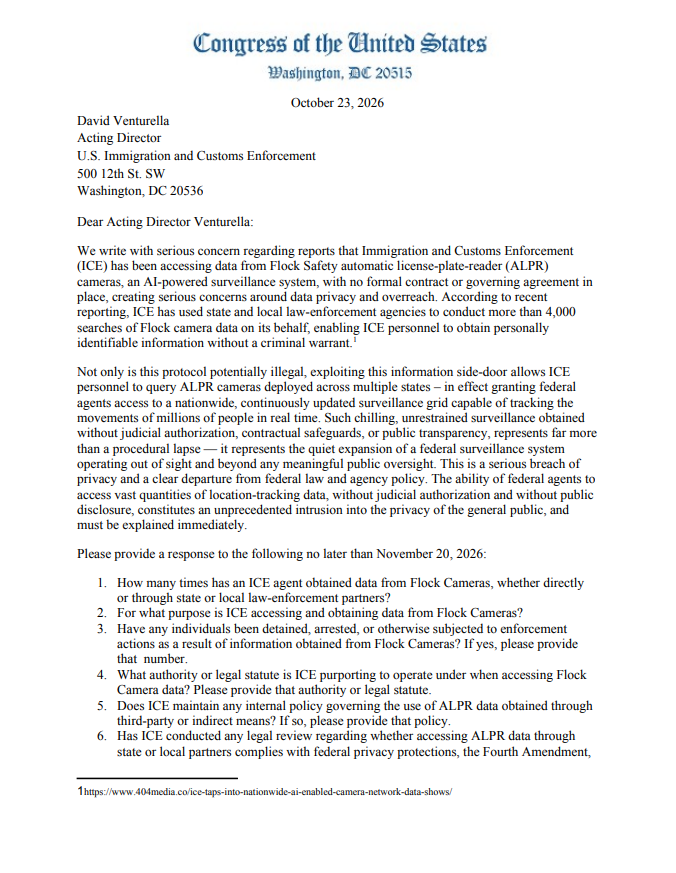
  • A formal letter on U.S. congressional letterhead, dated October 23, 2026, addressed to an immigration enforcement official. It raises concerns about ICE access to automated license-plate reader data and lists questions requesting a response. A citation appears at the bottom.
    A formal letter on U.S. congressional letterhead, dated October 23, 2026, addressed to an immigration enforcement official. It raises concerns about ICE access to automated license-plate reader data and lists questions requesting a response. A citation appears at the bottom.View post
  • A blue-and-orange celebratory poster announcing Indian American Heritage Month, with cherry blossoms, the U.S. Capitol dome, a decorative mandala, and tricolor bands along the bottom. It contains prominent text.
    A blue-and-orange celebratory poster announcing Indian American Heritage Month, with cherry blossoms, the U.S. Capitol dome, a decorative mandala, and tricolor bands along the bottom. It contains prominent text.View post
  • A promotional flyer for a passport fair hosted by Congressman Raja Krishnamoorthi in partnership with the Gail Borden Public Library. It includes event details, information about renewal and first-time applicant services, and illustrations of a passport, airplane, map, and location-related icons. Text appears throughout.
    A promotional flyer for a passport fair hosted by Congressman Raja Krishnamoorthi in partnership with the Gail Borden Public Library. It includes event details, information about renewal and first-time applicant services, and illustrations of a passport, airplane, map, and location-related icons. Text appears throughout.View post
  • A promotional flyer for a passport fair hosted by Congressman Raja Krishnamoorthi in partnership with the Gail Borden Public Library. It includes details about renewal and first-time applicant services, the date, time, and location, along with information about staff assistance and required forms. A passport and airplane appear over a map background. Text is present.
    A promotional flyer for a passport fair hosted by Congressman Raja Krishnamoorthi in partnership with the Gail Borden Public Library. It includes details about renewal and first-time applicant services, the date, time, and location, along with information about staff assistance and required forms. A passport and airplane appear over a map background. Text is present.View post
About the descriptions

Written by a vision model and may be wrong. Open the post to see the original. Five are shown; the toggle shows the rest.

Back to topNext: Methods and sources

Methods and sources

How this page was made. Profile built Oct 28, 2026; site last built Oct 28, 2026. Every number on the page is computed from the sources listed here, by the same rules for every official; nothing is written by hand.

The headline

The headline is the measure on which Krishnamoorthi is most unusual among House Democrats, chosen by one rule for every official of every party. The candidates are the rate of each kind of statement and of extreme labels, party unity, attendance, the small-donor share, the in-state share and total receipts of the latest cycle, the share of sponsored bills that got out of committee, talk-to-bills agreement, and the CSIP score’s place within the party group.

The builder ranks every measure within the same peer group the page compares it with, and writes each official’s percentile: the share of the group below the value, ties counting half, so 0.5 is the median and a value shared by many never ranks first. A measure’s score is how far that percentile sits from the median (0 in the middle, 0.5 at either end), and the highest score leads if it is above 0.25, outside the middle half of the group. Scores within 0.03 of each other are a tie, broken in this order: votes against the party majority, kinds of statement, ideology, roll calls missed, small donations, in-state money, legislation, agreement, extreme labels, receipts.

A measure counts only with at least 200 statements, 100 roll calls or 5 sponsored bills behind it and a peer group of at least 10. Two things never lead: high party unity or attendance, where most members sit, and a high rate of a kind of statement backed by fewer than 10 statements. When nothing qualifies, the headline is a neutral fact instead: statements classified, or years in office. The wording always names the direction (“in the bottom 5% of …”, “votes against the majority of …”).


Identifiers

Profile id
K000391
Bioguide
K000391
FEC candidate ids
H6IL08147, S6IL00482

Bulk files with the same data for every official:

Freshness of this profile’s data

  • What politicians sayOct 27, 20261 days agoMembers of Congress: tweets since 2017; press releases, newsletters and floor speeches since 2022. State legislators: tweets since May 2024. Governors: tweets since January 2025. Labels from an LLM classifier.
  • Roll calls (Congress)Sep 30, 202628 days agoVoteview roll calls, 113th Congress (2013) on.
  • Bills (Congress)Oct 22, 20266 days agoGovInfo BILLSTATUS: sponsors, cosponsors, actions, CRS policy area.
  • Campaign money (FEC)Oct 22, 20266 days agoFEC committee financial summaries (totals, small donations) and itemized contributions (donor counts, states, employers), cycles 2020-2026; aggregates only.
  • Ideology (CSIP)Oct 25, 20263 days agoCommon-Space Ideal Points (CSIP), current validated run.
  • WebsitesOct 25, 20263 days agoWeekly crawls of federal sites since April 2026; monthly state crawls since June 2026.
  • ImagesOct 28, 2026todayImages in members' tweets with vision-model descriptions.

How the measures work

What politicians say
Every post, press release, newsletter and congressional floor speech is read by a language model and marked for personal attacks, policy criticism, policy discussion, bipartisanship and credit claiming. A statement can be in several. Rates are shares of statements in the window. The methods paper.
Extreme labels
A statement has an extreme label when it calls a politician, party or policy “far left”, “far right”, “MAGA”, “extreme”, “radical”, “woke”, “fascist” or “communist”. The target is who the label is aimed at.
Policy areas and agreement
Statements and bills share 25 Congressional Research Service policy areas (state bills are assigned by a language model). Agreement is 1 − Jensen–Shannon distance between the two distributions, shown with at least 20 policy statements and 5 bills.
Ideology (CSIP)
Common-Space Ideal Points place federal and state officials on one left–right scale, estimated jointly from roll calls, campaign contributions and the text of statements, with standard errors. Only a validated run is shown. The methods paper.
Campaign money
Campaigns report by name only donors who give more than $200 in a cycle; smaller gifts are reported as one total. Federal totals and the small-donor share come from the FEC’s financial summaries of each campaign committee. Donor counts, donor states, employers and occupations cover itemized donors only. State filings report no small-gift totals, so state figures are itemized only. The lab never publishes donor names.
Votes and key votes
Attendance, party unity and the count of votes against the majority of an official’s own party come from roll calls (Voteview for Congress, chamber records for the states). Key votes are final-passage or override votes that became law, were decided by under 10%, saw at least 10% of a party vote against its majority, or concerned one of the 25 bills most mentioned in officials’ statements.
Peers and ranks
Comparisons are with the same party, chamber and level (for example House Democrats); state legislators are compared within their state and chamber for votes. Every comparison names its group. Rank 1 is the highest value in the group; tied values share the average of their ranks, and the percentile is the share of the group below the value, ties counting half.

America’s Political Pulse · Polarization Research Lab

Back to top