Skip to content

Democrat · U.S. House, Florida’s 25th district

2024 presidential vote here Harris +5.3 (the district as drawn for 2024; The Downballot)Won 2024 with 54.5%, by 9.0 points

Serving since Jan 4, 2005119th Congress (2025–27)next election Nov 7, 2028

Bioguide W000797FEC H4FL20023

Portrait of Debbie Wasserman Schultz, rendered as a two-tone print
Official portrait
14%
of sponsored bills got out of committee, in the top tenth of House Democrats

14% of 29 sponsored bills got out of committee; the average for House Democrats is 4.9%. Ranks 16th of 209, where 1st is the highest share.

The share of bills Schultz sponsored that a committee reported out or a chamber passed, ranked among House Democrats. Members of the majority party and committee chairs move more bills, so the rank reflects position as well as effort.

At a glance

6 measures against House Democrats. 4.2% of Schultz’s individual money in the 2026 cycle came in gifts of $200 or less, in the bottom quarter of House Democrats (median 13%). 3.2% of Schultz’s statements use an extreme label, 1.7 times the House Democrat average of 1.9%.

The measures on which Schultz sits furthest from the middle of House Democrats, each against the same group, with the CSIP score when there is one. Every number is explained in its own section below.

Out of committee

14%

House Democrats average 4.9% · ranks 16th of 209

Small donations, 2026

4.2%

House Democrats’ median 13% · ranks 180th of 214

Extreme labels

3.2%

House Democrats average 1.9% · ranks 32nd of 216

Policy criticism

34%

House Democrats average 27% · ranks 47th of 216

Raised, 2026

$3.7M

House Democrats’ median $2.0M · ranks 54th of 214

CSIP ideology

−1.11

Left of 0, the centre of the scale · ± 0.01

Peer group: House Democrats. Rank 1 is the highest value in the group; the thick bar is Schultz, the thin grey bar the peer average. The headline is the measure on which Schultz is most unusual among peers (Methods, §08).

The district at a glance

Congressional District 25 (119th Congress): the district as drawn for 2024

The district’s page

Of every 100 people

780,689 people (±3,971)

District

United States

Florida

Race and ethnicity, of every 100 people: district, Florida and the United States
GroupDistrictFloridaU.S.
White315057
Black151512
Hispanic or Latino452719
Asian536
Another race or more than one555

Hispanic or Latino people may be of any race; the other groups are not Hispanic.

Compared with the typical House district

Where it falls among the House districts: the centre rule is the median, the edges the lowest and the highest

← Lower than mostHigher than most →
Median household income
$85,600typical $78,700
Below the poverty line
11%typical 12%
Bachelor’s degree or moreadults 25 and over
42%typical 33%
Median age
41.3typical 39.1
Aged 65 and over
17%typical 17%
Born outside the U.S.
39%typical 10%
Veteranscivilian adults
3.6%typical 6.3%
Living in rural areas2020 Census
0.0%typical 15%
bottom 10%mediantop 10%
Show the data
Where it falls among the House districts
MeasureHere±The typical House districtPercentileStanding
Median household income$85,600±$1,583$78,70062near the middle of the House districts
Below the poverty line11%±0.612%43near the middle of the House districts
Bachelor’s degree or more42%±0.833%75more than in 3 of every 4 House districts
Median age41.3±0.439.179higher than in 3 of every 4 House districts
Aged 65 and over17%±0.417%45near the middle of the House districts
Born outside the U.S.39%±0.710%97more than in 19 of every 20 House districts
Veterans3.6%±0.26.3%15fewer than in 3 of every 4 House districts
Living in rural areas0.0%—15%9fewer than in 9 of every 10 House districts

Source: ACS 2020–2024 5-year estimates (Census Bureau); rural share from the 2020 Census.

About these figures

The figures from the American Community Survey are estimates from a sample, not a count. The ± beside each is its 90 percent margin of error: nine times in ten the true value lies within that range. In small districts the margins are wide, so a gap of a few points from Florida may be noise. Shares are of everyone in the district, except education (adults 25 and over), poverty (people whose poverty status is known) and veterans (civilian adults).

These are the Census Bureau’s own estimates for the district; margins on shares are approximated from the counts’ margins.

The rural share counts the people living outside the urban areas the Census Bureau drew from the 2020 Census; it is a count, with no margin of error.

Back to topNext: What politicians say

What Schultz says

Schultz criticizes policies more than 78% of House Democrats. Policy criticism in 34% of 2,250 statements, against 27% for the average House Democrat; 47th of 216.

An AI model reads each of Schultz’s 2,250 statements in the 119th Congress (1,943 posts on X, 184 press releases, 121 Congressional Record speeches, 2 newsletters) and marks the kinds of statement it contains: a personal attack, criticism of a policy, discussion of policy, bipartisanship, credit claiming, and extreme labels. A statement can carry several. Every rate is compared with the average for House Democrats and ranked among them.

Kinds of statement

Share of statements carrying each label, the 119th Congress

0%80%
Schultz
Peers
Rank
Policy discussion1,708 statements
76%
73%
84th of 216
Policy criticism776 statements
34%
27%
47th of 216
Credit claiming590 statements
26%
23%
67th of 216
Bipartisanship211 statements
9%
10%
91st of 216
Personal attacks175 statements
8%
7%
67th of 216
Show the data
Schultz's share of statements in each category against the House Democrats average.
RowSchultzPeers
Policy discussion76%73%
Policy criticism34%27%
Credit claiming26%23%
Bipartisanship9%10%
Personal attacks8%7%
2,250

statements classified

1,943 posts on X, 184 press releases, 121 Congressional Record speeches, 2 newsletters.

posts on X: 1,943 (86.4%)posts on X 1,943press releases: 184 (8.2%)Congressional Record speeches: 121 (5.4%)newsletters: 2 (0.1%)
Show the data
Schultz's statements by source
PartValue
posts on X1,943
press releases184
Congressional Record speeches121
newsletters2
How to read the bars

The thick bar is Schultz, in the colour of that kind of statement; the thin grey bar is the average House Democrats. A longer thick bar means Schultz does this more than peers. Rank 1 is the highest rate in the group.

Extreme labels

Schultz used extreme labels in 3.2% of statements, above the peer average. 71 statements, most often aimed at MAGA; peers 1.9%.

  1. “extreme”30
  2. “MAGA”15
  3. “far right”7
  4. “communist”3
  5. “fascist”2

Who gets the labels

Targets named alongside an extreme label, by number of statements

  1. MAGA8
  2. Republicans7
  3. Trump4
  4. Donald Trump3
  5. abortion bans1
What an extreme label is

Calls a politician, a party or a policy “far left”, “far right”, “MAGA”, “extreme”, “radical”, “woke”, “fascist” or “communist”. The target is who or what the label was aimed at. The lists show the five most used labels and targets; the toggle shows the rest.

Month by month

Share of statements per month, the 119th Congress

Statements2025-01: 1162025-02: 1022025-03: 1172025-04: 1102025-05: 1162025-06: 1572025-07: 1272025-08: 862025-09: 1072025-10: 1142025-11: 962025-12: 722026-01: 1042026-02: 862026-03: 1092026-04: 972026-05: 1282026-06: 872026-07: 932026-08: 542026-09: 552026-10: 682026-11: 49peak 157 · Jun ’25Personal attackspeak 23.6% · Sep ’26 · latest 12.2%Personal attacks, 2025-01: 6.0% of 116Personal attacks, 2025-02: 16.7% of 102Personal attacks, 2025-03: 12.8% of 117Personal attacks, 2025-04: 13.6% of 110Personal attacks, 2025-05: 9.5% of 116Personal attacks, 2025-06: 6.4% of 157Personal attacks, 2025-07: 6.3% of 127Personal attacks, 2025-08: 4.7% of 86Personal attacks, 2025-09: 3.7% of 107Personal attacks, 2025-10: 4.4% of 114Personal attacks, 2025-11: 5.2% of 96Personal attacks, 2025-12: 11.1% of 72Personal attacks, 2026-01: 8.6% of 104Personal attacks, 2026-02: 3.5% of 86Personal attacks, 2026-03: 2.8% of 109Personal attacks, 2026-04: 6.2% of 97Personal attacks, 2026-05: 3.9% of 128Personal attacks, 2026-06: 4.6% of 87Personal attacks, 2026-07: 9.7% of 93Personal attacks, 2026-08: 3.7% of 54Personal attacks, 2026-09: 23.6% of 55Personal attacks, 2026-10: 8.8% of 68Personal attacks, 2026-11: 12.2% of 49Policy criticismpeak 57.5% · Jul ’25 · latest 6.1%Policy criticism, 2025-01: 32.8% of 116Policy criticism, 2025-02: 35.3% of 102Policy criticism, 2025-03: 35.9% of 117Policy criticism, 2025-04: 34.5% of 110Policy criticism, 2025-05: 34.5% of 116Policy criticism, 2025-06: 52.2% of 157Policy criticism, 2025-07: 57.5% of 127Policy criticism, 2025-08: 41.9% of 86Policy criticism, 2025-09: 45.8% of 107Policy criticism, 2025-10: 43.0% of 114Policy criticism, 2025-11: 43.8% of 96Policy criticism, 2025-12: 29.2% of 72Policy criticism, 2026-01: 16.4% of 104Policy criticism, 2026-02: 41.9% of 86Policy criticism, 2026-03: 33.0% of 109Policy criticism, 2026-04: 25.8% of 97Policy criticism, 2026-05: 26.6% of 128Policy criticism, 2026-06: 40.2% of 87Policy criticism, 2026-07: 22.6% of 93Policy criticism, 2026-08: 18.5% of 54Policy criticism, 2026-09: 10.9% of 55Policy criticism, 2026-10: 10.3% of 68Policy criticism, 2026-11: 6.1% of 49Policy discussionpeak 96.3% · Aug ’26 · latest 85.7%Policy discussion, 2025-01: 69.8% of 116Policy discussion, 2025-02: 72.5% of 102Policy discussion, 2025-03: 68.4% of 117Policy discussion, 2025-04: 63.6% of 110Policy discussion, 2025-05: 70.7% of 116Policy discussion, 2025-06: 75.8% of 157Policy discussion, 2025-07: 81.1% of 127Policy discussion, 2025-08: 70.9% of 86Policy discussion, 2025-09: 81.3% of 107Policy discussion, 2025-10: 74.6% of 114Policy discussion, 2025-11: 71.9% of 96Policy discussion, 2025-12: 69.4% of 72Policy discussion, 2026-01: 80.8% of 104Policy discussion, 2026-02: 79.1% of 86Policy discussion, 2026-03: 74.3% of 109Policy discussion, 2026-04: 78.3% of 97Policy discussion, 2026-05: 67.2% of 128Policy discussion, 2026-06: 79.3% of 87Policy discussion, 2026-07: 87.1% of 93Policy discussion, 2026-08: 96.3% of 54Policy discussion, 2026-09: 81.8% of 55Policy discussion, 2026-10: 92.7% of 68Policy discussion, 2026-11: 85.7% of 49Bipartisanshippeak 18.7% · Sep ’25 · latest 8.2%Bipartisanship, 2025-01: 11.2% of 116Bipartisanship, 2025-02: 11.8% of 102Bipartisanship, 2025-03: 8.6% of 117Bipartisanship, 2025-04: 4.5% of 110Bipartisanship, 2025-05: 12.1% of 116Bipartisanship, 2025-06: 5.7% of 157Bipartisanship, 2025-07: 4.7% of 127Bipartisanship, 2025-08: 9.3% of 86Bipartisanship, 2025-09: 18.7% of 107Bipartisanship, 2025-10: 12.3% of 114Bipartisanship, 2025-11: 16.7% of 96Bipartisanship, 2025-12: 8.3% of 72Bipartisanship, 2026-01: 10.6% of 104Bipartisanship, 2026-02: 7.0% of 86Bipartisanship, 2026-03: 8.3% of 109Bipartisanship, 2026-04: 8.3% of 97Bipartisanship, 2026-05: 18.0% of 128Bipartisanship, 2026-06: 6.9% of 87Bipartisanship, 2026-07: 8.6% of 93Bipartisanship, 2026-08: 0.0% of 54Bipartisanship, 2026-09: 0.0% of 55Bipartisanship, 2026-10: 4.4% of 68Bipartisanship, 2026-11: 8.2% of 49Credit claimingpeak 42.5% · Jun ’26 · latest 10.2%Credit claiming, 2025-01: 31.9% of 116Credit claiming, 2025-02: 28.4% of 102Credit claiming, 2025-03: 18.8% of 117Credit claiming, 2025-04: 20.9% of 110Credit claiming, 2025-05: 25.9% of 116Credit claiming, 2025-06: 21.0% of 157Credit claiming, 2025-07: 21.3% of 127Credit claiming, 2025-08: 22.1% of 86Credit claiming, 2025-09: 36.4% of 107Credit claiming, 2025-10: 14.9% of 114Credit claiming, 2025-11: 36.5% of 96Credit claiming, 2025-12: 27.8% of 72Credit claiming, 2026-01: 27.9% of 104Credit claiming, 2026-02: 32.6% of 86Credit claiming, 2026-03: 39.5% of 109Credit claiming, 2026-04: 27.8% of 97Credit claiming, 2026-05: 21.9% of 128Credit claiming, 2026-06: 42.5% of 87Credit claiming, 2026-07: 33.3% of 93Credit claiming, 2026-08: 16.7% of 54Credit claiming, 2026-09: 14.5% of 55Credit claiming, 2026-10: 20.6% of 68Credit claiming, 2026-11: 10.2% of 49Extreme labelspeak 10.3% · Jun ’26 · latest 4.1%Extreme labels, 2025-01: 4.3% of 116Extreme labels, 2025-02: 5.9% of 102Extreme labels, 2025-03: 4.3% of 117Extreme labels, 2025-04: 3.6% of 110Extreme labels, 2025-05: 3.5% of 116Extreme labels, 2025-06: 5.7% of 157Extreme labels, 2025-07: 5.5% of 127Extreme labels, 2025-08: 0.0% of 86Extreme labels, 2025-09: 3.7% of 107Extreme labels, 2025-10: 1.8% of 114Extreme labels, 2025-11: 0.0% of 96Extreme labels, 2025-12: 0.0% of 72Extreme labels, 2026-01: 0.0% of 104Extreme labels, 2026-02: 2.3% of 86Extreme labels, 2026-03: 0.9% of 109Extreme labels, 2026-04: 1.0% of 97Extreme labels, 2026-05: 0.0% of 128Extreme labels, 2026-06: 10.3% of 87Extreme labels, 2026-07: 5.4% of 93Extreme labels, 2026-08: 1.8% of 54Extreme labels, 2026-09: 1.8% of 55Extreme labels, 2026-10: 4.4% of 68Extreme labels, 2026-11: 4.1% of 49Jan ’25Jul ’25Jan ’26Jul ’26Nov ’26
Show the data
Monthly rates for Schultz, each row shaded against its own peak, with statement volume. Months with fewer than 10 statements are left blank.
ColumnStatementsPersonal attacksPolicy criticismPolicy discussionBipartisanshipCredit claimingExtreme labels
Jan ’251166.0%32.8%69.8%11.2%31.9%4.3%
Feb ’2510216.7%35.3%72.5%11.8%28.4%5.9%
Mar ’2511712.8%35.9%68.4%8.6%18.8%4.3%
Apr ’2511013.6%34.5%63.6%4.5%20.9%3.6%
May ’251169.5%34.5%70.7%12.1%25.9%3.5%
Jun ’251576.4%52.2%75.8%5.7%21.0%5.7%
Jul ’251276.3%57.5%81.1%4.7%21.3%5.5%
Aug ’25864.7%41.9%70.9%9.3%22.1%0.0%
Sep ’251073.7%45.8%81.3%18.7%36.4%3.7%
Oct ’251144.4%43.0%74.6%12.3%14.9%1.8%
Nov ’25965.2%43.8%71.9%16.7%36.5%0.0%
Dec ’257211.1%29.2%69.4%8.3%27.8%0.0%
Jan ’261048.6%16.4%80.8%10.6%27.9%0.0%
Feb ’26863.5%41.9%79.1%7.0%32.6%2.3%
Mar ’261092.8%33.0%74.3%8.3%39.5%0.9%
Apr ’26976.2%25.8%78.3%8.3%27.8%1.0%
May ’261283.9%26.6%67.2%18.0%21.9%0.0%
Jun ’26874.6%40.2%79.3%6.9%42.5%10.3%
Jul ’26939.7%22.6%87.1%8.6%33.3%5.4%
Aug ’26543.7%18.5%96.3%0.0%16.7%1.8%
Sep ’265523.6%10.9%81.8%0.0%14.5%1.8%
Oct ’26688.8%10.3%92.7%4.4%20.6%4.4%
Nov ’264912.2%6.1%85.7%8.2%10.2%4.1%
How to read the strips

Each row is one kind of statement; each cell is a month, shaded against that row’s own peak (darker = closer to the peak), with the peak and the latest value written at the right. The top row counts statements. The strip covers every month of the 119th Congress, the same span as the rates above, including months with no statements. A month with fewer than 10 statements is hatched, not shaded: one or two posts would swing its rate to 0% or 100%.

In Schultz’s words

Real statements from the classifier’s example set, with the labels it assigned

Personal attacks

The text of this post is on X; follow the source link to read it.

Nov 20, 2026 · Posts on X · personal attacks; policy discussion; Civil Rights and Liberties, Minority Issues; Economics and Public Finance; Government Operations and Politics; Immigration; target: DeSantis · Source

Policy criticism

The text of this post is on X; follow the source link to read it.

Nov 17, 2026 · Posts on X · policy criticism; policy discussion; Health · Source

Extreme label

The text of this post is on X; follow the source link to read it.

Nov 23, 2026 · Posts on X · policy discussion; Agriculture and Food; Economics and Public Finance; Energy; Foreign Trade and International Finance; Armed Forces and National Security; extreme label “MAGA” aimed at MAGA policies · Source

Examples by category

Up to five recent statements in each category

Category

Overtly questions a named person’s character, integrity or loyalty, or calls them names. Criticising a record or a policy does not count.

  1. Posts on X

    The text of this post is on X; follow the source link to read it.

    personal attacks · policy discussion · Civil Rights and Liberties, Minority Issues · Economics and Public Finance · Government Operations and Politics · Immigration · target: DeSantisSource

  2. Posts on X

    The text of this post is on X; follow the source link to read it.

    personal attacks · policy discussion · Energy · International Affairs · target: TrumpSource

  3. Posts on X

    The text of this post is on X; follow the source link to read it.

    personal attacks · policy discussion · Armed Forces and National Security · Foreign Trade and International Finance · Science, Technology, Communications · target: TrumpSource

  4. Posts on X

    The text of this post is on X; follow the source link to read it.

    personal attacks · policy discussion · Transportation and Public Works · Economics and Public Finance · target: TrumpSource

  5. Posts on X

    The text of this post is on X; follow the source link to read it.

    personal attacks · policy discussion · Economics and Public Finance · Government Operations and Politics · target: TrumpSource

All 2,250 statements

Newest first, the 119th Congress

The full feed

Five statements at a time, newest first; filters apply to the statements loaded so far. Export saves the statements that match. Sources: 1,943 posts on X, 184 press releases, 121 Congressional Record speeches, 2 newsletters.

Back to topNext: Policy

Policy

Health is what Schultz talks about most: 30% of policy statements, above the peer share. Talk and legislation agree at 0.69 on a 0–1 scale (House Democrats average 0.67; 76th of 216).

Each policy statement is tagged by the AI model with one or more of 25 policy areas from the Congressional Research Service list, so the shares say what Schultz talks about. The bills Schultz sponsors and cosponsors carry the same areas, so the two can be compared.

What Schultz talks about

Share of policy statements by area, the 119th Congress

0%35%
Schultz
Peers
Health511 statements
30%
25%
Economics and Public Finance307 statements
18%
20%
Immigration289 statements
17%
10%
Armed Forces and National Security232 statements
14%
16%
Government Operations and Politics204 statements
12%
20%
Show the data
Policy areas Schultz talks about, as a share of policy statements, against the House Democrats average.
RowSchultzPeers
Health30%25%
Economics and Public Finance18%20%
Immigration17%10%
Armed Forces and National Security14%16%
Government Operations and Politics12%20%
How to read the bars

The thick bar is the share of Schultz’s policy statements in an area; the thin grey bar is the average share for House Democrats. A statement counts once in each of its areas, so shares can add to more than 100%. The five largest areas are shown; the toggle shows the rest.

Talks about · legislates on

Left: share of statements by policy area. Right: share of bills. Areas in order of their share of statements; both sides run from 0 to 35%. Grey ticks are the House Democrats averages.

Talks aboutLegislates onHealthHealth, talks about: 30% (House Democrats 25%)30%Health, legislates on: 23% (House Democrats 16%)23%Economics and Public FinanceEconomics and Public Finance, talks about: 18% (House Democrats 20%)18%Economics and Public Finance, legislates on: 0% (House Democrats 1%)0%ImmigrationImmigration, talks about: 17% (House Democrats 10%)17%Immigration, legislates on: 7% (House Democrats 4%)7%Armed Forces and NationalSecurityArmed Forces and National Security, talks about: 14% (House Democrats 16%)14%Armed Forces and National Security, legislates on: 3% (House Democrats 7%)3%Government Operations andPoliticsGovernment Operations and Politics, talks about: 12% (House Democrats 20%)12%Government Operations and Politics, legislates on: 9% (House Democrats 11%)9%
Show the data
Schultz's share of statements against share of bills in each policy area.
AreaTalks aboutHouse Democrats, talks aboutLegislates onHouse Democrats, legislates on
Health30%25%23%16%
Economics and Public Finance18%20%0%1%
Immigration17%10%7%4%
Armed Forces and National Security14%16%3%7%
Government Operations and Politics12%20%9%11%
0.69

talk-to-bills agreement, 0 to 1

House Democrats average 0.67. Ranks 76th of 216.

What agreement means, and what it doesn’t

Agreement is 1 minus the distance between the two distributions (Jensen–Shannon): 1 means Schultz legislates on exactly the areas Schultz talks about, in the same proportions; 0 means no overlap. It does not say whether the bills match the positions in the statements, only the subjects. Bills Schultz sponsored count fully, cosponsored bills a quarter. Shown with at least 20 policy statements and 5 bills.

Back to topNext: Ideology

Ideology

Schultz sits at −1.11 on the CSIP scale, left of 0, more liberal than 70% of House Democrats. Approximate range −1.12 to −1.09, which understates the uncertainty; from 4,920 donors and 7,257 roll calls.

CSIP, the lab’s Common-Space Ideal Point, places every official, federal and state, on one left–right scale, estimated from roll-call votes, who gives money to whom, and the text of statements. Negative is left of 0, positive right of it; 0 is the centre of the scale, not a definition of “moderate”.

−1.11

CSIP ideal point

Approximate range −1.12 to −1.09. From 4,920 donors and 7,257 roll calls. Run 2026-11-03T100151. Blue is left of 0, red right of 0.

← More liberalMore conservative →0Schultz −1.1House Democrats −1.0All House +0.4

The outlined dot is Schultz, coloured by its side of 0 (blue left, red right, deeper further out); the bar through it is the approximate range (±1.96 standard errors), which understates the uncertainty; the grey ticks below are the medians of Schultz’s groups. 0 is the centre of the scale, not “moderate” by definition.

What this means, and what it doesn’t

The score summarises how an official votes, who funds them and how they talk, relative to everyone else. It does not grade positions as good or bad, and two officials with the same score can differ on any single issue. The ± range is 1.96 standard errors, which understates the uncertainty: scores whose ranges overlap may not differ at all, and even scores whose ranges do not overlap may not differ.

Where Schultz sits

Every official in each group, on the CSIP scale

−2.0−1.00.0+1.0+2.0← More liberalMore conservative →House Democratsmedian −1.0Schultz −1.1All Housemedian +0.4
Show the data
Schultz's CSIP score of −1.11 placed against House Democrats, All House.
GroupOfficialsMedianShare left of Schultz
House Democrats217−1.029%
All House439+0.415%
How to read the strips

Every small dot is one official on the same scale, coloured by its own score (blue left of 0, red right of 0, grey at 0, deeper further out) and spread up and down only to keep dots apart; where a group is crowded the dots overlap, and darker patches mean more officials. The large outlined dot is Schultz in every row; the rule is each group’s median. The table under the figure gives the share of each group to the left of Schultz.

Back to topNext: Money

Money

Schultz raised $3.7M in the 2026 cycle, 1.9 times the House Democrats’ median of $2.0M. 4.2% of individual money came in gifts of $200 or less. 54% of itemized individual money came from Florida.

Campaign money from Federal Election Commission filings, as aggregates only; the lab never shows an individual donor. Campaigns must report by name every person who gives them more than $200 in a cycle (“itemized”); smaller gifts are reported only as one total (“unitemized”), so donor counts, donor states, employers and occupations describe itemized donors only.

Election cycle
$3.7M

raised in the 2026 cycle

From 1,374 itemized donors. House Democrats’ median $2.0M.

Where the money came from

Each square is one percent of 2026-cycle receipts, from FEC summary totals.

Itemized individual (over $200): $2.6M (71.0%)Itemized individual (over $200): $2.6M (71.0%)Itemized individual (over $200): $2.6M (71.0%)Itemized individual (over $200): $2.6M (71.0%)Itemized individual (over $200): $2.6M (71.0%)Itemized individual (over $200): $2.6M (71.0%)Itemized individual (over $200): $2.6M (71.0%)Itemized individual (over $200): $2.6M (71.0%)Itemized individual (over $200): $2.6M (71.0%)Itemized individual (over $200): $2.6M (71.0%)Itemized individual (over $200): $2.6M (71.0%)Itemized individual (over $200): $2.6M (71.0%)Itemized individual (over $200): $2.6M (71.0%)Itemized individual (over $200): $2.6M (71.0%)Itemized individual (over $200): $2.6M (71.0%)Itemized individual (over $200): $2.6M (71.0%)Itemized individual (over $200): $2.6M (71.0%)Itemized individual (over $200): $2.6M (71.0%)Itemized individual (over $200): $2.6M (71.0%)Itemized individual (over $200): $2.6M (71.0%)Itemized individual (over $200): $2.6M (71.0%)Itemized individual (over $200): $2.6M (71.0%)Itemized individual (over $200): $2.6M (71.0%)Itemized individual (over $200): $2.6M (71.0%)Itemized individual (over $200): $2.6M (71.0%)Itemized individual (over $200): $2.6M (71.0%)Itemized individual (over $200): $2.6M (71.0%)Itemized individual (over $200): $2.6M (71.0%)Itemized individual (over $200): $2.6M (71.0%)Itemized individual (over $200): $2.6M (71.0%)Itemized individual (over $200): $2.6M (71.0%)Itemized individual (over $200): $2.6M (71.0%)Itemized individual (over $200): $2.6M (71.0%)Itemized individual (over $200): $2.6M (71.0%)Itemized individual (over $200): $2.6M (71.0%)Itemized individual (over $200): $2.6M (71.0%)Itemized individual (over $200): $2.6M (71.0%)Itemized individual (over $200): $2.6M (71.0%)Itemized individual (over $200): $2.6M (71.0%)Itemized individual (over $200): $2.6M (71.0%)Itemized individual (over $200): $2.6M (71.0%)Itemized individual (over $200): $2.6M (71.0%)Itemized individual (over $200): $2.6M (71.0%)Itemized individual (over $200): $2.6M (71.0%)Itemized individual (over $200): $2.6M (71.0%)Itemized individual (over $200): $2.6M (71.0%)Itemized individual (over $200): $2.6M (71.0%)Itemized individual (over $200): $2.6M (71.0%)Itemized individual (over $200): $2.6M (71.0%)Itemized individual (over $200): $2.6M (71.0%)Itemized individual (over $200): $2.6M (71.0%)Itemized individual (over $200): $2.6M (71.0%)Itemized individual (over $200): $2.6M (71.0%)Itemized individual (over $200): $2.6M (71.0%)Itemized individual (over $200): $2.6M (71.0%)Itemized individual (over $200): $2.6M (71.0%)Itemized individual (over $200): $2.6M (71.0%)Itemized individual (over $200): $2.6M (71.0%)Itemized individual (over $200): $2.6M (71.0%)Itemized individual (over $200): $2.6M (71.0%)Itemized individual (over $200): $2.6M (71.0%)Itemized individual (over $200): $2.6M (71.0%)Itemized individual (over $200): $2.6M (71.0%)Itemized individual (over $200): $2.6M (71.0%)Itemized individual (over $200): $2.6M (71.0%)Itemized individual (over $200): $2.6M (71.0%)Itemized individual (over $200): $2.6M (71.0%)Itemized individual (over $200): $2.6M (71.0%)Itemized individual (over $200): $2.6M (71.0%)Itemized individual (over $200): $2.6M (71.0%)Itemized individual (over $200): $2.6M (71.0%)Unitemized individual (gifts of $200 or less): $114.0K (3.1%)Unitemized individual (gifts of $200 or less): $114.0K (3.1%)Unitemized individual (gifts of $200 or less): $114.0K (3.1%)PACs and other committees: $903.5K (24.4%)PACs and other committees: $903.5K (24.4%)PACs and other committees: $903.5K (24.4%)PACs and other committees: $903.5K (24.4%)PACs and other committees: $903.5K (24.4%)PACs and other committees: $903.5K (24.4%)PACs and other committees: $903.5K (24.4%)PACs and other committees: $903.5K (24.4%)PACs and other committees: $903.5K (24.4%)PACs and other committees: $903.5K (24.4%)PACs and other committees: $903.5K (24.4%)PACs and other committees: $903.5K (24.4%)PACs and other committees: $903.5K (24.4%)PACs and other committees: $903.5K (24.4%)PACs and other committees: $903.5K (24.4%)PACs and other committees: $903.5K (24.4%)PACs and other committees: $903.5K (24.4%)PACs and other committees: $903.5K (24.4%)PACs and other committees: $903.5K (24.4%)PACs and other committees: $903.5K (24.4%)PACs and other committees: $903.5K (24.4%)PACs and other committees: $903.5K (24.4%)PACs and other committees: $903.5K (24.4%)PACs and other committees: $903.5K (24.4%)Remainder not broken out in the FEC summary (transfers, loans, refunds): $58.7K (1.6%)Remainder not broken out in the FEC summary (transfers, loans, refunds): $58.7K (1.6%)
  • Itemized individual (over $200)71 squares$2.6M
  • Unitemized individual (gifts of $200 or less)3 squares$114.0K
  • PACs and other committees24 squares$903.5K
  • Remainder not broken out in the FEC summary (transfers, loans, refunds)2 squares$58.7K
Show the data
Sources of Schultz's money, 2026 cycle, one square per percent
SourceAmountShare
Itemized individual (over $200)$2.6M71.0%
Unitemized individual (gifts of $200 or less)$114.0K3.1%
PACs and other committees$903.5K24.4%
Remainder not broken out in the FEC summary (transfers, loans, refunds)$58.7K1.6%
What this means, and what it doesn’t

Totals say how much a campaign took in, not how it was spent, and they rise sharply when a seat is up for election; compare cycles with that in mind. The small-donor share understates small giving when a campaign itemizes gifts made through ActBlue or WinRed.

Receipts by cycle

Total receipts, 2020 to 2026. The grey line is the House Democrats’ median for 2026.

2020 cycle: $2.2M$2.2M20202022 cycle: $2.1M$2.1M20222024 cycle: $2.9M$2.9M20242026 cycle: $3.7M$3.7M2026House Democrats median $2.0M
Show the data
Schultz's receipts by cycle against the 2026 House Democrats median.
ItemValue
2020 cycle$2.2M
2022 cycle$2.1M
2024 cycle$2.9M
2026 cycle$3.7M

Top donor states, 2026

Itemized contributions by donor state. 54% came from Florida.

  1. Florida$1.3M
  2. New York$248.7K
  3. California$212.1K
  4. Maryland$122.4K
  5. Massachusetts$98.7K

Small donations

Gifts of $200 or less as a share of individual money, by cycle. The thin grey bar is the 2026 House Democrats’ median.

0%60%
Schultz
Median
2026
4%
13%
2024
6%
13%
2022
12%
13%
2020
16%
13%
Show the data
Small-donor share by cycle against the House Democrats median
RowSchultzMedian
2026 cycle4%13%
2024 cycle6%13%
2022 cycle12%13%
2020 cycle16%13%

Where itemized donors live

Individuals who gave more than $200, by donor state

Alaska: no dataAKMaine: no dataMEVermont: $7,000VTNew Hampshire: $2,000NHWashington: $25.0KWAIdaho: no dataIDMontana: no dataMTNorth Dakota: no dataNDMinnesota: $700MNIllinois: $22.5KILWisconsin: $2,600WIMichigan: no dataMINew York: $248.7KNYRhode Island: $1,000RIMassachusetts: $98.7KMAOregon: no dataORNevada: $17.0KNVWyoming: no dataWYSouth Dakota: no dataSDIowa: $500IAIndiana: $5,850INOhio: $7,325OHPennsylvania: $43.1KPANew Jersey: $37.8KNJConnecticut: $17.8KCTCalifornia: $212.1KCAUtah: no dataUTColorado: $2,000CONebraska: no dataNEMissouri: $11.0KMOKentucky: $348KYWest Virginia: no dataWVVirginia: $32.7KVAMaryland: $122.4KMDDelaware: $2,500DEArizona: no dataAZNew Mexico: $500NMKansas: no dataKSArkansas: no dataARTennessee: $1,000TNNorth Carolina: $36.0KNCSouth Carolina: $13.0KSCDistrict of Columbia: $71.3KDCOklahoma: $7,000OKLouisiana: no dataLAMississippi: $500MSAlabama: $8,000ALGeorgia: $13.5KGAHawaii: no dataHITexas: $8,642TXFlorida: $1.3MFL
Show the data
Schultz's itemized individual contributions by donor state, 2026 cycle
StateValue
Florida$1.3M
New York$248.7K
California$212.1K
Maryland$122.4K
Massachusetts$98.7K
District of Columbia$71.3K
Pennsylvania$43.1K
New Jersey$37.8K
North Carolina$36.0K
Virginia$32.7K
Washington$25.0K
Illinois$22.5K
Connecticut$17.8K
Nevada$17.0K
Georgia$13.5K
South Carolina$13.0K
Missouri$11.0K
Texas$8,642
Alabama$8,000
Ohio$7,325
Vermont$7,000
Oklahoma$7,000
Indiana$5,850
Wisconsin$2,600
Delaware$2,500
New Hampshire$2,000
Colorado$2,000
Rhode Island$1,000
Tennessee$1,000
Minnesota$700
Iowa$500
New Mexico$500
Mississippi$500
Kentucky$348
AlaskaNo data
MaineNo data
IdahoNo data
MontanaNo data
North DakotaNo data
MichiganNo data
OregonNo data
WyomingNo data
South DakotaNo data
UtahNo data
NebraskaNo data
West VirginiaNo data
ArizonaNo data
KansasNo data
ArkansasNo data
LouisianaNo data
HawaiiNo data
1,374

itemized donors

People who gave more than $200

54%

from Florida

Of itemized individual dollars

How to read the map

Every state the same size. Darker states gave more itemized money; hatched states had no itemized donors; the outlined state is Florida. Gifts of $200 or less carry no address and are left out.

Donors’ ideology

Distribution of itemized donors’ own CSIP scores

CSIP −1.75 to −1.50: 0%CSIP −1.50 to −1.25: 0.1%CSIP −1.25 to −1.00: 30%CSIP −1.00 to −0.75: 32%32%CSIP −0.75 to −0.50: 13%CSIP −0.50 to −0.25: 7.5%CSIP −0.25 to 0.00: 8.5%CSIP 0.00 to +0.25: 5.9%CSIP +0.25 to +0.50: 2.3%CSIP +0.50 to +0.75: 1.0%CSIP +0.75 to +1.00: 0.1%← More liberalMore conservative →0
Show the data
Ideology of Schultz's itemized donors in 2026, from −1.75 to +1.00: 30% between −1.25 and −1.00, 32% between −1.00 and −0.75, 13% between −0.75 and −0.50, 7.5% between −0.50 and −0.25, 8.5% between −0.25 and 0.00, 5.9% between 0.00 and +0.25.
ItemValue
CSIP −1.75 to −1.500%
CSIP −1.50 to −1.250.1%
CSIP −1.25 to −1.0030%
CSIP −1.00 to −0.7532%
CSIP −0.75 to −0.5013%
CSIP −0.50 to −0.257.5%
CSIP −0.25 to 0.008.5%
CSIP 0.00 to +0.255.9%
CSIP +0.25 to +0.502.3%
CSIP +0.50 to +0.751.0%
CSIP +0.75 to +1.000.1%
How to read the columns

Donors who give to many candidates get their own CSIP score. Each column is the share of Schultz’s itemized money from donors in that part of the scale, blue left of 0 and red right of 0, deeper further out; Schultz’s own score is −1.11.

Top donor occupations

Itemized, 2026 cycle.

  1. NOT EMPLOYED$462.7K 264 donors
  2. ATTORNEY$263.0K 168 donors
  3. NOT EMPLOYED, RETIRED$221.8K 191 donors
  4. CEO$94.1K 36 donors
  5. REAL ESTATE$91.8K 47 donors

Top committees

PAC and committee contributions, 2026 cycle.

  1. ALLIED PILOTS ASSOCIATION POLITICAL ACTION COMMITTEE$10.0K
  2. AMERICAN BANKERS ASSOCIATION PAC (BANKPAC)$10.0K
  3. AMERICAN COLLEGE OF RADIOLOGY ASSOCIATION PAC$10.0K
  4. AMERICAN CRYSTAL SUGAR COMPANY POLITICAL ACTION COMMITTEE$10.0K
  5. AMERICAN FEDERATION OF STATE COUNTY & MUNICIPAL EMPLOYEES P E O P L E$10.0K

Top employers

Itemized, 2026 cycle.

  1. AVIATOR CAPITAL$49.0K 7 donors
  2. THE HAGGARD LAW FIRM$26.0K 6 donors
  3. SINTAVIA LLC$17.5K 4 donors
  4. LEON MEDICAL CENTERS$14.0K 3 donors
  5. PANZA MAURER$13.4K 7 donors

Aggregates only. Individual donors are never named.

Back to topNext: Votes

Votes

Schultz voted with the majority of House Democrats on 96.6% of party-line votes and missed 1.9% of 687 roll calls. House Democrats on average: 96.3% party unity, 96.9% attendance. Across all roll calls, Schultz voted against the majority of House Democrats 20 times.

687 roll calls Schultz could vote on in the 119th Congress, compared with House Democrats. Attendance is the share with a vote recorded. Party unity counts only party-line roll calls, where most Democrats and most Republicans voted on opposite sides, and is the share of those where Schultz voted with the majority of House Democrats. The count of votes against that majority covers every roll call where the majority took a side.

20

votes against the majority of House Democrats

Party unity 96.6%, House Democrats average 96.3%, ranks 147th of 217. 687 roll calls in the 119th Congress.

Attendance and party unity

The thick bar is Schultz, the thin grey bar the House Democrats average. The scale runs from 80% to 100% to show the gap.

80%100%
Schultz
Peers
Rank
Attendance
98.1%
96.9%
112th of 217
Party unity
96.6%
96.3%
147th of 217
Show the data
Schultz's attendance and party unity against House Democrats.
RowSchultzPeers
Attendance98.1%96.9%
Party unity96.6%96.3%
What this means, and what it doesn’t

A missed roll call has many causes, from illness to campaigning, so attendance says how often, not why. A vote against the majority can be on procedure as well as substance, and many fall on roll calls where both parties split; the key votes below show the ones that decided something.

Key votes

25 roll calls the lab flagged as key in the 119th Congress

Key votes
Party split (yea–nay)Why it’s key
Nov 17, 2026
H.R. 9600
Common Sense 250 Act
On Motion to Suspend the Rules and Pass
YeaWith majorityPassedD 202–0 · R 163–36Democrats 202 yea, 0 nay; Republicans 163 yea, 36 nayparty crossover
Nov 11, 2026
H.R. 1013
Retirement Fairness for Charities and Educational Institutions Act
On Passage
YeaAgainst majorityPassedD 83–128 · R 211–0 · I 1–0Democrats 83 yea, 128 nay; Republicans 211 yea, 0 nay; Independents 1 yea, 0 nayparty crossover
Sep 16, 2026
S. 2403
Retire through Ownership Act
On Motion to Suspend the Rules and Pass
YeaWith majorityPassedD 209–0 · R 191–14 · I 1–0Democrats 209 yea, 0 nay; Republicans 191 yea, 14 nay; Independents 1 yea, 0 naybecame law
Sep 16, 2026
H.J.Res. 213
Providing for congressional disapproval under chapter 8 of title 5, United States Code, of the rule issued by the Environmental Protection Agency relating to the “California State Nonroad Engine Pollution Control Standards; Commercial Harbor Craft Regulations; Notice of Decision”
On Passage
NayWith majorityPassedD 3–207 · R 210–1 · I 1–0Democrats 3 yea, 207 nay; Republicans 210 yea, 1 nay; Independents 1 yea, 0 nayclose vote
Sep 16, 2026
H.R. 10326
PROOF Act
On Passage
NayWith majorityPassedD 6–206 · R 210–1 · I 1–0Democrats 6 yea, 206 nay; Republicans 210 yea, 1 nay; Independents 1 yea, 0 nayclose vote
How key votes are chosen

Automatically: a final-passage or override vote where the measure became law, the margin was under 10%, at least 10% of either party voted against its majority, or the bill was among the 25 most mentioned in officials’ own statements. Up to 25 per window, most recent first; five are shown. Bars show yea on the left, nay on the right, per party.

Votes most often with

The colleagues who voted the same way as Schultz most often

  1. Sheila Cherfilus-MccormickD462 shared votes98%
  2. James WalkinshawD433 shared votes98%
  3. Lois FrankelD649 shared votes98%
  4. Marilyn StricklandD660 shared votes98%
  5. Jerrold NadlerD604 shared votes98%

Votes least often with

The colleagues who voted the same way as Schultz least often

  1. Chip RoyR638 shared votes18%
  2. Ralph NormanR599 shared votes19%
  3. Eric BurlisonR644 shared votes20%
  4. Andy BiggsR609 shared votes20%
  5. Josh BrecheenR642 shared votes20%
How to read the agreement lists

The share of roll calls both members voted on where they voted the same way, among colleagues sharing at least 50 such votes. High agreement with members of the other party is common on routine votes.

Full voting record

119th Congress (2025–27), loads in batches

Back to topNext: Legislation

Legislation

Schultz sponsored 29 bills in the 119th Congress; none became law. Cosponsored 481 others. 14% of sponsored bills got out of committee (House Democrats average 4.9%; 16th of 209).

The bills Schultz sponsored and cosponsored in the 119th Congress, from the official bill records, and how far each got: introduced, referred to or acted on in committee, passed one chamber, passed both, became law. A bill counts at every stage it has reached, so the blocks only shrink to the right.

Bills by stage

Counts for the 119th Congress

Sponsored29 billsSponsored, Introduced: 2929Sponsored, In committee: 2929Sponsored, Passed one chamber: 44Sponsored, Passed both chambers: 00Sponsored, Became law: 00Cosponsored481 billsCosponsored, Introduced: 481481Cosponsored, In committee: 481481Cosponsored, Passed one chamber: 1616Cosponsored, Passed both chambers: 22Cosponsored, Became law: 11IntroducedIncommitteePassed onechamberPassed bothchambersBecamelaw
Show the data
Bills Schultz sponsored and cosponsored, by furthest stage reached
RoleIntroducedIn committeePassed one chamberPassed both chambersBecame law
Sponsored2929400
Cosponsored4814811621
How to read the blocks

Ink blocks are bills Schultz sponsored, ochre blocks bills Schultz cosponsored; the figure above each block is the count. Most bills in any legislature never leave committee, so a short staircase is the norm.

14%

of sponsored bills got out of committee

House Democrats average 4.9%. Ranks 16th of 209.

Cosponsorship partners

Colleagues who most often cosponsor with Schultz, by number of shared bills in the 119th Congress; the square shows their party.

  1. Eleanor Norton51
  2. Brian Fitzpatrick40
  3. Jared Moskowitz34
  4. Darren Soto30
  5. Josh Gottheimer29
What this means, and what it doesn’t

The score is the share of sponsored bills that a committee reported out or a chamber passed, with at least 5 sponsored bills, ranked within the peer group. Members of the majority party and committee chairs move more bills, so the rank reflects position in the chamber as well as effort. Cosponsorship partners are the five colleagues who share the most of Schultz’s bills; the toggle shows more.

Bill list

Sponsored and cosponsored, with status and policy area; five are shown, the toggle shows the rest

Bills sponsored and cosponsored
H.R. 11117↗ official page (opens in a new tab)To amend the Public Health Service Act to authorize grants to States, Indian Tribes, Tribal organizations, and political subdivisions thereof to hire, employ, train, and dispatch mental health professionals to respond in lieu of law enforcement officers in emergencies involving one or more persons wCosponsorNov 19, 2026In committeeUnassignedReferred to the Committee on Energy and Commerce, and in addition to the Committee on the Judiciary, for a period to be subsequently determined by the Speaker, in each case for consideration of such provisions as fall within the jurisdiction of the committee concerned. Nov 19, 2026
H.Res. 1672↗ official page (opens in a new tab)Recognizing violence against women in politics as a global phenomenon and supporting women's full and equal participation in political life.CosponsorNov 19, 2026In committeeUnassignedReferred to the House Committee on the Judiciary. Nov 19, 2026
H.R. 11056↗ official page (opens in a new tab)To protect victims of crime or serious labor violations from removal during Department of Homeland Security enforcement actions, and for other purposes.CosponsorNov 18, 2026In committeeUnassignedReferred to the House Committee on the Judiciary. Nov 18, 2026
H.R. 10921↗ official page (opens in a new tab)Breast Cancer Patient Equity ActCosponsorOct 29, 2026In committeeHealthReferred to the Committee on Energy and Commerce, and in addition to the Committee on Ways and Means, for a period to be subsequently determined by the Speaker, in each case for consideration of such provisions as fall within the jurisdiction of the committee concerned. Oct 29, 2026
H.Res. 1644↗ official page (opens in a new tab)Original National Domestic Violence Awareness Month Resolution of 2026CosponsorOct 29, 2026In committeeCrime and Law EnforcementReferred to the House Committee on Education and Workforce. Oct 29, 2026

Back to topNext: Lawmark

Lawmark Achievement Scores

Schultz’s Lawmark Achievement Score in the 119th Congress stands at +0.1. The 90% interval runs from −1.4 to +1.6, which takes in the median for the House (+0.9): the score is not distinguishable from the typical House member’s. Position contributes −0.8 and Schultz’s personal part +0.9.

The Lawmark Achievement Score measures how far a member’s own bills get against how far the same bills would be expected to get with another sponsor, step by step: committee action, leaving committee, passing the chamber, passing the other chamber, becoming law. It adds two parts. The part from position is what the member’s posts are worth (the majority party, chairs, ranking seats, leadership, seniority); the personal part is what the member adds beyond them. The unit is one standard deviation of members’ personal parts, and 0 is a first-term member of the minority with no committee post and an average personal record.

+0.1

Lawmark Achievement Score, 119th Congress

90% interval −1.4 to +1.6. Provisional: the Congress is still under way.

From position
−0.8 (−0.9 to −0.6)
Personal
+0.9 (−0.6 to +2.3)

Posts held: minority party · subcommittee ranking member · power committee · 11th Congress in the chamber.

With Schultz as sponsor, 1.0% of the House’s own bills in the 119th Congress would become law (90% interval 0.5% to 1.8%), against 1.3% for the median House member.

22 bills sponsored: 3 saw committee action, 3 left committee, 2 passed the House, 0 became law.

Schultz in the 119th Congress

The grey ticks are the 430 members of the House with at least five bills; the line is their median score

−2.00.0+2.0+4.0+6.0+8.0Median +0.9Score: +0.1 (90% interval −1.4 to +1.6)+0.1Scoreposition + personalFrom position: −0.8 (90% interval −0.9 to −0.6)−0.8From positionPersonal: +0.9 (90% interval −0.6 to +2.3)+0.9Personal
Show the data
Schultz’s Lawmark Achievement Score in the 119th Congress +0.1 (90% interval −1.4 to +1.6), from position −0.8, personal +0.9; the chamber median is +0.9.
PartEstimate90% interval
Score (position + personal)+0.1−1.4 to +1.6
From position−0.8−0.9 to −0.6
Personal+0.9−0.6 to +2.3
What this means, and what it doesn’t

The score credits a member for bills that move, not for bills filed: a member who introduces two hundred bills and sees six become law scores below one who introduces twenty and sees five. Each bill is compared with bills like it (its policy area, when in the Congress it was introduced, how many committees it went to, whether it is commemorative or an appropriations bill, how significant it looked when introduced), so an easy bill earns less than a hard one. Every score carries a 90% interval; where two members’ intervals overlap, the data do not tell them apart.

A Congress still under way is provisional: pending bills are counted as still able to move, on the schedule bills kept in past Congresses, and the score will change as they do. With fewer than five bills in a Congress, Schultz’s own contribution cannot be measured, and only the part from position is shown.

A methods paper on how the scores are estimated, and how to reproduce them, is forthcoming.

Congress by Congress

Newest first

−2.0−1.00.0+1.0+2.0+3.0+4.0119th: +0.1 (90% interval −1.4 to +1.6)+0.1119thHouse, provisional118th: −0.1 (90% interval −1.5 to +1.3)−0.1118thHouse117th: +1.7 (90% interval +0.3 to +3.1)+1.7117thHouse116th: +1.3 (90% interval −0.1 to +2.7)+1.3116thHouse115th: −0.2 (90% interval −1.6 to +1.4)−0.2115thHouse114th: +0.2 (90% interval −1.2 to +1.7)+0.2114thHouse113th: +0.8 (90% interval −0.7 to +2.2)+0.8113thHouse
Show the data
Schultz’s Lawmark Achievement Score by Congress: 119th +0.1; 118th −0.1; 117th +1.7; 116th +1.3; 115th −0.2; 114th +0.2; 113th +0.8.
CongressScore90% interval
119th (House, provisional)+0.1−1.4 to +1.6
118th (House)−0.1−1.5 to +1.3
117th (House)+1.7+0.3 to +3.1
116th (House)+1.3−0.1 to +2.7
115th (House)−0.2−1.6 to +1.4
114th (House)+0.2−1.2 to +1.7
113th (House)+0.8−0.7 to +2.2
How to read the rows

Each row is one Congress: the dot is the score and the bar its 90% interval. An open gold dot is the part from position alone, shown where Schultz had fewer than five bills. Scores compare members within a chamber and Congress; a member’s own scores are linked across Congresses, so a long record steadies each one.

Lawmark text in law

Words of enacted text that came from Schultz’s bills in the 119th Congress

809

words in law

809 words in 1 law, from 1 bill

Inside other laws: 809 (100.0%)Inside other laws 809
Show the data
Schultz’s words in law in the 119th Congress: 0 from laws Schultz sponsored, 809 from Schultz’s bills enacted inside other laws, 0 from major vehicles Schultz sponsored.
PartValue
Own laws0
Inside other laws809
Major vehicles0

A further 809 words came from Schultz’s bills of the previous Congress; they are reported apart and not counted here.

  • P.L. 119-60 National Defense Authorization Act for Fiscal Year 2026

    809 words in 7 sections, from H.R. 1274 · Dec 18, 2025

Bill progress share

Volden–Wiseman method

0.72

119th Congress

1.0 is the average member of the House; a member with the same posts would be expected to reach 0.5, so this is in line with expectations.

The standard count: the member’s share of the chamber’s bills at each stage (introduced, committee action, out of committee, passed the chamber, became law), with commemorative bills counting least and significant ones most, scaled so the chamber averages 1. It rewards volume as well as success; the Lawmark Achievement Score does not.

Back to topNext: Online

Online

A site that changed 51 times in 90 days. Schultz’s official site had 46 pages when last crawled on Nov 22, 2026. The lab last catalogued the images Schultz posted on Nov 23, 2026.

The lab crawls Schultz’s official and campaign websites (weekly for Congress, monthly for the states) and keeps every page’s text, so changes can be read later; it also records social accounts and describes the images Schultz posts with a vision model.

Websites

How to read the counts

“Pages crawled” is the size of the site at the last crawl; “changes in 90 days” counts pages whose text differed from the previous crawl. Sites change for many routine reasons, such as new press releases, so a high count is not by itself notable.

Images Schultz posted

The latest 24, with model-written descriptions

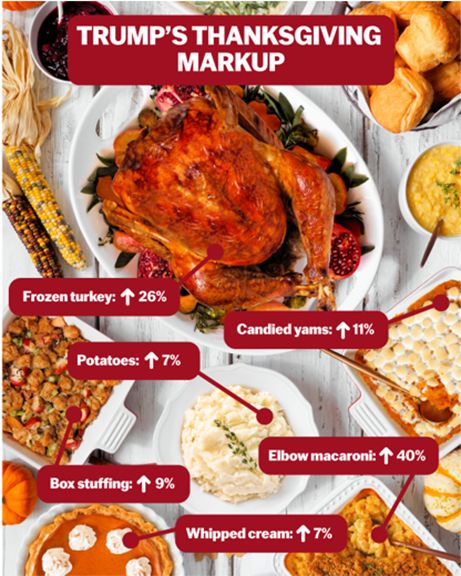
  • A Thanksgiving meal spread with a plate of turkey and traditional side dishes, surrounded by pies and serving dishes. Red labels point to foods and show percentage increases; a large headline appears at the top.
    A Thanksgiving meal spread with a plate of turkey and traditional side dishes, surrounded by pies and serving dishes. Red labels point to foods and show percentage increases; a large headline appears at the top.View post
  • A Thanksgiving dinner spread viewed from above, with a roasted turkey surrounded by side dishes. Red labels and pointer lines show price increases for several foods. The image includes text.
    A Thanksgiving dinner spread viewed from above, with a roasted turkey surrounded by side dishes. Red labels and pointer lines show price increases for several foods. The image includes text.View post
  • A damaged building interior or covered structure with a collapsed, bent metal roof and exposed support beams. Insulation and loose wires hang among the debris. A wall on the right is covered with rows of small plaques bearing text.
    A damaged building interior or covered structure with a collapsed, bent metal roof and exposed support beams. Insulation and loose wires hang among the debris. A wall on the right is covered with rows of small plaques bearing text.View post
  • A heavily damaged indoor space filled with broken structural materials, insulation, and scattered blue upholstered seats. There is no clearly visible text.
    A heavily damaged indoor space filled with broken structural materials, insulation, and scattered blue upholstered seats. There is no clearly visible text.View post
  • A group of people walks outside a modern white building with tall blue vertical architectural panels. Green hedges and trees line the walkway. Some people wear polo shirts or jackets, and one person holds a phone. There is small text on some clothing.
    A group of people walks outside a modern white building with tall blue vertical architectural panels. Green hedges and trees line the walkway. Some people wear polo shirts or jackets, and one person holds a phone. There is small text on some clothing.View post
About the descriptions

Written by a vision model and may be wrong. Open the post to see the original. Five are shown; the toggle shows the rest.

Back to topNext: Methods and sources

Methods and sources

How this page was made. Profile built Nov 26, 2026; site last built Nov 26, 2026. Every number on the page is computed from the sources listed here, by the same rules for every official; nothing is written by hand.

The headline

The headline is the measure on which Schultz is most unusual among House Democrats, chosen by one rule for every official of every party. The candidates are the rate of each kind of statement and of extreme labels, party unity, attendance, the small-donor share, the in-state share and total receipts of the latest cycle, the share of sponsored bills that got out of committee, talk-to-bills agreement, and the CSIP score’s place within the party group.

The builder ranks every measure within the same peer group the page compares it with, and writes each official’s percentile: the share of the group below the value, ties counting half, so 0.5 is the median and a value shared by many never ranks first. A measure’s score is how far that percentile sits from the median (0 in the middle, 0.5 at either end), and the highest score leads if it is above 0.25, outside the middle half of the group. Scores within 0.03 of each other are a tie, broken in this order: votes against the party majority, kinds of statement, ideology, roll calls missed, small donations, in-state money, legislation, agreement, extreme labels, receipts.

A measure counts only with at least 200 statements, 100 roll calls or 5 sponsored bills behind it and a peer group of at least 10. Two things never lead: high party unity or attendance, where most members sit, and a high rate of a kind of statement backed by fewer than 10 statements. When nothing qualifies, the headline is a neutral fact instead: statements classified, or years in office. The wording always names the direction (“in the bottom 5% of …”, “votes against the majority of …”).


Identifiers

Profile id
W000797
Bioguide
W000797
FEC candidate ids
H4FL20023

Bulk files with the same data for every official:

Freshness of this profile’s data

  • What politicians sayNov 25, 20261 days agoMembers of Congress: tweets since 2017; press releases, newsletters and floor speeches since 2022. State legislators: tweets since May 2024. Governors: tweets since January 2025. Labels from an LLM classifier.
  • Roll calls (Congress)Nov 20, 20266 days agoVoteview roll calls, 113th Congress (2013) on.
  • Bills (Congress)Nov 20, 20266 days agoGovInfo BILLSTATUS: sponsors, cosponsors, actions, CRS policy area.
  • Lawmark Achievement Scores (Congress)Nov 20, 20266 days agoLawmark Achievement Scores, Lawmark text in law and the bill progress share, every Congress from the 113th (2013), from the bill status files, the printed bill texts and public committee rosters; weekly.
  • Campaign money (FEC)Nov 20, 20266 days agoFEC committee financial summaries (totals, small donations) and itemized contributions (donor counts, states, employers), the 2020 cycle on; aggregates only.
  • Ideology (CSIP)Nov 3, 202623 days agoCommon-Space Ideal Points (CSIP), current validated run.
  • WebsitesNov 22, 20264 days agoWeekly crawls of federal sites since April 2026; monthly state crawls since June 2026.
  • ImagesNov 26, 2026todayImages in members' tweets with vision-model descriptions.

How the measures work

What politicians say
Every post, press release, newsletter and congressional floor speech is read by a language model and marked for personal attacks, policy criticism, policy discussion, bipartisanship and credit claiming. A statement can be in several. Rates are shares of statements in the window. The methods paper.
Extreme labels
A statement has an extreme label when it calls a politician, party or policy “far left”, “far right”, “MAGA”, “extreme”, “radical”, “woke”, “fascist” or “communist”. The target is who the label is aimed at.
Policy areas and agreement
Statements and bills share 25 Congressional Research Service policy areas (state bills are assigned by a language model). Agreement is 1 − Jensen–Shannon distance between the two distributions, shown with at least 20 policy statements and 5 bills.
Ideology (CSIP)
Common-Space Ideal Points place federal and state officials on one left–right scale, estimated jointly from roll calls, campaign contributions and the text of statements, with standard errors. Only a validated run is shown. The methods paper.
Campaign money
Campaigns report by name only donors who give more than $200 in a cycle; smaller gifts are reported as one total. Federal totals and the small-donor share come from the FEC’s financial summaries of each campaign committee. Donor counts, donor states, employers and occupations cover itemized donors only. State filings report no small-gift totals, so state figures are itemized only. The lab never publishes donor names.
Votes and key votes
Attendance, party unity and the count of votes against the majority of an official’s own party come from roll calls (Voteview for Congress, chamber records for the states). Key votes are final-passage or override votes that became law, were decided by under 10%, saw at least 10% of a party vote against its majority, or concerned one of the 25 bills most mentioned in officials’ statements.
Peers and ranks
Comparisons are with the same party, chamber and level (for example House Democrats); state legislators are compared within their state and chamber for votes. Every comparison names its group. Rank 1 is the highest value in the group; tied values share the average of their ranks, and the percentile is the share of the group below the value, ties counting half.

America’s Political Pulse · Polarization Research Lab

Back to top