Skip to content

Democrat · U.S. House, Texas’s 16th district

2024 presidential vote here Harris +16.0 (the district as drawn for 2024; The Downballot)Won 2024 with 59.5%, by 19.1 points

Serving since Jan 3, 2019119th Congress (2025–27)next election Nov 7, 2028

Bioguide E000299FEC H8TX16109

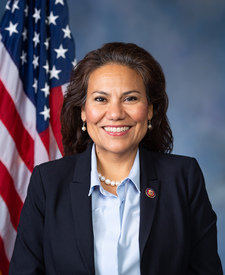
Portrait of Veronica Escobar, rendered as a two-tone print
Official portrait
1.5×
the House Democrat rate of policy criticism

41% of 1,666 statements criticize a policy (688 statements); the average for House Democrats is 27%. Ranks 13th of 216, where 1st is the highest rate.

An AI model reads each of Escobar’s posts on X, newsletters, Congressional Record speeches and press releases and marks whether it criticizes a specific policy, law or ruling. The rate is the share of statements marked; it is compared with the average among House Democrats and ranked against the same group.

At a glance

6 measures against House Democrats. 84% of Escobar’s itemized money in the 2026 cycle came from Texas, in the top quarter of House Democrats. 4.6% of Escobar’s individual money in the 2026 cycle came in gifts of $200 or less, in the bottom quarter of House Democrats (median 13%).

The measures on which Escobar sits furthest from the middle of House Democrats, each against the same group, with the CSIP score when there is one. Every number is explained in its own section below.

Policy criticism

41%

House Democrats average 27% · ranks 13th of 216

From Texas, 2026

84%

Of itemized individual dollars · ranks 25th of 214 House Democrats

Small donations, 2026

4.6%

House Democrats’ median 13% · ranks 175th of 214

Out of committee

0%

House Democrats average 4.9% · ranks 173rd of 209

Raised, 2026

$1.1M

House Democrats’ median $2.0M · ranks 169th of 214

CSIP ideology

−1.03

Left of 0, the centre of the scale · ± 0.02

Peer group: House Democrats. Rank 1 is the highest value in the group; the thick bar is Escobar, the thin grey bar the peer average. The headline is the measure on which Escobar is most unusual among peers (Methods, §08).

The district at a glance

Congressional District 16 (119th Congress): the district as drawn for 2024

The district’s page

Of every 100 people

776,702 people (±3,668)

District

United States

Texas

Race and ethnicity, of every 100 people: district, Texas and the United States
GroupDistrictTexasU.S.
White113957
Black31212
Hispanic or Latino824019
Asian156
Another race or more than one245

Hispanic or Latino people may be of any race; the other groups are not Hispanic.

Compared with the typical House district

Where it falls among the House districts: the centre rule is the median, the edges the lowest and the highest

← Lower than mostHigher than most →
Median household income
$60,400typical $78,700
Below the poverty line
18%typical 12%
Bachelor’s degree or moreadults 25 and over
27%typical 33%
Median age
33.9typical 39.1
Aged 65 and over
13%typical 17%
Born outside the U.S.
23%typical 10%
Veteranscivilian adults
7.7%typical 6.3%
Living in rural areas2020 Census
0.9%typical 15%
bottom 10%mediantop 10%
Show the data
Where it falls among the House districts
MeasureHere±The typical House districtPercentileStanding
Median household income$60,400±$1,265$78,7009lower than in 9 of every 10 House districts
Below the poverty line18%±0.712%91more than in 9 of every 10 House districts
Bachelor’s degree or more27%±0.733%25fewer than in 3 of every 4 House districts
Median age33.9±0.239.15lower than in 9 of every 10 House districts
Aged 65 and over13%±0.317%12fewer than in 3 of every 4 House districts
Born outside the U.S.23%±0.410%79more than in 3 of every 4 House districts
Veterans7.7%±0.46.3%78more than in 3 of every 4 House districts
Living in rural areas0.9%—15%22fewer than in 3 of every 4 House districts

Source: ACS 2020–2024 5-year estimates (Census Bureau); rural share from the 2020 Census.

About these figures

The figures from the American Community Survey are estimates from a sample, not a count. The ± beside each is its 90 percent margin of error: nine times in ten the true value lies within that range. In small districts the margins are wide, so a gap of a few points from Texas may be noise. Shares are of everyone in the district, except education (adults 25 and over), poverty (people whose poverty status is known) and veterans (civilian adults).

These are the Census Bureau’s own estimates for the district; margins on shares are approximated from the counts’ margins.

The rural share counts the people living outside the urban areas the Census Bureau drew from the 2020 Census; it is a count, with no margin of error.

Back to topNext: What politicians say

What Escobar says

Escobar criticizes policies more than 93% of House Democrats. Policy criticism in 41% of 1,666 statements, against 27% for the average House Democrat; 13th of 216.

An AI model reads each of Escobar’s 1,666 statements in the 119th Congress (1,232 posts on X, 248 press releases, 162 newsletters, 24 Congressional Record speeches) and marks the kinds of statement it contains: a personal attack, criticism of a policy, discussion of policy, bipartisanship, credit claiming, and extreme labels. A statement can carry several. Every rate is compared with the average for House Democrats and ranked among them.

Kinds of statement

Share of statements carrying each label, the 119th Congress

0%80%
Escobar
Peers
Rank
Policy discussion1,191 statements
71%
73%
137th of 216
Policy criticism688 statements
41%
27%
13th of 216
Credit claiming285 statements
17%
23%
157th of 216
Bipartisanship168 statements
10%
10%
81st of 216
Personal attacks127 statements
8%
7%
71st of 216
Show the data
Escobar's share of statements in each category against the House Democrats average.
RowEscobarPeers
Policy discussion71%73%
Policy criticism41%27%
Credit claiming17%23%
Bipartisanship10%10%
Personal attacks8%7%
1,666

statements classified

1,232 posts on X, 248 press releases, 162 newsletters, 24 Congressional Record speeches.

posts on X: 1,232 (73.9%)posts on X 1,232press releases: 248 (14.9%)newsletters: 162 (9.7%)Congressional Record speeches: 24 (1.4%)
Show the data
Escobar's statements by source
PartValue
posts on X1,232
press releases248
newsletters162
Congressional Record speeches24
How to read the bars

The thick bar is Escobar, in the colour of that kind of statement; the thin grey bar is the average House Democrats. A longer thick bar means Escobar does this more than peers. Rank 1 is the highest rate in the group.

Extreme labels

Escobar used extreme labels in 1.7% of statements, close to the peer average. 28 statements, most often aimed at Republicans; peers 1.9%.

  1. “MAGA”6
  2. “extreme”6
  3. “radical”3
  4. “fascist”2
  5. “far right”1

Who gets the labels

Targets named alongside an extreme label, by number of statements

  1. Republicans2
  2. abortion bans1
  3. leftwing agenda1
  4. MAGA group1
  5. right wing1
What an extreme label is

Calls a politician, a party or a policy “far left”, “far right”, “MAGA”, “extreme”, “radical”, “woke”, “fascist” or “communist”. The target is who or what the label was aimed at. The lists show the five most used labels and targets; the toggle shows the rest.

Month by month

Share of statements per month, the 119th Congress

Statements2025-01: 522025-02: 712025-03: 972025-04: 852025-05: 912025-06: 1422025-07: 1462025-08: 772025-09: 1272025-10: 662025-11: 402025-12: 582026-01: 822026-02: 772026-03: 772026-04: 412026-05: 522026-06: 852026-07: 682026-08: 432026-09: 332026-10: 142026-11: 42peak 146 · Jul ’25Personal attackspeak 15.8% · Jan ’26 · latest 0.0%Personal attacks, 2025-01: 11.5% of 52Personal attacks, 2025-02: 14.1% of 71Personal attacks, 2025-03: 15.5% of 97Personal attacks, 2025-04: 8.2% of 85Personal attacks, 2025-05: 5.5% of 91Personal attacks, 2025-06: 12.0% of 142Personal attacks, 2025-07: 6.2% of 146Personal attacks, 2025-08: 2.6% of 77Personal attacks, 2025-09: 4.7% of 127Personal attacks, 2025-10: 7.6% of 66Personal attacks, 2025-11: 10.0% of 40Personal attacks, 2025-12: 8.6% of 58Personal attacks, 2026-01: 15.8% of 82Personal attacks, 2026-02: 6.5% of 77Personal attacks, 2026-03: 5.2% of 77Personal attacks, 2026-04: 4.9% of 41Personal attacks, 2026-05: 5.8% of 52Personal attacks, 2026-06: 2.4% of 85Personal attacks, 2026-07: 5.9% of 68Personal attacks, 2026-08: 2.3% of 43Personal attacks, 2026-09: 3.0% of 33Personal attacks, 2026-10: 7.1% of 14Personal attacks, 2026-11: 0.0% of 42Policy criticismpeak 63.5% · Jun ’26 · latest 7.1%Policy criticism, 2025-01: 40.4% of 52Policy criticism, 2025-02: 45.1% of 71Policy criticism, 2025-03: 30.9% of 97Policy criticism, 2025-04: 41.2% of 85Policy criticism, 2025-05: 45.1% of 91Policy criticism, 2025-06: 53.5% of 142Policy criticism, 2025-07: 29.4% of 146Policy criticism, 2025-08: 40.3% of 77Policy criticism, 2025-09: 48.0% of 127Policy criticism, 2025-10: 45.5% of 66Policy criticism, 2025-11: 30.0% of 40Policy criticism, 2025-12: 36.2% of 58Policy criticism, 2026-01: 18.3% of 82Policy criticism, 2026-02: 59.7% of 77Policy criticism, 2026-03: 37.7% of 77Policy criticism, 2026-04: 39.0% of 41Policy criticism, 2026-05: 55.8% of 52Policy criticism, 2026-06: 63.5% of 85Policy criticism, 2026-07: 36.8% of 68Policy criticism, 2026-08: 48.8% of 43Policy criticism, 2026-09: 36.4% of 33Policy criticism, 2026-10: 35.7% of 14Policy criticism, 2026-11: 7.1% of 42Policy discussionpeak 90.9% · Sep ’26 · latest 76.2%Policy discussion, 2025-01: 76.9% of 52Policy discussion, 2025-02: 60.6% of 71Policy discussion, 2025-03: 54.6% of 97Policy discussion, 2025-04: 63.5% of 85Policy discussion, 2025-05: 69.2% of 91Policy discussion, 2025-06: 72.5% of 142Policy discussion, 2025-07: 59.6% of 146Policy discussion, 2025-08: 72.7% of 77Policy discussion, 2025-09: 71.7% of 127Policy discussion, 2025-10: 81.8% of 66Policy discussion, 2025-11: 60.0% of 40Policy discussion, 2025-12: 62.1% of 58Policy discussion, 2026-01: 87.8% of 82Policy discussion, 2026-02: 71.4% of 77Policy discussion, 2026-03: 61.0% of 77Policy discussion, 2026-04: 82.9% of 41Policy discussion, 2026-05: 76.9% of 52Policy discussion, 2026-06: 84.7% of 85Policy discussion, 2026-07: 80.9% of 68Policy discussion, 2026-08: 90.7% of 43Policy discussion, 2026-09: 90.9% of 33Policy discussion, 2026-10: 78.6% of 14Policy discussion, 2026-11: 76.2% of 42Bipartisanshippeak 25.0% · May ’26 · latest 16.7%Bipartisanship, 2025-01: 15.4% of 52Bipartisanship, 2025-02: 9.9% of 71Bipartisanship, 2025-03: 7.2% of 97Bipartisanship, 2025-04: 3.5% of 85Bipartisanship, 2025-05: 6.6% of 91Bipartisanship, 2025-06: 6.3% of 142Bipartisanship, 2025-07: 8.2% of 146Bipartisanship, 2025-08: 7.8% of 77Bipartisanship, 2025-09: 12.6% of 127Bipartisanship, 2025-10: 10.6% of 66Bipartisanship, 2025-11: 5.0% of 40Bipartisanship, 2025-12: 8.6% of 58Bipartisanship, 2026-01: 9.8% of 82Bipartisanship, 2026-02: 2.6% of 77Bipartisanship, 2026-03: 5.2% of 77Bipartisanship, 2026-04: 17.1% of 41Bipartisanship, 2026-05: 25.0% of 52Bipartisanship, 2026-06: 14.1% of 85Bipartisanship, 2026-07: 16.2% of 68Bipartisanship, 2026-08: 18.6% of 43Bipartisanship, 2026-09: 24.2% of 33Bipartisanship, 2026-10: 0.0% of 14Bipartisanship, 2026-11: 16.7% of 42Credit claimingpeak 40.4% · Jan ’25 · latest 30.9%Credit claiming, 2025-01: 40.4% of 52Credit claiming, 2025-02: 14.1% of 71Credit claiming, 2025-03: 9.3% of 97Credit claiming, 2025-04: 11.8% of 85Credit claiming, 2025-05: 8.8% of 91Credit claiming, 2025-06: 7.0% of 142Credit claiming, 2025-07: 19.9% of 146Credit claiming, 2025-08: 16.9% of 77Credit claiming, 2025-09: 11.0% of 127Credit claiming, 2025-10: 22.7% of 66Credit claiming, 2025-11: 20.0% of 40Credit claiming, 2025-12: 13.8% of 58Credit claiming, 2026-01: 14.6% of 82Credit claiming, 2026-02: 11.7% of 77Credit claiming, 2026-03: 13.0% of 77Credit claiming, 2026-04: 24.4% of 41Credit claiming, 2026-05: 32.7% of 52Credit claiming, 2026-06: 18.8% of 85Credit claiming, 2026-07: 23.5% of 68Credit claiming, 2026-08: 27.9% of 43Credit claiming, 2026-09: 33.3% of 33Credit claiming, 2026-10: 28.6% of 14Credit claiming, 2026-11: 30.9% of 42Extreme labelspeak 7.7% · Jan ’25 · latest 2.4%Extreme labels, 2025-01: 7.7% of 52Extreme labels, 2025-02: 5.6% of 71Extreme labels, 2025-03: 3.1% of 97Extreme labels, 2025-04: 2.4% of 85Extreme labels, 2025-05: 3.3% of 91Extreme labels, 2025-06: 4.9% of 142Extreme labels, 2025-07: 1.4% of 146Extreme labels, 2025-08: 0.0% of 77Extreme labels, 2025-09: 0.0% of 127Extreme labels, 2025-10: 0.0% of 66Extreme labels, 2025-11: 0.0% of 40Extreme labels, 2025-12: 0.0% of 58Extreme labels, 2026-01: 0.0% of 82Extreme labels, 2026-02: 1.3% of 77Extreme labels, 2026-03: 1.3% of 77Extreme labels, 2026-04: 0.0% of 41Extreme labels, 2026-05: 0.0% of 52Extreme labels, 2026-06: 0.0% of 85Extreme labels, 2026-07: 0.0% of 68Extreme labels, 2026-08: 0.0% of 43Extreme labels, 2026-09: 0.0% of 33Extreme labels, 2026-10: 0.0% of 14Extreme labels, 2026-11: 2.4% of 42Jan ’25Jul ’25Jan ’26Jul ’26Nov ’26
Show the data
Monthly rates for Escobar, each row shaded against its own peak, with statement volume. Months with fewer than 10 statements are left blank.
ColumnStatementsPersonal attacksPolicy criticismPolicy discussionBipartisanshipCredit claimingExtreme labels
Jan ’255211.5%40.4%76.9%15.4%40.4%7.7%
Feb ’257114.1%45.1%60.6%9.9%14.1%5.6%
Mar ’259715.5%30.9%54.6%7.2%9.3%3.1%
Apr ’25858.2%41.2%63.5%3.5%11.8%2.4%
May ’25915.5%45.1%69.2%6.6%8.8%3.3%
Jun ’2514212.0%53.5%72.5%6.3%7.0%4.9%
Jul ’251466.2%29.4%59.6%8.2%19.9%1.4%
Aug ’25772.6%40.3%72.7%7.8%16.9%0.0%
Sep ’251274.7%48.0%71.7%12.6%11.0%0.0%
Oct ’25667.6%45.5%81.8%10.6%22.7%0.0%
Nov ’254010.0%30.0%60.0%5.0%20.0%0.0%
Dec ’25588.6%36.2%62.1%8.6%13.8%0.0%
Jan ’268215.8%18.3%87.8%9.8%14.6%0.0%
Feb ’26776.5%59.7%71.4%2.6%11.7%1.3%
Mar ’26775.2%37.7%61.0%5.2%13.0%1.3%
Apr ’26414.9%39.0%82.9%17.1%24.4%0.0%
May ’26525.8%55.8%76.9%25.0%32.7%0.0%
Jun ’26852.4%63.5%84.7%14.1%18.8%0.0%
Jul ’26685.9%36.8%80.9%16.2%23.5%0.0%
Aug ’26432.3%48.8%90.7%18.6%27.9%0.0%
Sep ’26333.0%36.4%90.9%24.2%33.3%0.0%
Oct ’26147.1%35.7%78.6%0.0%28.6%0.0%
Nov ’26420.0%7.1%76.2%16.7%30.9%2.4%
How to read the strips

Each row is one kind of statement; each cell is a month, shaded against that row’s own peak (darker = closer to the peak), with the peak and the latest value written at the right. The top row counts statements. The strip covers every month of the 119th Congress, the same span as the rates above, including months with no statements. A month with fewer than 10 statements is hatched, not shaded: one or two posts would swing its rate to 0% or 100%.

In Escobar’s words

Real statements from the classifier’s example set, with the labels it assigned

Credit claiming

Weekly Update, November 14 - November 20, 2026 Dear political, Welcome to the weekly edition of my newsletter. Here you'll find recaps of some of the most important things that happened in Washington and El Paso, my reactions, and news I'd love to bring to your attention. In Case You Missed It: An…

Nov 20, 2026 · Newsletters · policy discussion; bipartisanship; credit claiming; Immigration; Government Operations and Politics; Economics and Public Finance; Public Lands and Natural Resources; Agriculture and Food

Policy criticism

The text of this post is on X; follow the source link to read it.

Nov 16, 2026 · Posts on X · policy criticism; policy discussion; Immigration; Economics and Public Finance · Source

Extreme label

The text of this post is on X; follow the source link to read it.

Nov 15, 2026 · Posts on X · policy discussion; credit claiming; Agriculture and Food; Health; Taxation; Economics and Public Finance; extreme label “MAGA” aimed at Republicans · Source

Examples by category

Up to five recent statements in each category

Category

Overtly questions a named person’s character, integrity or loyalty, or calls them names. Criticising a record or a policy does not count.

  1. Press releases

    Congresswoman Escobar Statement on El Paso Chamber of Commerce's Effort to Rename Bridge of the Americas Today, Congresswoman Veronica Escobar (TX-16) released the following statement in response to media inquires about the El Paso Chamber of Commerce's effort to rename the Bridge of the Americas after Donald Trump: "Gas prices are through the roof because of Donald Trump’s illegal war in Iran; businesses and consumers are struggling because of Donald Trump’s reckless tariffs; and Donald Trump announced that he will not renew our trade agreement with Mexico and Canada. And the El Paso Chamber

    personal attacks · policy discussion · Armed Forces and National Security · Energy · Foreign Trade and International Finance · Transportation and Public Works · target: Donald TrumpSource

  2. Posts on X

    The text of this post is on X; follow the source link to read it.

    personal attacks · target: presidentSource

  3. Posts on X

    The text of this post is on X; follow the source link to read it.

    personal attacks · policy discussion · Transportation and Public Works · target: PaxtonSource

  4. Press releases

    Congresswoman Escobar Statement Following Dangerous Trump Speech to Cast Doubt on Election Safety Today, Congresswoman Veronica Escobar (TX-16) released the following statement after Donald Trump gave a rambling, dangerous speech from the White House: “Since the 2020 election, more than 60 judges – some of whom Trump appointed – rejected lawsuits challenging the results. Numerous recounts and audits have only reaffirmed that he lost. Prominent Republicans and members of his own administration disputed every single one of his claims. “Trump knows he lost in 2020. Tonight’s rambling speech by t

    personal attacks · policy discussion · Government Operations and Politics · Civil Rights and Liberties, Minority Issues · target: Donald TrumpSource

  5. Newsletters

    Weekly Update, July 11 - July 17, 2026 Dear political, Welcome to the weekly edition of my newsletter. Here you'll find recaps of some of the most important things that happened in Washington and El Paso, my reactions, and news I'd love to bring to your attention. [Final 2023 Banner]<https://escobar.house.gov/components/redirect/r.aspx?ID=7059-1868228> Dear political, Welcome to the weekly edition of my newsletter. Here you'll find recaps of some of the most important things that happened in Washington and El Paso, my reactions, and news I'd love to bring to your attention. Video of the We

    personal attacks · policy discussion · bipartisanship · credit claiming · Crime and Law Enforcement · Foreign Trade and International Finance · Transportation and Public Works · Immigration · Armed Forces and National Security · International Affairs · Housing and Community Development · Government Operations and Politics · Agriculture and Food · Water Resources Development · Health · Civil Rights and Liberties, Minority Issues · target: Donald Trump

All 1,666 statements

Newest first, the 119th Congress

The full feed

Five statements at a time, newest first; filters apply to the statements loaded so far. Export saves the statements that match. Sources: 1,232 posts on X, 248 press releases, 162 newsletters, 24 Congressional Record speeches.

Back to topNext: Policy

Policy

Immigration is what Escobar talks about most: 30% of policy statements, 2.9 times the peer share. Talk and legislation agree at 0.68 on a 0–1 scale (House Democrats average 0.67; 104th of 216).

Each policy statement is tagged by the AI model with one or more of 25 policy areas from the Congressional Research Service list, so the shares say what Escobar talks about. The bills Escobar sponsors and cosponsors carry the same areas, so the two can be compared.

What Escobar talks about

Share of policy statements by area, the 119th Congress

0%35%
Escobar
Peers
Immigration358 statements
30%
10%
Health344 statements
29%
25%
Economics and Public Finance325 statements
27%
20%
Government Operations and Politics310 statements
26%
20%
Armed Forces and National Security191 statements
16%
16%
Show the data
Policy areas Escobar talks about, as a share of policy statements, against the House Democrats average.
RowEscobarPeers
Immigration30%10%
Health29%25%
Economics and Public Finance27%20%
Government Operations and Politics26%20%
Armed Forces and National Security16%16%
How to read the bars

The thick bar is the share of Escobar’s policy statements in an area; the thin grey bar is the average share for House Democrats. A statement counts once in each of its areas, so shares can add to more than 100%. The five largest areas are shown; the toggle shows the rest.

Talks about · legislates on

Left: share of statements by policy area. Right: share of bills. Areas in order of their share of statements; both sides run from 0 to 35%. Grey ticks are the House Democrats averages.

Talks aboutLegislates onImmigrationImmigration, talks about: 30% (House Democrats 10%)30%Immigration, legislates on: 10% (House Democrats 4%)10%HealthHealth, talks about: 29% (House Democrats 25%)29%Health, legislates on: 16% (House Democrats 16%)16%Economics and Public FinanceEconomics and Public Finance, talks about: 27% (House Democrats 20%)27%Economics and Public Finance, legislates on: 1% (House Democrats 1%)1%Government Operations andPoliticsGovernment Operations and Politics, talks about: 26% (House Democrats 20%)26%Government Operations and Politics, legislates on: 10% (House Democrats 11%)10%Armed Forces and NationalSecurityArmed Forces and National Security, talks about: 16% (House Democrats 16%)16%Armed Forces and National Security, legislates on: 15% (House Democrats 7%)15%
Show the data
Escobar's share of statements against share of bills in each policy area.
AreaTalks aboutHouse Democrats, talks aboutLegislates onHouse Democrats, legislates on
Immigration30%10%10%4%
Health29%25%16%16%
Economics and Public Finance27%20%1%1%
Government Operations and Politics26%20%10%11%
Armed Forces and National Security16%16%15%7%
0.68

talk-to-bills agreement, 0 to 1

House Democrats average 0.67. Ranks 104th of 216.

What agreement means, and what it doesn’t

Agreement is 1 minus the distance between the two distributions (Jensen–Shannon): 1 means Escobar legislates on exactly the areas Escobar talks about, in the same proportions; 0 means no overlap. It does not say whether the bills match the positions in the statements, only the subjects. Bills Escobar sponsored count fully, cosponsored bills a quarter. Shown with at least 20 policy statements and 5 bills.

Back to topNext: Ideology

Ideology

Escobar sits at −1.03 on the CSIP scale, left of 0, more liberal than 55% of House Democrats. Approximate range −1.04 to −1.01, which understates the uncertainty; from 1,443 donors and 3,776 roll calls.

CSIP, the lab’s Common-Space Ideal Point, places every official, federal and state, on one left–right scale, estimated from roll-call votes, who gives money to whom, and the text of statements. Negative is left of 0, positive right of it; 0 is the centre of the scale, not a definition of “moderate”.

−1.03

CSIP ideal point

Approximate range −1.04 to −1.01. From 1,443 donors and 3,776 roll calls. Run 2026-11-03T100151. Blue is left of 0, red right of 0.

← More liberalMore conservative →0Escobar −1.0House Democrats −1.0All House +0.4

The outlined dot is Escobar, coloured by its side of 0 (blue left, red right, deeper further out); the bar through it is the approximate range (±1.96 standard errors), which understates the uncertainty; the grey ticks below are the medians of Escobar’s groups. 0 is the centre of the scale, not “moderate” by definition.

What this means, and what it doesn’t

The score summarises how an official votes, who funds them and how they talk, relative to everyone else. It does not grade positions as good or bad, and two officials with the same score can differ on any single issue. The ± range is 1.96 standard errors, which understates the uncertainty: scores whose ranges overlap may not differ at all, and even scores whose ranges do not overlap may not differ.

Where Escobar sits

Every official in each group, on the CSIP scale

−2.0−1.00.0+1.0+2.0← More liberalMore conservative →House Democratsmedian −1.0Escobar −1.0All Housemedian +0.4
Show the data
Escobar's CSIP score of −1.03 placed against House Democrats, All House.
GroupOfficialsMedianShare left of Escobar
House Democrats217−1.045%
All House439+0.422%
How to read the strips

Every small dot is one official on the same scale, coloured by its own score (blue left of 0, red right of 0, grey at 0, deeper further out) and spread up and down only to keep dots apart; where a group is crowded the dots overlap, and darker patches mean more officials. The large outlined dot is Escobar in every row; the rule is each group’s median. The table under the figure gives the share of each group to the left of Escobar.

Back to topNext: Money

Money

Escobar raised $1.1M in the 2026 cycle, below the House Democrats’ median of $2.0M. 4.6% of individual money came in gifts of $200 or less. 84% of itemized individual money came from Texas.

Campaign money from Federal Election Commission filings, as aggregates only; the lab never shows an individual donor. Campaigns must report by name every person who gives them more than $200 in a cycle (“itemized”); smaller gifts are reported only as one total (“unitemized”), so donor counts, donor states, employers and occupations describe itemized donors only.

Election cycle
$1.1M

raised in the 2026 cycle

From 290 itemized donors. House Democrats’ median $2.0M.

Where the money came from

Each square is one percent of 2026-cycle receipts, from FEC summary totals.

Itemized individual (over $200): $538.3K (50.4%)Itemized individual (over $200): $538.3K (50.4%)Itemized individual (over $200): $538.3K (50.4%)Itemized individual (over $200): $538.3K (50.4%)Itemized individual (over $200): $538.3K (50.4%)Itemized individual (over $200): $538.3K (50.4%)Itemized individual (over $200): $538.3K (50.4%)Itemized individual (over $200): $538.3K (50.4%)Itemized individual (over $200): $538.3K (50.4%)Itemized individual (over $200): $538.3K (50.4%)Itemized individual (over $200): $538.3K (50.4%)Itemized individual (over $200): $538.3K (50.4%)Itemized individual (over $200): $538.3K (50.4%)Itemized individual (over $200): $538.3K (50.4%)Itemized individual (over $200): $538.3K (50.4%)Itemized individual (over $200): $538.3K (50.4%)Itemized individual (over $200): $538.3K (50.4%)Itemized individual (over $200): $538.3K (50.4%)Itemized individual (over $200): $538.3K (50.4%)Itemized individual (over $200): $538.3K (50.4%)Itemized individual (over $200): $538.3K (50.4%)Itemized individual (over $200): $538.3K (50.4%)Itemized individual (over $200): $538.3K (50.4%)Itemized individual (over $200): $538.3K (50.4%)Itemized individual (over $200): $538.3K (50.4%)Itemized individual (over $200): $538.3K (50.4%)Itemized individual (over $200): $538.3K (50.4%)Itemized individual (over $200): $538.3K (50.4%)Itemized individual (over $200): $538.3K (50.4%)Itemized individual (over $200): $538.3K (50.4%)Itemized individual (over $200): $538.3K (50.4%)Itemized individual (over $200): $538.3K (50.4%)Itemized individual (over $200): $538.3K (50.4%)Itemized individual (over $200): $538.3K (50.4%)Itemized individual (over $200): $538.3K (50.4%)Itemized individual (over $200): $538.3K (50.4%)Itemized individual (over $200): $538.3K (50.4%)Itemized individual (over $200): $538.3K (50.4%)Itemized individual (over $200): $538.3K (50.4%)Itemized individual (over $200): $538.3K (50.4%)Itemized individual (over $200): $538.3K (50.4%)Itemized individual (over $200): $538.3K (50.4%)Itemized individual (over $200): $538.3K (50.4%)Itemized individual (over $200): $538.3K (50.4%)Itemized individual (over $200): $538.3K (50.4%)Itemized individual (over $200): $538.3K (50.4%)Itemized individual (over $200): $538.3K (50.4%)Itemized individual (over $200): $538.3K (50.4%)Itemized individual (over $200): $538.3K (50.4%)Itemized individual (over $200): $538.3K (50.4%)Itemized individual (over $200): $538.3K (50.4%)Unitemized individual (gifts of $200 or less): $25.9K (2.4%)Unitemized individual (gifts of $200 or less): $25.9K (2.4%)PACs and other committees: $503.1K (47.1%)PACs and other committees: $503.1K (47.1%)PACs and other committees: $503.1K (47.1%)PACs and other committees: $503.1K (47.1%)PACs and other committees: $503.1K (47.1%)PACs and other committees: $503.1K (47.1%)PACs and other committees: $503.1K (47.1%)PACs and other committees: $503.1K (47.1%)PACs and other committees: $503.1K (47.1%)PACs and other committees: $503.1K (47.1%)PACs and other committees: $503.1K (47.1%)PACs and other committees: $503.1K (47.1%)PACs and other committees: $503.1K (47.1%)PACs and other committees: $503.1K (47.1%)PACs and other committees: $503.1K (47.1%)PACs and other committees: $503.1K (47.1%)PACs and other committees: $503.1K (47.1%)PACs and other committees: $503.1K (47.1%)PACs and other committees: $503.1K (47.1%)PACs and other committees: $503.1K (47.1%)PACs and other committees: $503.1K (47.1%)PACs and other committees: $503.1K (47.1%)PACs and other committees: $503.1K (47.1%)PACs and other committees: $503.1K (47.1%)PACs and other committees: $503.1K (47.1%)PACs and other committees: $503.1K (47.1%)PACs and other committees: $503.1K (47.1%)PACs and other committees: $503.1K (47.1%)PACs and other committees: $503.1K (47.1%)PACs and other committees: $503.1K (47.1%)PACs and other committees: $503.1K (47.1%)PACs and other committees: $503.1K (47.1%)PACs and other committees: $503.1K (47.1%)PACs and other committees: $503.1K (47.1%)PACs and other committees: $503.1K (47.1%)PACs and other committees: $503.1K (47.1%)PACs and other committees: $503.1K (47.1%)PACs and other committees: $503.1K (47.1%)PACs and other committees: $503.1K (47.1%)PACs and other committees: $503.1K (47.1%)PACs and other committees: $503.1K (47.1%)PACs and other committees: $503.1K (47.1%)PACs and other committees: $503.1K (47.1%)PACs and other committees: $503.1K (47.1%)PACs and other committees: $503.1K (47.1%)PACs and other committees: $503.1K (47.1%)PACs and other committees: $503.1K (47.1%)
  • Itemized individual (over $200)51 squares$538.3K
  • Unitemized individual (gifts of $200 or less)2 squares$25.9K
  • PACs and other committees47 squares$503.1K
Show the data
Sources of Escobar's money, 2026 cycle, one square per percent
SourceAmountShare
Itemized individual (over $200)$538.3K50.4%
Unitemized individual (gifts of $200 or less)$25.9K2.4%
PACs and other committees$503.1K47.1%
What this means, and what it doesn’t

Totals say how much a campaign took in, not how it was spent, and they rise sharply when a seat is up for election; compare cycles with that in mind. The small-donor share understates small giving when a campaign itemizes gifts made through ActBlue or WinRed.

Receipts by cycle

Total receipts, 2020 to 2026. The grey line is the House Democrats’ median for 2026.

2020 cycle: $1.1M$1.1M20202022 cycle: $1.3M$1.3M20222024 cycle: $1.3M$1.3M20242026 cycle: $1.1M$1.1M2026House Democrats median $2.0M
Show the data
Escobar's receipts by cycle against the 2026 House Democrats median.
ItemValue
2020 cycle$1.1M
2022 cycle$1.3M
2024 cycle$1.3M
2026 cycle$1.1M

Top donor states, 2026

Itemized contributions by donor state. 84% came from Texas.

  1. Texas$379.8K
  2. District of Columbia$19.0K
  3. Puerto Rico$13.5K
  4. California$9,300
  5. Virginia$9,050

Small donations

Gifts of $200 or less as a share of individual money, by cycle. The thin grey bar is the 2026 House Democrats’ median.

0%60%
Escobar
Median
2026
5%
13%
2024
4%
13%
2022
9%
13%
2020
9%
13%
Show the data
Small-donor share by cycle against the House Democrats median
RowEscobarMedian
2026 cycle5%13%
2024 cycle4%13%
2022 cycle9%13%
2020 cycle9%13%

Where itemized donors live

Individuals who gave more than $200, by donor state

Alaska: no dataAKMaine: no dataMEVermont: no dataVTNew Hampshire: no dataNHWashington: $7,000WAIdaho: no dataIDMontana: no dataMTNorth Dakota: no dataNDMinnesota: no dataMNIllinois: $1,000ILWisconsin: no dataWIMichigan: no dataMINew York: $2,100NYRhode Island: no dataRIMassachusetts: $250MAOregon: $500ORNevada: no dataNVWyoming: no dataWYSouth Dakota: no dataSDIowa: no dataIAIndiana: no dataINOhio: no dataOHPennsylvania: no dataPANew Jersey: no dataNJConnecticut: no dataCTCalifornia: $9,300CAUtah: no dataUTColorado: $1,250CONebraska: no dataNEMissouri: $250MOKentucky: no dataKYWest Virginia: no dataWVVirginia: $9,050VAMaryland: $4,500MDDelaware: no dataDEArizona: $65AZNew Mexico: $50NMKansas: no dataKSArkansas: no dataARTennessee: no dataTNNorth Carolina: no dataNCSouth Carolina: no dataSCDistrict of Columbia: $19.0KDCOklahoma: no dataOKLouisiana: no dataLAMississippi: no dataMSAlabama: no dataALGeorgia: no dataGAHawaii: no dataHITexas: $379.8KTXFlorida: $1,000FL
Show the data
Escobar's itemized individual contributions by donor state, 2026 cycle
StateValue
Texas$379.8K
District of Columbia$19.0K
California$9,300
Virginia$9,050
Washington$7,000
Maryland$4,500
New York$2,100
Colorado$1,250
Illinois$1,000
Florida$1,000
Oregon$500
Massachusetts$250
Missouri$250
Arizona$65
New Mexico$50
AlaskaNo data
MaineNo data
VermontNo data
New HampshireNo data
IdahoNo data
MontanaNo data
North DakotaNo data
MinnesotaNo data
WisconsinNo data
MichiganNo data
Rhode IslandNo data
NevadaNo data
WyomingNo data
South DakotaNo data
IowaNo data
IndianaNo data
OhioNo data
PennsylvaniaNo data
New JerseyNo data
ConnecticutNo data
UtahNo data
NebraskaNo data
KentuckyNo data
West VirginiaNo data
DelawareNo data
KansasNo data
ArkansasNo data
TennesseeNo data
North CarolinaNo data
South CarolinaNo data
OklahomaNo data
LouisianaNo data
MississippiNo data
AlabamaNo data
GeorgiaNo data
HawaiiNo data
290

itemized donors

People who gave more than $200

84%

from Texas

Of itemized individual dollars

How to read the map

Every state the same size. Darker states gave more itemized money; hatched states had no itemized donors; the outlined state is Texas. Gifts of $200 or less carry no address and are left out.

Donors’ ideology

Distribution of itemized donors’ own CSIP scores

CSIP −1.50 to −1.25: 0.3%CSIP −1.25 to −1.00: 40%40%CSIP −1.00 to −0.75: 36%CSIP −0.75 to −0.50: 7.6%CSIP −0.50 to −0.25: 3.0%CSIP −0.25 to 0.00: 5.6%CSIP 0.00 to +0.25: 5.5%CSIP +0.25 to +0.50: 1.7%CSIP +0.50 to +0.75: 0.8%← More liberalMore conservative →0
Show the data
Ideology of Escobar's itemized donors in 2026, from −1.50 to +0.75: 40% between −1.25 and −1.00, 36% between −1.00 and −0.75, 7.6% between −0.75 and −0.50, 5.6% between −0.25 and 0.00, 5.5% between 0.00 and +0.25.
ItemValue
CSIP −1.50 to −1.250.3%
CSIP −1.25 to −1.0040%
CSIP −1.00 to −0.7536%
CSIP −0.75 to −0.507.6%
CSIP −0.50 to −0.253.0%
CSIP −0.25 to 0.005.6%
CSIP 0.00 to +0.255.5%
CSIP +0.25 to +0.501.7%
CSIP +0.50 to +0.750.8%
How to read the columns

Donors who give to many candidates get their own CSIP score. Each column is the share of Escobar’s itemized money from donors in that part of the scale, blue left of 0 and red right of 0, deeper further out; Escobar’s own score is −1.03.

Top donor occupations

Itemized, 2026 cycle.

  1. NOT EMPLOYED$94.7K 74 donors
  2. CEO$51.0K 22 donors
  3. ATTORNEY$47.2K 32 donors
  4. EXECUTIVE$24.1K 4 donors
  5. REAL ESTATE$12.5K 3 donors

Top committees

PAC and committee contributions, 2026 cycle.

  1. L3HARRIS TECHNOLOGIES, INC. PAC$17.5K
  2. JSTREETPAC$14.0K
  3. AMERICAN FEDERATION OF TEACHERS, AFL-CIO COMMITTEE ON POLITICAL EDUCATION$10.0K
  4. AMERICAN SOCIETY OF ANESTHESIOLOGISTS POLITICAL ACTION COMMITTEE (ASA PAC)$10.0K
  5. DELOITTE POLITICAL ACTION COMMITTEE$10.0K

Top employers

Itemized, 2026 cycle.

  1. WESTSTAR BANK$11.3K 4 donors
  2. THE RABEN GROUP$5,140 4 donors

Aggregates only. Individual donors are never named.

Back to topNext: Votes

Votes

Escobar voted with the majority of House Democrats on 99.1% of party-line votes and missed 1.2% of 687 roll calls. House Democrats on average: 96.3% party unity, 96.9% attendance. Across all roll calls, Escobar voted against the majority of House Democrats 16 times.

687 roll calls Escobar could vote on in the 119th Congress, compared with House Democrats. Attendance is the share with a vote recorded. Party unity counts only party-line roll calls, where most Democrats and most Republicans voted on opposite sides, and is the share of those where Escobar voted with the majority of House Democrats. The count of votes against that majority covers every roll call where the majority took a side.

16

votes against the majority of House Democrats

Party unity 99.1%, House Democrats average 96.3%, ranks 72nd of 217. 687 roll calls in the 119th Congress.

Attendance and party unity

The thick bar is Escobar, the thin grey bar the House Democrats average. The scale runs from 80% to 100% to show the gap.

80%100%
Escobar
Peers
Rank
Attendance
98.8%
96.9%
72nd of 217
Party unity
99.1%
96.3%
72nd of 217
Show the data
Escobar's attendance and party unity against House Democrats.
RowEscobarPeers
Attendance98.8%96.9%
Party unity99.1%96.3%
What this means, and what it doesn’t

A missed roll call has many causes, from illness to campaigning, so attendance says how often, not why. A vote against the majority can be on procedure as well as substance, and many fall on roll calls where both parties split; the key votes below show the ones that decided something.

Key votes

25 roll calls the lab flagged as key in the 119th Congress

Key votes
Party split (yea–nay)Why it’s key
Nov 17, 2026
H.R. 9600
Common Sense 250 Act
On Motion to Suspend the Rules and Pass
YeaWith majorityPassedD 202–0 · R 163–36Democrats 202 yea, 0 nay; Republicans 163 yea, 36 nayparty crossover
Nov 11, 2026
H.R. 1013
Retirement Fairness for Charities and Educational Institutions Act
On Passage
YeaAgainst majorityPassedD 83–128 · R 211–0 · I 1–0Democrats 83 yea, 128 nay; Republicans 211 yea, 0 nay; Independents 1 yea, 0 nayparty crossover
Sep 16, 2026
S. 2403
Retire through Ownership Act
On Motion to Suspend the Rules and Pass
YeaWith majorityPassedD 209–0 · R 191–14 · I 1–0Democrats 209 yea, 0 nay; Republicans 191 yea, 14 nay; Independents 1 yea, 0 naybecame law
Sep 16, 2026
H.J.Res. 213
Providing for congressional disapproval under chapter 8 of title 5, United States Code, of the rule issued by the Environmental Protection Agency relating to the “California State Nonroad Engine Pollution Control Standards; Commercial Harbor Craft Regulations; Notice of Decision”
On Passage
NayWith majorityPassedD 3–207 · R 210–1 · I 1–0Democrats 3 yea, 207 nay; Republicans 210 yea, 1 nay; Independents 1 yea, 0 nayclose vote
Sep 16, 2026
H.R. 10326
PROOF Act
On Passage
NayWith majorityPassedD 6–206 · R 210–1 · I 1–0Democrats 6 yea, 206 nay; Republicans 210 yea, 1 nay; Independents 1 yea, 0 nayclose vote
How key votes are chosen

Automatically: a final-passage or override vote where the measure became law, the margin was under 10%, at least 10% of either party voted against its majority, or the bill was among the 25 most mentioned in officials’ own statements. Up to 25 per window, most recent first; five are shown. Bars show yea on the left, nay on the right, per party.

Votes most often with

The colleagues who voted the same way as Escobar most often

  1. Jill TokudaD677 shared votes99%
  2. Mark PocanD671 shared votes99%
  3. Suzanne BonamiciD670 shared votes99%
  4. Nanette BarragánD659 shared votes98%
  5. Joaquin CastroD658 shared votes98%

Votes least often with

The colleagues who voted the same way as Escobar least often

  1. Chip RoyR638 shared votes16%
  2. Ralph NormanR602 shared votes17%
  3. Eric BurlisonR650 shared votes18%
  4. Josh BrecheenR644 shared votes18%
  5. Andy BiggsR616 shared votes18%
How to read the agreement lists

The share of roll calls both members voted on where they voted the same way, among colleagues sharing at least 50 such votes. High agreement with members of the other party is common on routine votes.

Full voting record

119th Congress (2025–27), loads in batches

Back to topNext: Legislation

Legislation

Escobar sponsored 24 bills in the 119th Congress; none became law. Cosponsored 347 others. 0% of sponsored bills got out of committee (House Democrats average 4.9%; 173rd of 209).

The bills Escobar sponsored and cosponsored in the 119th Congress, from the official bill records, and how far each got: introduced, referred to or acted on in committee, passed one chamber, passed both, became law. A bill counts at every stage it has reached, so the blocks only shrink to the right.

Bills by stage

Counts for the 119th Congress

Sponsored24 billsSponsored, Introduced: 2424Sponsored, In committee: 2424Sponsored, Passed one chamber: 00Sponsored, Passed both chambers: 00Sponsored, Became law: 00Cosponsored347 billsCosponsored, Introduced: 347347Cosponsored, In committee: 347347Cosponsored, Passed one chamber: 1010Cosponsored, Passed both chambers: 00Cosponsored, Became law: 00IntroducedIncommitteePassed onechamberPassed bothchambersBecamelaw
Show the data
Bills Escobar sponsored and cosponsored, by furthest stage reached
RoleIntroducedIn committeePassed one chamberPassed both chambersBecame law
Sponsored2424000
Cosponsored3473471000
How to read the blocks

Ink blocks are bills Escobar sponsored, ochre blocks bills Escobar cosponsored; the figure above each block is the count. Most bills in any legislature never leave committee, so a short staircase is the norm.

0%

of sponsored bills got out of committee

House Democrats average 4.9%. Ranks 173rd of 209.

Cosponsorship partners

Colleagues who most often cosponsor with Escobar, by number of shared bills in the 119th Congress; the square shows their party.

  1. Eleanor Norton38
  2. Rashida Tlaib21
  3. Shri Thanedar17
  4. Sylvia Garcia17
  5. Vicente Gonzalez16
What this means, and what it doesn’t

The score is the share of sponsored bills that a committee reported out or a chamber passed, with at least 5 sponsored bills, ranked within the peer group. Members of the majority party and committee chairs move more bills, so the rank reflects position in the chamber as well as effort. Cosponsorship partners are the five colleagues who share the most of Escobar’s bills; the toggle shows more.

Bill list

Sponsored and cosponsored, with status and policy area; five are shown, the toggle shows the rest

Bills sponsored and cosponsored
H.R. 11138↗ official page (opens in a new tab)To require the Commissioner of Social Security to take certain actions to improve the processing of claims and appeals for disability insurance benefits and supplemental security income, and for other purposes.CosponsorNov 20, 2026In committeeUnassignedReferred to the House Committee on Ways and Means. Nov 20, 2026
H.Res. 1672↗ official page (opens in a new tab)Recognizing violence against women in politics as a global phenomenon and supporting women's full and equal participation in political life.CosponsorNov 19, 2026In committeeUnassignedReferred to the House Committee on the Judiciary. Nov 19, 2026
H.R. 11014↗ official page (opens in a new tab)Ducks and Geese Protection ActSponsorNov 12, 2026In committeeUnassignedReferred to the House Committee on Agriculture. Nov 12, 2026
H.Res. 1663↗ official page (opens in a new tab)Expressing opposition to the use of State power against people in the United States seeking essential health care, including criminalization of the full range of sexual and reproductive health care such as abortion, gender-affirming care, and contraceptive care, and disapproving of State punishment CosponsorNov 12, 2026In committeeHealthReferred to the Committee on Energy and Commerce, and in addition to the Committee on the Judiciary, for a period to be subsequently determined by the Speaker, in each case for consideration of such provisions as fall within the jurisdiction of the committee concerned. Nov 12, 2026
H.R. 11002↗ official page (opens in a new tab)Protecting Our Public Lands from Data Centers Act of 2026CosponsorNov 11, 2026In committeePublic Lands and Natural ResourcesSponsor introductory remarks on measure. (CR H6202) Nov 12, 2026

Back to topNext: Lawmark

Lawmark Achievement Scores

Escobar’s Lawmark Achievement Score in the 119th Congress stands at −1.3. The 90% interval runs from −2.7 to +0.3, wholly below the median for the House (+0.9). Position contributes −0.7 and Escobar’s personal part −0.6.

The Lawmark Achievement Score measures how far a member’s own bills get against how far the same bills would be expected to get with another sponsor, step by step: committee action, leaving committee, passing the chamber, passing the other chamber, becoming law. It adds two parts. The part from position is what the member’s posts are worth (the majority party, chairs, ranking seats, leadership, seniority); the personal part is what the member adds beyond them. The unit is one standard deviation of members’ personal parts, and 0 is a first-term member of the minority with no committee post and an average personal record.

−1.3

Lawmark Achievement Score, 119th Congress

90% interval −2.7 to +0.3. Provisional: the Congress is still under way.

From position
−0.7 (−0.8 to −0.6)
Personal
−0.6 (−2.0 to +0.9)

Posts held: minority party · power committee · 4th Congress in the chamber.

With Escobar as sponsor, 0.5% of the House’s own bills in the 119th Congress would become law (90% interval 0.2% to 1.0%), against 1.3% for the median House member.

22 bills sponsored: 0 saw committee action, 0 left committee, 0 passed the House, 0 became law.

Escobar in the 119th Congress

The grey ticks are the 430 members of the House with at least five bills; the line is their median score

−2.00.0+2.0+4.0+6.0+8.0Median +0.9Score: −1.3 (90% interval −2.7 to +0.3)−1.3Scoreposition + personalFrom position: −0.7 (90% interval −0.8 to −0.6)−0.7From positionPersonal: −0.6 (90% interval −2.0 to +0.9)−0.6Personal
Show the data
Escobar’s Lawmark Achievement Score in the 119th Congress −1.3 (90% interval −2.7 to +0.3), from position −0.7, personal −0.6; the chamber median is +0.9.
PartEstimate90% interval
Score (position + personal)−1.3−2.7 to +0.3
From position−0.7−0.8 to −0.6
Personal−0.6−2.0 to +0.9
What this means, and what it doesn’t

The score credits a member for bills that move, not for bills filed: a member who introduces two hundred bills and sees six become law scores below one who introduces twenty and sees five. Each bill is compared with bills like it (its policy area, when in the Congress it was introduced, how many committees it went to, whether it is commemorative or an appropriations bill, how significant it looked when introduced), so an easy bill earns less than a hard one. Every score carries a 90% interval; where two members’ intervals overlap, the data do not tell them apart.

A Congress still under way is provisional: pending bills are counted as still able to move, on the schedule bills kept in past Congresses, and the score will change as they do. With fewer than five bills in a Congress, Escobar’s own contribution cannot be measured, and only the part from position is shown.

A methods paper on how the scores are estimated, and how to reproduce them, is forthcoming.

Congress by Congress

Newest first

−3.0−2.0−1.00.0+1.0+2.0+3.0119th: −1.3 (90% interval −2.7 to +0.3)−1.3119thHouse, provisional118th: −1.0 (90% interval −2.5 to +0.5)−1.0118thHouse117th: +1.2 (90% interval −0.3 to +2.6)+1.2117thHouse116th: +1.2 (90% interval −0.3 to +2.7)+1.2116thHouse
Show the data
Escobar’s Lawmark Achievement Score by Congress: 119th −1.3; 118th −1.0; 117th +1.2; 116th +1.2.
CongressScore90% interval
119th (House, provisional)−1.3−2.7 to +0.3
118th (House)−1.0−2.5 to +0.5
117th (House)+1.2−0.3 to +2.6
116th (House)+1.2−0.3 to +2.7
How to read the rows

Each row is one Congress: the dot is the score and the bar its 90% interval. An open gold dot is the part from position alone, shown where Escobar had fewer than five bills. Scores compare members within a chamber and Congress; a member’s own scores are linked across Congresses, so a long record steadies each one.

Lawmark text in law

Words of enacted text that came from Escobar’s bills in the 119th Congress

No text from Escobar’s bills of the 119th Congress is in a law yet.

Bill progress share

Volden–Wiseman method

0.17

119th Congress

1.0 is the average member of the House; a member with the same posts would be expected to reach 0.5, so this is below expectations.

The standard count: the member’s share of the chamber’s bills at each stage (introduced, committee action, out of committee, passed the chamber, became law), with commemorative bills counting least and significant ones most, scaled so the chamber averages 1. It rewards volume as well as success; the Lawmark Achievement Score does not.

Back to topNext: Online

Online

A site that changed 100 times in 90 days. Escobar’s official site had 38 pages when last crawled on Nov 22, 2026. The lab last catalogued the images Escobar posted on Nov 19, 2026.

The lab crawls Escobar’s official and campaign websites (weekly for Congress, monthly for the states) and keeps every page’s text, so changes can be read later; it also records social accounts and describes the images Escobar posts with a vision model.

Websites

  • Official site

    escobar.house.gov

    Last crawled Nov 22, 2026

    38

    pages crawled

    100

    changes in 90 days

  • Campaign site

    veronicaescobar.com

    Last crawled Nov 22, 2026

    11

    pages crawled

    13

    changes in 90 days

How to read the counts

“Pages crawled” is the size of the site at the last crawl; “changes in 90 days” counts pages whose text differed from the previous crawl. Sites change for many routine reasons, such as new press releases, so a high count is not by itself notable.

Images Escobar posted

The latest 24, with model-written descriptions

  • A woman seated in a formal interior speaks with a man standing nearby. Photography lighting equipment is visible overhead, and a water bottle sits on a small table. No prominent text is visible.
    A woman seated in a formal interior speaks with a man standing nearby. Photography lighting equipment is visible overhead, and a water bottle sits on a small table. No prominent text is visible.View post
  • A black-and-white campaign-style poster featuring people at a graduation celebration, with a large graduation poster in the foreground and oversized lettering across the image. A small colorful logo appears at the bottom.
    A black-and-white campaign-style poster featuring people at a graduation celebration, with a large graduation poster in the foreground and oversized lettering across the image. A small colorful logo appears at the bottom.View post
  • A political graphic featuring a sunset over the rugged Big Bend landscape. Large white lettering overlays the scenery, with a news headline and short explanatory text at the top and a congresswoman’s logo at the bottom right.
    A political graphic featuring a sunset over the rugged Big Bend landscape. Large white lettering overlays the scenery, with a news headline and short explanatory text at the top and a congresswoman’s logo at the bottom right.View post
  • A black-and-white photograph shows an older man in a suit speaking closely with a woman in a formal hall. A suited security guard and other people are visible in the background. There is no prominent text.
    A black-and-white photograph shows an older man in a suit speaking closely with a woman in a formal hall. A suited security guard and other people are visible in the background. There is no prominent text.View post
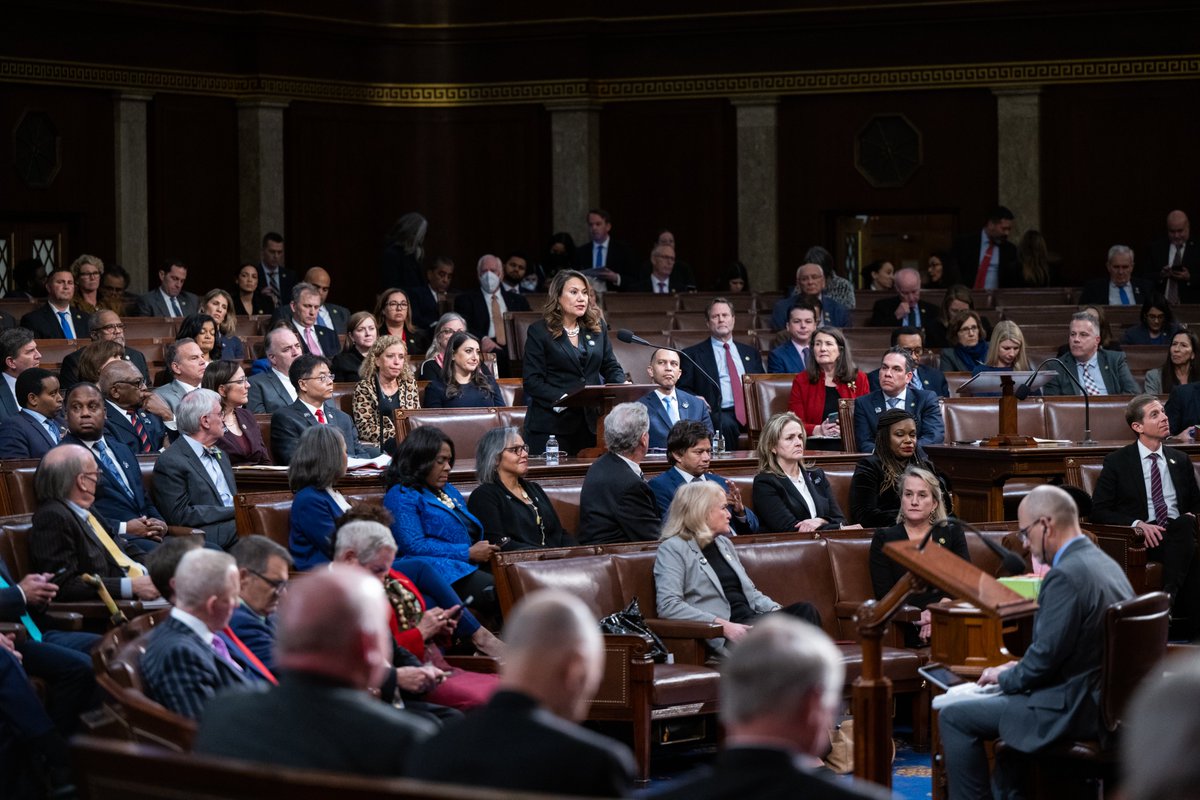
  • A woman speaks from a lectern in a formal legislative chamber filled with seated attendees. There is decorative trim and wood paneling, and no prominent readable text.
    A woman speaks from a lectern in a formal legislative chamber filled with seated attendees. There is decorative trim and wood paneling, and no prominent readable text.View post
About the descriptions

Written by a vision model and may be wrong. Open the post to see the original. Five are shown; the toggle shows the rest.

Back to topNext: Methods and sources

Methods and sources

How this page was made. Profile built Nov 24, 2026; site last built Nov 24, 2026. Every number on the page is computed from the sources listed here, by the same rules for every official; nothing is written by hand.

The headline

The headline is the measure on which Escobar is most unusual among House Democrats, chosen by one rule for every official of every party. The candidates are the rate of each kind of statement and of extreme labels, party unity, attendance, the small-donor share, the in-state share and total receipts of the latest cycle, the share of sponsored bills that got out of committee, talk-to-bills agreement, and the CSIP score’s place within the party group.

The builder ranks every measure within the same peer group the page compares it with, and writes each official’s percentile: the share of the group below the value, ties counting half, so 0.5 is the median and a value shared by many never ranks first. A measure’s score is how far that percentile sits from the median (0 in the middle, 0.5 at either end), and the highest score leads if it is above 0.25, outside the middle half of the group. Scores within 0.03 of each other are a tie, broken in this order: votes against the party majority, kinds of statement, ideology, roll calls missed, small donations, in-state money, legislation, agreement, extreme labels, receipts.

A measure counts only with at least 200 statements, 100 roll calls or 5 sponsored bills behind it and a peer group of at least 10. Two things never lead: high party unity or attendance, where most members sit, and a high rate of a kind of statement backed by fewer than 10 statements. When nothing qualifies, the headline is a neutral fact instead: statements classified, or years in office. The wording always names the direction (“in the bottom 5% of …”, “votes against the majority of …”).


Identifiers

Profile id
E000299
Bioguide
E000299
FEC candidate ids
H8TX16109

Bulk files with the same data for every official:

Freshness of this profile’s data

  • What politicians sayNov 23, 20261 days agoMembers of Congress: tweets since 2017; press releases, newsletters and floor speeches since 2022. State legislators: tweets since May 2024. Governors: tweets since January 2025. Labels from an LLM classifier.
  • Roll calls (Congress)Nov 20, 20264 days agoVoteview roll calls, 113th Congress (2013) on.
  • Bills (Congress)Nov 20, 20264 days agoGovInfo BILLSTATUS: sponsors, cosponsors, actions, CRS policy area.
  • Lawmark Achievement Scores (Congress)Nov 20, 20264 days agoLawmark Achievement Scores, Lawmark text in law and the bill progress share, every Congress from the 113th (2013), from the bill status files, the printed bill texts and public committee rosters; weekly.
  • Campaign money (FEC)Nov 20, 20264 days agoFEC committee financial summaries (totals, small donations) and itemized contributions (donor counts, states, employers), the 2020 cycle on; aggregates only.
  • Ideology (CSIP)Nov 3, 202621 days agoCommon-Space Ideal Points (CSIP), current validated run.
  • WebsitesNov 22, 20262 days agoWeekly crawls of federal sites since April 2026; monthly state crawls since June 2026.
  • ImagesNov 24, 2026todayImages in members' tweets with vision-model descriptions.

How the measures work

What politicians say
Every post, press release, newsletter and congressional floor speech is read by a language model and marked for personal attacks, policy criticism, policy discussion, bipartisanship and credit claiming. A statement can be in several. Rates are shares of statements in the window. The methods paper.
Extreme labels
A statement has an extreme label when it calls a politician, party or policy “far left”, “far right”, “MAGA”, “extreme”, “radical”, “woke”, “fascist” or “communist”. The target is who the label is aimed at.
Policy areas and agreement
Statements and bills share 25 Congressional Research Service policy areas (state bills are assigned by a language model). Agreement is 1 − Jensen–Shannon distance between the two distributions, shown with at least 20 policy statements and 5 bills.
Ideology (CSIP)
Common-Space Ideal Points place federal and state officials on one left–right scale, estimated jointly from roll calls, campaign contributions and the text of statements, with standard errors. Only a validated run is shown. The methods paper.
Campaign money
Campaigns report by name only donors who give more than $200 in a cycle; smaller gifts are reported as one total. Federal totals and the small-donor share come from the FEC’s financial summaries of each campaign committee. Donor counts, donor states, employers and occupations cover itemized donors only. State filings report no small-gift totals, so state figures are itemized only. The lab never publishes donor names.
Votes and key votes
Attendance, party unity and the count of votes against the majority of an official’s own party come from roll calls (Voteview for Congress, chamber records for the states). Key votes are final-passage or override votes that became law, were decided by under 10%, saw at least 10% of a party vote against its majority, or concerned one of the 25 bills most mentioned in officials’ statements.
Peers and ranks
Comparisons are with the same party, chamber and level (for example House Democrats); state legislators are compared within their state and chamber for votes. Every comparison names its group. Rank 1 is the highest value in the group; tied values share the average of their ranks, and the percentile is the share of the group below the value, ties counting half.

America’s Political Pulse · Polarization Research Lab

Back to top